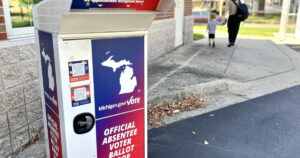
In a turn of events that has sparked a heated public debate, the Maricopa County Board of Supervisors finds itself embroiled in a controversy with Recorder Justin Heap. The dispute centers around the authority to approve ballot drop boxes, a decision that has brought legal threats and accusations of political maneuvering to the forefront.
The board convened to finalize vote center and drop box sites for imminent elections. However, a preemptive letter from Heap’s legal representative challenged the board’s authority in this matter, escalating tensions.
Attorney James Rogers contended, “Only the Recorder possesses the statutory authority to designate the locations for drop boxes and to establish them,” highlighting a potential legal breach for those setting up unauthorized drop boxes.
Rogers further alleged that participating in such activities is tantamount to committing a class 5 felony, with possible imprisonment ranging from six months to over two years.
The supervisors expressed strong disapproval of Heap’s actions, suggesting that such legal threats jeopardize the safety and security of numerous election workers and volunteers. “This is shocking and appalling,” remarked Supervisor Thomas Galvin.
The Ongoing Legal Dispute
This conflict over drop boxes is the latest chapter in a broader struggle for control over the county’s election process. The issue seemed settled when a judge recently ruled in Heap’s favor regarding another lawsuit against the board.
The court’s decision clarified the division of election-related duties between the recorder and the board, though it did not specifically address drop boxes. Judge Scott Blaney determined that tasks explicitly assigned to the recorder or the board should follow accordingly, which Rogers argues includes drop boxes due to their role in early voting.
Conversely, Maricopa County Elections Director Scott Jarrett cited the state’s Election Procedures Manual, which mandates that drop-off locations receive approval from the Board of Supervisors.
Rogers dismissed this argument, asserting that the manual cannot override legal statutes by redistributing powers between elected officials.
Conflicting Narratives
In response to the board’s actions, the Recorder’s Office accused them of engaging in “political theater” without adequate consultation or warning. Heap’s statement criticized the board for failing to provide a fair opportunity to review or discuss the proposed drop box sites.
However, the board refuted these claims. Jarrett insisted that collaboration with the Recorder’s Office has been ongoing since February. “Everyone at the recorder’s office knew what was coming,” Galvin remarked, criticizing what he perceived as political gamesmanship from Heap.
Further complicating matters, Supervisor Debbie Lesko revealed inconsistencies in Heap’s communications. Initially, Heap’s chief of staff consented to the board’s drop box locations, only for Heap to later contradict this approval.
Accusations of authority delegation to Rogers, a legislative candidate, and a member of America First Legal, have compounded tensions. Board Chair Kate Brophy McGee questioned, “Who is running the recorder’s office?” suggesting that Rogers holds disproportionate influence.
Heap opted not to attend the board meeting, citing legal strategy and the board’s ongoing appeal against the recent court ruling as his reasons. This decision drew criticism from board members who accused Heap of sowing doubt about election integrity to bolster unsubstantiated fraud narratives.
Supervisor Steve Gallardo voiced concerns, “He’s doing everything he can to make this election fail, just so he can stand in front of the very few people that support him to say, ‘look, I told you so.’”
Despite Heap’s protests, the board proceeded with a 4-1 vote to approve the drop box locations, with Supervisor Mark Stewart being the lone dissenting voice. Stewart’s proposal to allow Heap a window to contest the locations was not supported by the board.