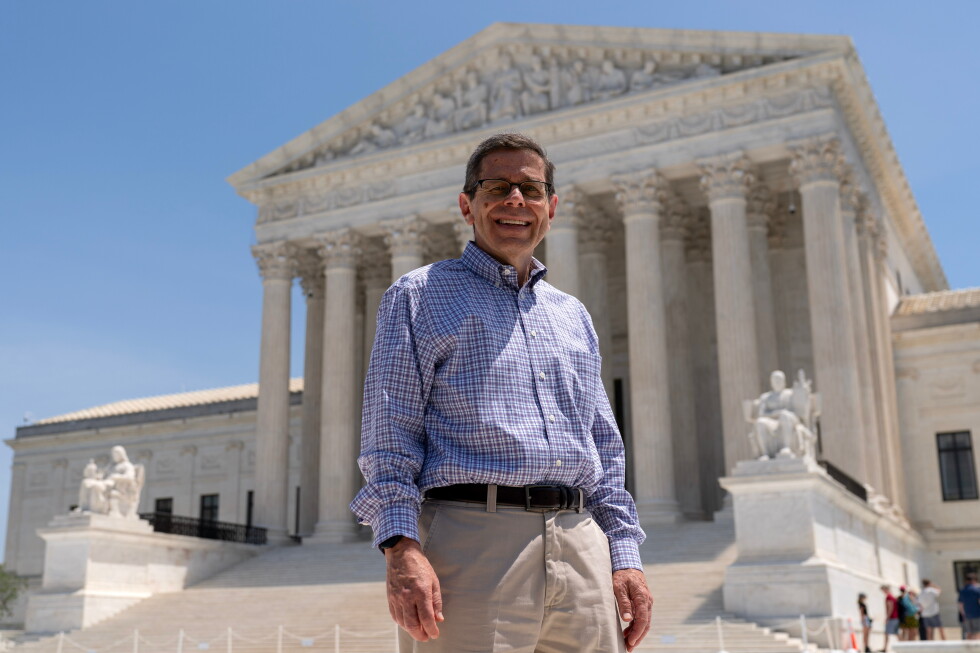
WASHINGTON (AP) — The landscape of the United States Supreme Court has undergone significant ideological shifts over the past two decades, as observed by seasoned journalist Mark Sherman. After spending 20 years covering the high court for The Associated Press, Sherman reflects on his tenure and the court’s gradual shift toward conservatism. His experiences provide a unique perspective on the dynamics that have shaped the judiciary’s current makeup.
At the conclusion of Sherman’s initial year covering the Supreme Court, Justice Stephen Breyer made headlines with an unscripted critique of his conservative colleagues. “It is not often in the law that so few have so quickly changed so much,” Breyer remarked, dissenting in a pivotal school integration case. This moment underscored the new conservative dominance in the court, as evidenced by a series of 5-4 decisions. Sherman noted this as a key example of justices expressing human emotions, despite the traditional solemnity of their roles.
The Supreme Court’s Conservative Turn
When Sherman began his coverage in 2006, the court had already taken a slight rightward turn with the transition from Justice Sandra Day O’Connor to Justice Anthony Kennedy. Together, they played crucial roles in decisions such as preserving abortion rights in 1992 and deciding the outcome of the 2000 presidential election in favor of George W. Bush. Kennedy is celebrated for his opinions on gay rights, notably the decision that legalized same-sex marriage nationwide. However, his majority opinion in Citizens United, which enabled significant independent political spending, is also widely discussed.
Scalia’s Death and the Blocking of Merrick Garland
A pivotal moment came with Justice Antonin Scalia’s unexpected death in 2016. This event provided Democrats an opportunity to shift the court leftward, but Republicans, led by Senate Majority Leader Mitch McConnell, blocked any appointment until after the presidential election. Despite President Obama nominating Merrick Garland, a respected judge, the seat remained vacant. Justice Ruth Bader Ginsburg, confident in a Democratic victory, speculated about a female president filling multiple vacancies. However, the election of Donald Trump resulted in a new conservative majority, altering the court’s trajectory on issues like abortion and affirmative action.
Justices’ Retirement Timing
Lifetime appointments allow justices to influence their successors by timing their retirements. Ginsburg remained on the court until her death shortly before the 2020 election, and her wish that her seat not be filled before then was unheeded. Anthony Kennedy and Stephen Breyer, upon their retirements, were succeeded by former clerks, Brett Kavanaugh and Ketanji Brown Jackson, respectively. This succession strategy highlights how personal connections may influence judicial appointments.
Perceptions of Political Leanings
Chief Justice John Roberts has maintained that judges are not political entities, stating, “There are no Trump judges or Obama judges, only an independent judiciary.” However, the appointment patterns since 2010 suggest otherwise, with conservative justices appointed by Republican presidents and liberal justices by Democrats. Both parties emphasize the importance of selecting ideologically aligned justices.
Changes in Covering the Court
The dynamics of covering the Supreme Court have evolved significantly. Prior to the COVID-19 pandemic, reporters like Sherman played a crucial role in interpreting court proceedings. However, the pandemic led to remote sessions and live audio broadcasts, allowing the public direct access to hearings. This transparency has altered the role of journalists, as decisions are now publicly accessible on the court’s website. Moreover, the rise of emergency appeals has introduced unpredictability in coverage, demanding constant vigilance from reporters.