Billions of taxpayer dollars, the health records of millions of veterans, and questions about whether a tech billionaire’s friendship with the president shaped a massive government contract — it all came to a head Thursday on Capitol Hill. The CEO of Oracle Corporation faced lawmakers under subpoena, and the answers he gave raised as many questions as they resolved.
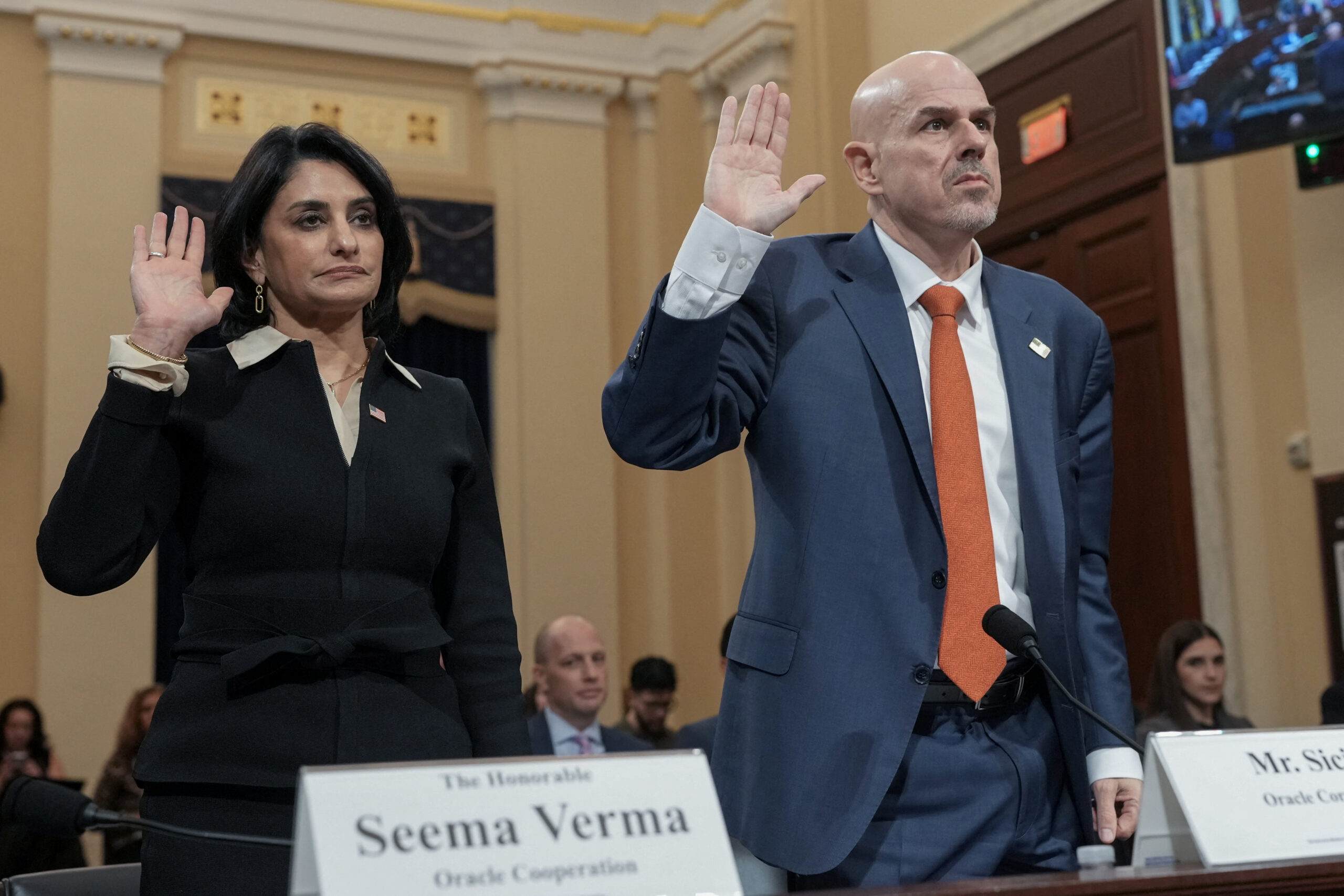
Michael Sicilia, Oracle’s CEO, testified before the House Committee on Veterans’ Affairs about a contract with the Department of Veterans Affairs that recently saw its ceiling raised by nearly $17 billion. The hearing focused on whether Oracle leadership — including billionaire founder Larry Ellison, a known ally of President Trump — had any role in influencing those negotiations.
Sicilia told the committee he had no such involvement.
“I’ve never talked with anybody in the White House about the VA contract,”
he said. He also stated that neither he nor Ellison had sought to influence the deal, though he acknowledged he had not directly asked Ellison whether the company’s founder had discussed the contract with Trump or White House officials.
A Contract That Keeps Growing
The VA’s electronic health record modernization project has been the subject of growing scrutiny as its price tag has ballooned. Oracle initially proposed raising the contract ceiling by roughly $18.5 billion in July. After negotiations, the company submitted a final proposal on August 14 for a $16.9 billion increase. The VA approved that modification on August 18, bringing the total contract ceiling to $26.94 billion — the maximum the VA can spend under the agreement before negotiating individual task orders separately.
Sicilia told lawmakers that the original $10 billion ceiling would only cover deployments at about 50 of the 170 VA medical centers included in the rollout plan, following a program reset and changes in scope. He attributed the higher figure to a longer rollout timeline and additional work requirements.
The new health record system is currently live at 19 VA medical centers. The VA plans to begin its next round of installations in January, with 26 more sites scheduled for 2027.
VA Deputy Secretary Paul Lawrence previously told the committee in September that a separate acquisition team handled the negotiations independently, and that neither he nor Dr. Neil Evans, who leads the modernization program, participated directly. Lawrence said the two received only a general account of the process. When asked by Rep. Morgan Luttrell, R-Texas, whether anyone at the VA had questioned the need for another $17 billion, Lawrence said he didn’t know what had been discussed during acquisition talks.
Subpoenas and Accountability
Thursday’s hearing only happened because Congress forced it. After Oracle representatives failed to appear at an earlier hearing on the contract increase, the committee voted 19-0 in September to issue subpoenas to both Sicilia and Ellison. Rep. Mark Takano, D-Calif., the ranking Democrat on the committee, did not hold back.
“Having to compel your testimony through a subpoena is absolutely unacceptable, and I expect a commitment from you today that this will never happen again,”
Takano said.
Emails between Oracle’s sales team and the VA contracting office were entered into the congressional record during the hearing. Takano also formally requested Oracle’s communications with White House and VA officials related to the company’s work for the department. Larry Ellison himself is expected to testify under subpoena on December 10, according to Takano.
Broken Promises and Patient Safety
Democrats pressed Oracle on whether the company had lived up to a 2022 pledge to absorb significant cost overruns. Rep. Maggie Goodlander, D-N.H., read the commitment back to Sicilia directly.
“We’re trying to get to the truth of whether a promise was made and broken,”
she said.
Sicilia maintained that Oracle had honored its promise but argued the commitment came with an exception for significant changes in scope. Neither Sicilia nor Oracle executive Seema Verma disclosed to lawmakers how much the company had actually absorbed in overruns.
Patient safety concerns also surfaced during the hearing. Rep. Maxine Dexter, D-Ore., recounted the case of Raymond Sands, a 77-year-old Marine veteran whose antibiotics for pneumonia were delayed following a software error. Sands died eight days after being hospitalized. According to records reported by The Washington Post, the VA told his family that the change in the records system contributed to the delay — an incident the department later classified as catastrophic.
Concerns about Oracle’s contract performance were further highlighted when Rep. Nancy Mace, R-S.C., asked how many open software tickets were more than 90 days old and how many had been flagged for patient safety. Verma said she would provide those figures later. Rep. Kimberlyn King-Hinds, a Republican from the Northern Mariana Islands, proposed mandatory quarterly reports tracking unresolved software defects and distinguishing between payments for added work versus corrections to existing defects.
Lobbying Questions Linger
Near the end of the hearing, Takano raised another concern: Oracle’s recent hiring of a lobbying firm with direct ties to VA Secretary Doug Collins. The firm, Duddington Global Strategies, was founded by Brendan Belair, who previously served as chief of staff to Collins when Collins represented Georgia’s 9th Congressional District. Oracle has paid $120,000 to retain Belair over the past year.
Federal law permits former senior congressional staff to lobby after a one-year “cooling off” period. Belair left Capitol Hill after Collins lost a U.S. Senate bid in 2021, making him eligible under that rule. Still, Takano pressed Oracle executives for transparency.
“I’d be interested in knowing what specific benefits and access Oracle receives from retaining Secretary Collins’ former chief of staff as a lobbyist,”
Takano said.