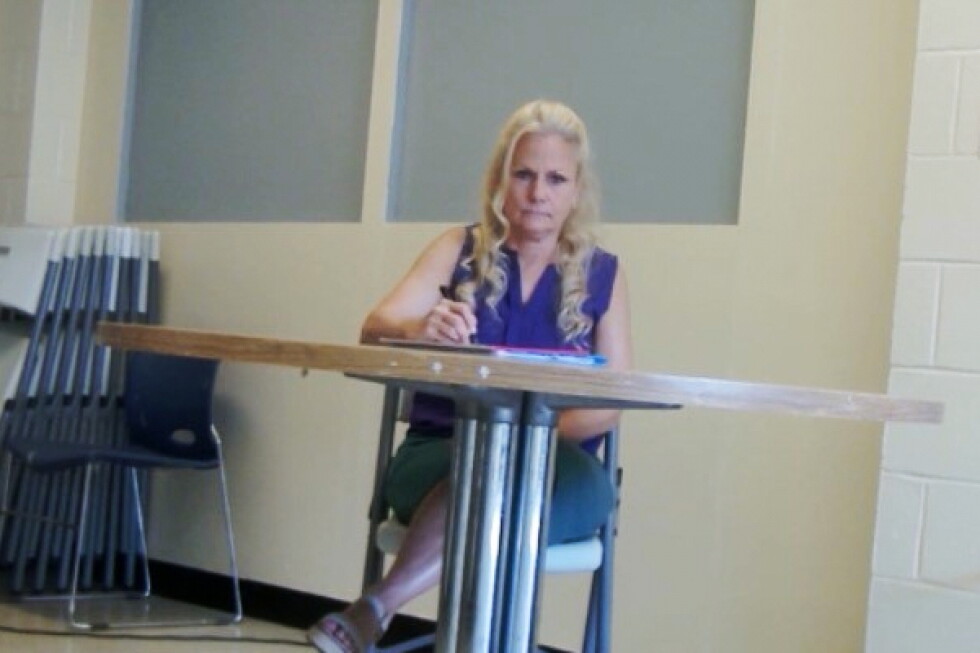
In a case that captivated the nation over three decades ago, Pamela Smart’s legal team is once again pushing for a retrial. Smart, who has been imprisoned since 1990 for allegedly orchestrating her husband’s murder, is seeking a new trial based on claims of constitutional violations during her original proceedings.
At the age of 22, Pamela Smart was working as a high school media coordinator when she engaged in an illicit relationship with a 15-year-old student. This student later shot and killed her husband, Gregory Smart, in Derry, New Hampshire. Although Smart has consistently denied any involvement in the murder plot, she was convicted as an accomplice to first-degree murder and received a life sentence without parole. The trial gained national attention as one of the first to be televised in its entirety.
Smart’s current petition for habeas corpus relief, filed in January, was the focus of a hearing held on Monday. Her legal representatives argued that inaccuracies in trial transcripts misled jurors, citing that transcripts of recorded conversations included words not audible on the tapes. Phrases like “you had your husband killed” and “this would have been the perfect murder” were highlighted as examples.
Matthew Zernhelt, Smart’s attorney, emphasized that jurors were improperly influenced by the transcripts. He stated, “Modern science confirms what common sense has always told us: when people are handed a script, they inevitably hear the words they are shown.” Zernhelt further explained that forensic studies demonstrate how transcripts can shape listener perceptions of unclear audio.
The defense also believes that media frenzy and flawed jury instructions tainted the original verdict. They claimed that jurors were not adequately instructed to focus solely on trial evidence and that New Hampshire law did not mandate a life sentence without parole for an accomplice to first-degree murder.
State’s Position on the Petition
The state has called for the dismissal of Smart’s petition, arguing that many of her claims have been previously addressed by the New Hampshire Supreme Court or could have been raised in earlier appeals. They pointed out that during the initial trial, the defense only voiced concerns about transcript discrepancies related to overlapping voices, which the judge had instructed jurors to disregard in favor of the audio.
Assistant Attorney General John Drennan contended that Smart’s claims lack factual support. He compared the situation to interpreting a voicemail, saying, “Maybe cognitive bias has set in, but it doesn’t mean that I can’t, when listening, say, ‘Hey, I’m not sure that’s right.’ I know to review it. I know to be skeptical.”
The state also noted that Smart’s team has not substantiated other allegations, such as ineffective counsel or the trial’s jurisdictional issues. Despite past attempts to secure a sentence reduction hearing in New Hampshire, Smart’s petitions have repeatedly been denied, including a rejection by the state Supreme Court in 2023.
Smart’s Admission and Media Influence
In 2024, Pamela Smart publicly accepted responsibility for her husband’s death, acknowledging that she had previously shifted blame as a coping strategy. Her trial was a media sensation, partly due to the nature of her relationship with the student, William Flynn, who testified against her. Flynn claimed Smart pressured him to kill her husband to avoid a financial loss from divorce and threatened to end their relationship if he refused.
Flynn, along with Patrick Randall, who participated in the murder, were both convicted and sentenced to 28 years to life. They have since been released on parole, as have two other teens involved in the case. The dramatic story inspired the book “To Die For” by Joyce Maynard and a subsequent film adaptation starring Nicole Kidman and Joaquin Phoenix.