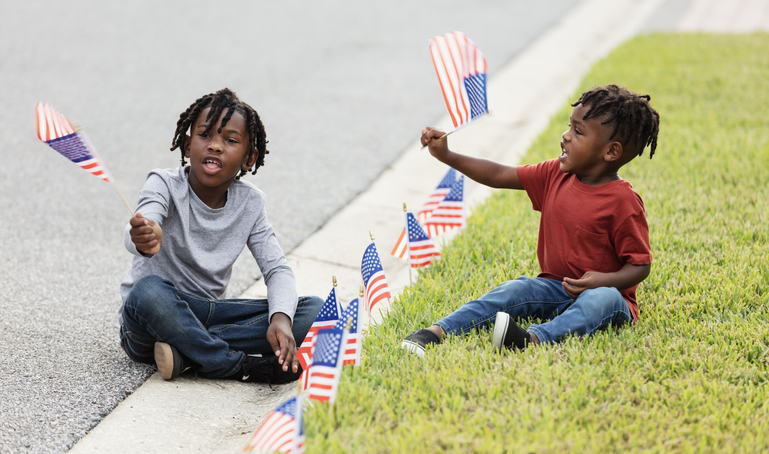
As Independence Day approaches, the nation once again finds itself awash in patriotic colors and celebrations. Yet, beneath the vibrant displays, there lies a deeper narrative that often goes unspoken. This narrative is poignantly captured through two contrasting images of young girls holding American flags, representing both hope and the complexities of racial identity in the U.S.
One particular image that sparked reflection was that of a friend’s daughter, joyfully waving a flag, embodying the carefree spirit many associate with the holiday. In stark contrast, a treasured photograph of a young Black girl holding the same flag evokes a more profound contemplation. Despite the different contexts, both images underscore a common desire for a hopeful future, albeit with a cautious sense of realism.
The juxtaposition of these images brings to mind Frederick Douglass’s powerful 1852 speech, “What to the Slave Is the Fourth of July?”, where he highlighted the glaring disparity in the American experience. As Douglass eloquently expressed, “This Fourth of July is yours, not mine. You may rejoice, I must mourn.” His words resonate with many today, reflecting the persistent inequalities that shape the lives of Black Americans.
For those in the Black community, national celebrations can feel like a reminder of the unfulfilled promises of freedom and equality. Douglass’s speech, while acknowledging the nascent potential of the young republic, also called out the stark injustices that remained. His hope for a nation that could correct its course seems increasingly remote as systemic disparities continue to persist.
As the United States approaches its 250th anniversary, the question of what is truly being celebrated becomes ever more pressing. The commercialization of patriotism—with its flurry of red, white, and blue merchandise—often glosses over a turbulent history, reducing it to mere symbols. Douglass foresaw this risk, warning against such displays becoming a “thin veil to cover up crimes.”
In 2026, the challenge of achieving justice, which Douglass once saw as attainable, appears more daunting. The entrenched inequities in society act as a constant reminder of the work that remains. The contrasting experiences of two young girls on the Fourth of July serve as a poignant metaphor for these ongoing struggles. Both deserve to experience the unencumbered joy and promise that such celebrations symbolize.
This Fourth of July, as we reflect on the nation’s journey, the question lingers: What, to the Black American, is the 250th? The answer to this question remains vital as we continue to strive for an inclusive and equitable society for all.
SEE ALSO:
America’s 250th Birthday: What Are We Really Celebrating?
Frederick Douglass Said ‘This Fourth Of July Is Yours, Not Mine’