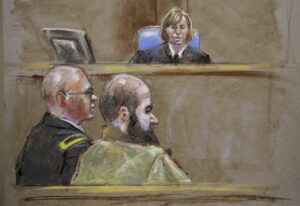
In a surprising twist, the trial concerning last year’s devastating Palisades Fire has been declared a mistrial, leaving the accused, Jonathan Rinderknecht, facing a retrial this fall. The fire, one of the most destructive in California’s history, has left deep scars across Los Angeles and Malibu, with entire neighborhoods reduced to ashes.
Out of the 12 jurors, ten were convinced of Rinderknecht’s innocence, prompting Judge Anne Hwang to schedule a retrial for October 19 and keep him in custody until then. Rinderknecht, 29, maintains his innocence, a sentiment echoed by his defense attorney, Steve Haney, who noted the lack of strong evidence presented by the prosecution.
However, First Assistant U.S. Attorney Bill Essayli expressed confidence in their evidence, aiming for a guilty verdict in the upcoming trial. The prosecution accuses Rinderknecht of using a barbecue lighter on January 1, 2025, to ignite a fire that smoldered for days before erupting on January 7, resulting in 12 deaths and widespread destruction.
The prosecution’s case lacked direct evidence linking Rinderknecht to the initial fire, but they presented a digital trail to suggest his potential motive of societal revenge. The defense argues that fireworks were the more likely cause, criticizing investigators for prematurely focusing on Rinderknecht.
“This is a big victory, and it feels so unfair that, given the circumstances, the government maintains my son in jail,” said Rinderknecht’s father, Joel.
As the new trial approaches, attention also turns to the political arena, with Los Angeles Mayor Karen Bass facing scrutiny over the city’s wildfire response, coinciding with her re-election campaign. The aftermath of the Palisades Fire and another wildfire in Altadena continues to disrupt lives, with victims seeking legal and financial redress.
Digital Evidence and Investigative Findings
The trial presented a wealth of digital records and extensive testimonies from various experts and investigators. Security footage pinpointed the fire’s origin to a familiar mountainside location, where Rinderknecht was present around the time of the blaze. His movements were tracked through phone data, revealing multiple 911 calls and his presence at the scene.
Jurors were shown data from Rinderknecht’s phone and online accounts, including frequent interactions with ChatGPT. In one exchange, he queried, “Why am I so angry all the time?”
Expressions of Frustration
Rinderknecht reportedly expressed discontent over wealth inequality and climate change. He also inquired about Luigi Mangione, involved in a high-profile murder case, and made inflammatory posts on Reddit. Additionally, he sent abusive messages to a woman who declined his New Year’s Eve invitation.
Prosecutors highlighted videos Rinderknecht took of the fire and his queries to ChatGPT about accidental fire accountability, suggesting attempts to mislead investigators. The day before the fire’s resurgence, he recorded a video detailing his mental distress.
Interviews and Defense Assertions
Weeks after the fire, Rinderknecht engaged in an eight-hour conversation with an ATF agent, detailing his actions during the fire. His account conflicted with his 911 call data, and he speculated about possible motives for arson in affluent areas. Expert testimony characterized his behavior as typical of a revenge-driven arsonist.
The defense argued that investigators lacked evidence of arson-related activities by Rinderknecht and criticized their quick judgment. Witnesses recalled hearing fireworks, supporting the defense’s theory of accidental ignition by fireworks.
Former fire investigator Ed Nordskog accused authorities of confirmation bias, pointing out the prevalence of fireworks-related fires on New Year’s Eve.
Juror’s Perspective
Juror No. 4, identified as Syrena, voted against conviction, citing insufficient evidence. She questioned the responsibility of other parties involved in the fire’s management. Despite his use of ChatGPT, she defended Rinderknecht, stating, “It made me angry that they were putting his character down.”
Rinderknecht’s attorney was barred from arguing negligence by the Los Angeles Fire Department, which Syrena believed was relevant. She doubted the prosecution’s claim of Rinderknecht’s solitary presence at the fire’s origin, highlighting the defense’s arguments.