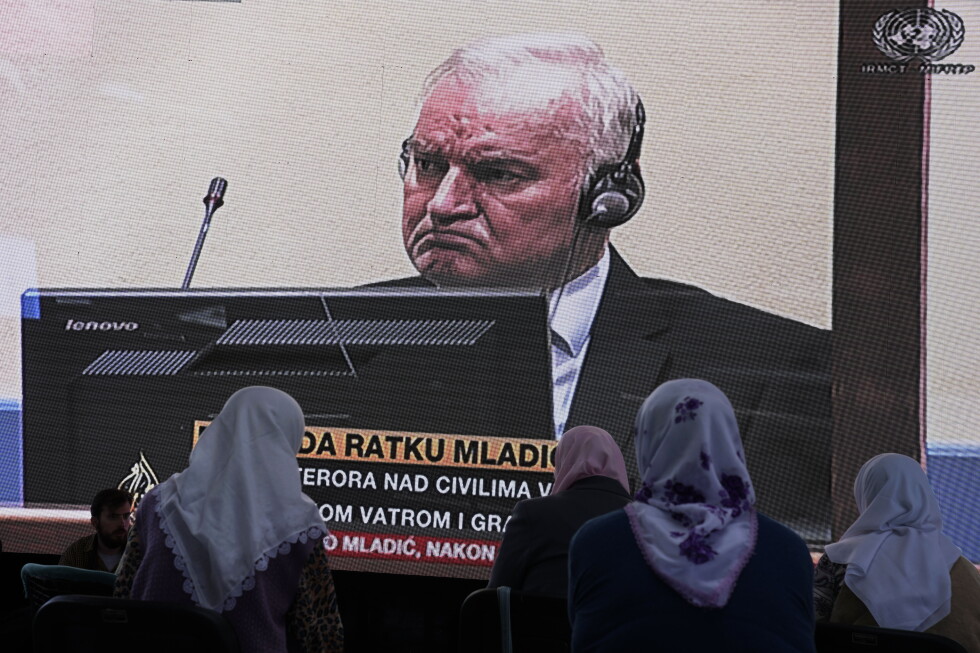
In a dramatic turn of events, the controversy surrounding the late Ratko Mladic, a former Bosnian Serb army commander, has reignited debates in the Balkans. Mladic, who passed away at 84 while serving a life sentence, was a central figure in the brutal conflicts of the 1990s. His death has prompted mixed reactions across the region, highlighting the deep divisions that persist even decades after the wars.
Serbian President Aleksandar Vucic has expressed strong disapproval of the U.N. court’s decision not to grant Mladic early release on humanitarian grounds. The Serbian government, along with Mladic’s family, had repeatedly appealed for his release citing his deteriorating health, but the requests were denied. Just a week following the rejection of his final plea, Mladic died in custody.
“That was uncivilized behavior, unprecedented and without excuse,” Vucic stated, emphasizing his belief that the court intended for Mladic to die in prison. Mladic had been incarcerated since 2011, following his 2017 life sentence for war crimes committed during the Yugoslav Wars.
Bosnian Serbs Remember Mladic as a Hero
Among the Bosnian Serbs, Mladic is still hailed as a hero, and his death has led to candlelit vigils in his honor. Stojanka Visnjevac from Mladic’s hometown of Kalinovik expressed her admiration, stating, “He could not have been a better man. Everything else is just a bunch of lies.”
Conversely, families of the victims view his death as a form of justice. Fazila Efendic, who lost family members in the 1995 Srebrenica massacre, a tragic event that marked Europe’s first genocide since World War II, remarked, “For us, it is important that he is convicted and that he served his sentence until he died.”
Debate Over Mladic’s Final Resting Place
There is uncertainty about where Mladic will be buried. President Vucic indicated that the decision rests with Mladic’s family and assured that if they wish for him to be buried in Serbia, arrangements would be made to ensure a respectful ceremony. He did not confirm whether Mladic would receive a state funeral, a prospect that has already sparked outrage in the region.
Meanwhile, the U.N. court has initiated an inquiry into Mladic’s death. Although the Dutch authorities have stated they will not conduct a criminal investigation or perform an autopsy, the court is proceeding with its assessment. The International Residual Mechanism for Criminal Tribunals, the body responsible, has yet to release details about the cause of death.
For more information about the U.N. tribunal and Mladic’s conviction, visit the Associated Press.
“`