In a wave of political maneuvering, the redrawing of congressional maps in several Southern states has sparked voter confusion and logistical challenges, exacerbated by a recent U.S. Supreme Court decision. This reshaping could significantly impact the upcoming elections, leaving voters uncertain about their districts and the fate of their ballots.
Louisiana voters have already participated in early voting, possibly within outdated district lines, while Alabama prepares for a redo of its congressional primaries. Meanwhile, Tennessee’s new map has disrupted ongoing races, illustrating the broad effects of redistricting.
The Republican-driven push to redraw congressional boundaries follows a Supreme Court ruling that weakened the Voting Rights Act, causing turmoil amidst the primary season. The adjustments could influence the party balance in the U.S. House.
In Louisiana, the map revision might remove or change districts where 30% of the population is Black, potentially affecting minority representation. Similar changes are under discussion in Alabama, Mississippi, South Carolina, and Tennessee, where Democratic districts with Black representatives are at risk.
Voter experiences have been fraught with confusion, as exemplified by Sallie Davis, a New Orleans resident, who faced uncertainty at the polls when her preferred candidate was crossed out on paper. She expressed distrust in the voting process, saying, “I think I have been disenfranchised. I think my vote, that I just voted on, it’s not going to count or something. I think it’s illegal.”
Primaries Rescheduled and Compressed Timelines
Louisiana’s primary was set for Saturday, but adjustments were made after Governor Jeff Landry declared an emergency, postponing congressional primaries to allow time for a new map. Nearly 179,000 ballots were cast, but U.S. House votes won’t be tallied.
In Alabama, despite plans to maintain the primary date, vote counts may be affected as the state switches to different districts following a Supreme Court ruling. The redistricting extends to Mississippi, where the Legislature will meet in a historical setting to discuss changes.
Activists like Amir Badat warn of potential voter suppression through administrative errors and chaos, predicting similar issues in states like Tennessee, which has already implemented a new map, impacting Memphis voters.
Concerns Over Voter Trust and Engagement
Amidst these changes, activists fear growing distrust among voters. Anneshia Hardy of Alabama Values cautions that frequent rule changes could lead to increased disengagement, stating, “Once people stop believing that the process is stable and fair, disengagement is going to increase, and that’s one of the biggest dangers here.”
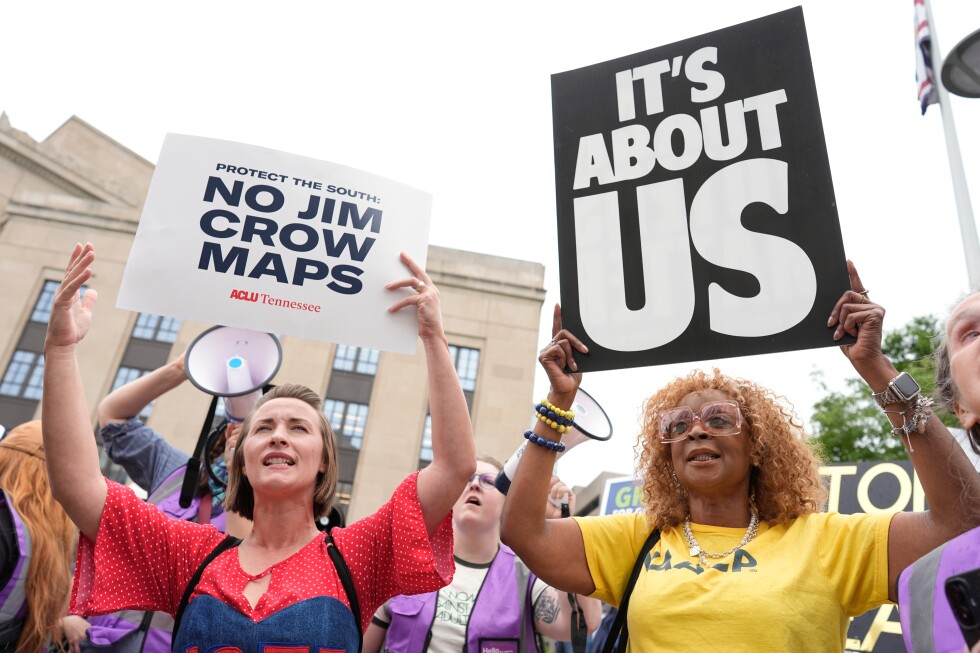
Some Louisiana voters, like David Victorian, express concerns about the health of democracy, rallying at the State Capitol to protest gerrymandering efforts that threaten their political influence.