In a pivotal Supreme Court ruling affecting congressional districting, states are swiftly responding to new guidelines that limit the role of race in drawing voting districts. This decision has far-reaching implications for the future of minority representation in the U.S. Congress, altering a key Civil Rights-era statute.
The Supreme Court’s recent decision to strike down a predominantly Black congressional district in Louisiana is already prompting state-level legislative actions. This ruling significantly restricts the use of racial considerations in the formation of voting districts, impacting laws designed to enhance minority representation in Congress.
Florida
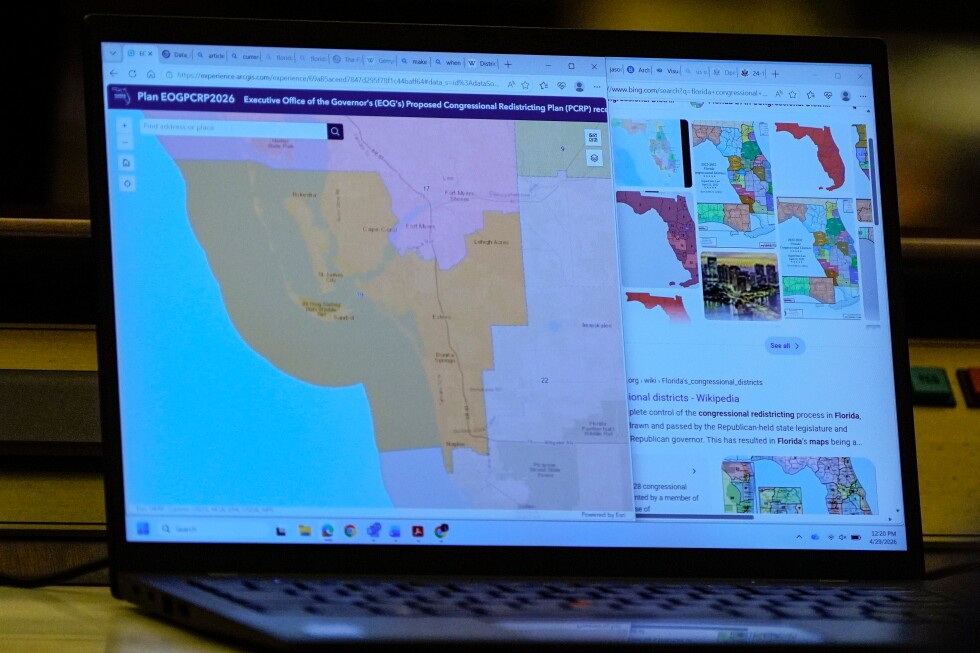
Quick to act on the recent Supreme Court ruling, Florida’s Republican-majority Legislature approved new U.S. House districts expected to benefit the GOP by adding up to four seats in the upcoming midterm elections. Governor Ron DeSantis had preemptively called a special session for redistricting, anticipating the court’s decision.
DeSantis introduced a new map on Monday, revising a southeastern district originally aimed at supporting Black representation under the Voting Rights Act. “Properly understood, the Fourteenth Amendment forbids the government from divvying up the citizenry based in whole or in part upon race,” DeSantis stated in a letter to lawmakers.
Despite the 2010 Florida constitutional amendment prohibiting racial or language-based voter discrimination, DeSantis argues this conflicts with the U.S. Constitution. Ruth Greenwood from Harvard Law School notes that the Supreme Court’s decision does not automatically nullify state constitutional protections against racial discrimination in voting districts.
Mississippi
Mississippi Governor Tate Reeves plans to convene a special legislative session to address state Supreme Court voting districts, following the U.S. Supreme Court’s guidance on “race-conscious redistricting.” This action stems from a federal judge’s ruling last year mandating the redrawing of districts to better represent Black voters.
Louisiana
Last year, Louisiana legislators delayed the state’s primaries, anticipating a Supreme Court decision on congressional districts. With early voting approaching, it remains uncertain if the state legislature can revise district boundaries before the general election. State leaders, including House Speaker Phillip DeVillier and Senate President Cameron Henry, are currently evaluating the ruling’s implications.
Alabama
Alabama must use a new congressional map until the 2030 census, following a federal court’s mandate to create a near-majority Black district. Although state Attorney General Steve Marshall supports the Supreme Court’s ruling, citing the need to eliminate “racial quota systems,” Governor Kay Ivey indicates that a special session is not imminent, as the primaries are slated for May 19.
Tennessee
The possibility of redistricting Tennessee’s congressional districts has been raised by Senator Marsha Blackburn. However, logistical challenges, such as the concluded candidate qualifying period and upcoming August primary, complicate potential changes, according to Senate Speaker Randy McNally.
Illinois
In anticipation of the Supreme Court’s decision, Illinois’ Democratic-led House proposed a constitutional amendment to prioritize race-based redistricting. However, Senate President Don Harmon suggests delaying its passage to thoroughly assess the legal ramifications of the court’s ruling.
For more detailed information on the Supreme Court decision, visit the Associated Press article.