Supreme Court Faces Monumental Decisions Amidst Declining Public Trust
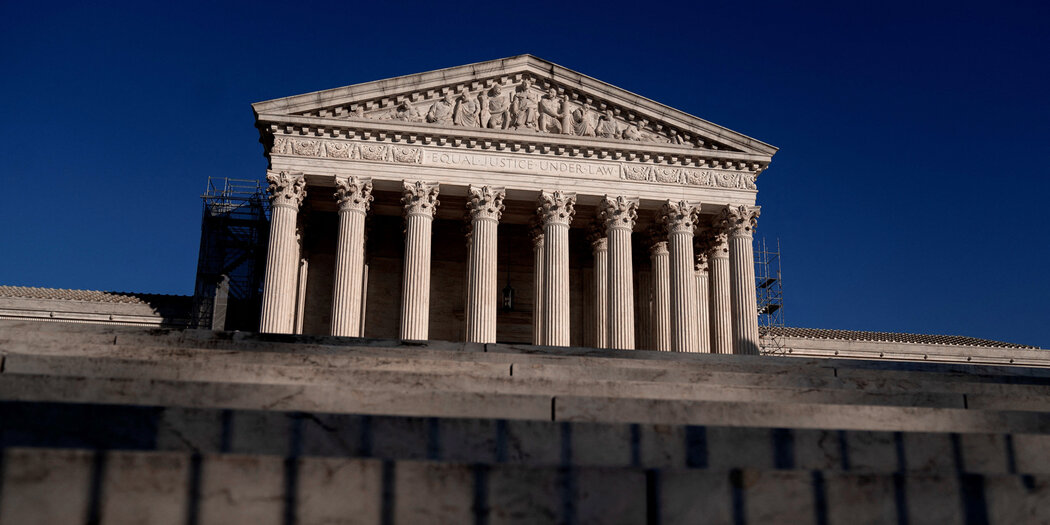
The United States Supreme Court is on the brink of a pivotal term that could redefine its role and influence in American democracy. As the new term begins, the Court’s credibility is under intense scrutiny, with public trust at historic lows. This period will test the boundaries of presidential power, voting rights, and campaign finance laws.
Chief Justice John Roberts marks two decades in his role this Monday, a tenure during which confidence in the Court has significantly diminished. In recent years, the Court has taken a conservative stance, yet not entirely aligning with the MAGA movement. However, past decisions, such as Trump v. United States, have expanded presidential immunity, raising questions about the potential erosion of checks on executive power.
The upcoming sessions will address critical issues surrounding presidential authority. In November, the Court is set to hear arguments regarding former President Trump’s attempt to unilaterally impose tariffs, a move deemed illegal by lower courts. This case, described by former federal judge Michael McConnell as “the most significant case on presidential power since the steel seizure case in 1952,” could have far-reaching implications for executive power.
Other significant cases loom, particularly concerning the “shadow docket,” where the justices have previously sided with Trump in 85% of cases without detailed explanations. These rulings have permitted controversial actions such as the firing of senior appointees and the withholding of congressionally appropriated funds. The Court’s decisions on these matters could further define the scope of presidential power.
One of the most consequential cases involves the Voting Rights Act, specifically Section 2, which has been instrumental in improving representation for minority communities. The case, Louisiana v. Callais, challenges the constitutionality of this provision, with significant repercussions for voting rights nationwide. The Brennan Center, in its amicus brief, emphasized the transformative impact of Section 2, particularly in the South.
Additionally, the Court will reconsider campaign finance regulations, potentially dismantling long-standing restrictions on coordination between campaigns and national party committees. Such a move could further erode the integrity of campaign finance laws.
With vast power yet minimal accountability, the Supreme Court’s decisions in these cases will have profound implications for the nation’s democratic processes. As the term unfolds, the question remains: will the Court uphold the principles of checks and balances that are foundational to American democracy?
For more insights and updates, subscribe to The Briefing, written by Michael Waldman. Click here to receive it in your inbox.