Resignation of Texas A&M President Sparks Debate on Free Speech
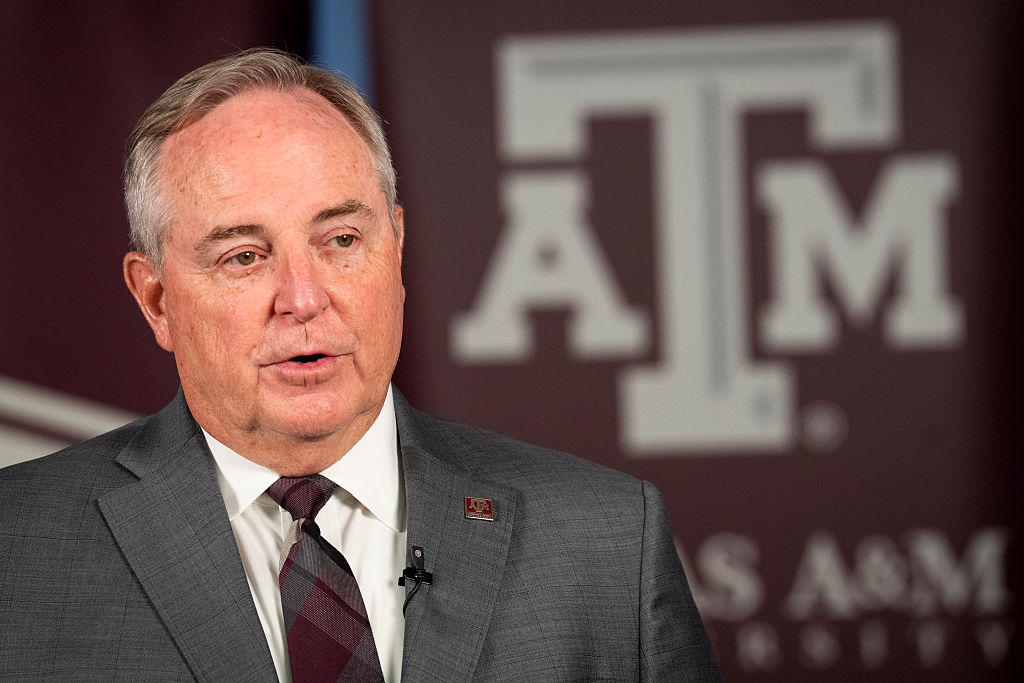
In a turn of events highlighting the ongoing tension over free expression in education, Texas A&M University President Mark Welsh has resigned. The decision comes after mounting pressure from state Republicans following his initial hesitation to dismiss a professor teaching gender content in a children’s literature class.
As reported by The Texas Tribune, the controversy erupted when a video surfaced showing former Texas A&M professor Melissa McCoul being challenged by a student. The student claimed that the professor’s teachings, which included the idea of more than two genders, contravened an executive order by former President Donald Trump against diversity, equity, and inclusion (DEI) initiatives and infringed upon her religious beliefs.
The incident has sparked a wider debate, with the video and a recording of Welsh’s refusal to fire McCoul being circulated by state Rep. Brian Harrison, R-Midlothian, on X. Despite eventually dismissing McCoul, Welsh’s actions did not satisfy Harrison or Texas Lt. Gov. Dan Patrick.
Lt. Gov. Dan Patrick commented on X, “His ambivalence on the issue and his dismissal of the student’s concerns by immediately taking the side of the professor is unacceptable. Most parents, students, and Aggie alumni expect Texas A&M to reflect the values of our state and our nation as well as A&M’s rich history. If President Welsh will not or cannot reflect those values, then change needs to happen.”
Supporting the resignation, Texas A&M Chancellor Glenn Hegar stated, “President Welsh is a man of honor who has led Texas A&M with selfless dedication. We are grateful for his service and contributions. At the same time, we agree that now is the right moment to make a change and to position Texas A&M for continued excellence in the years ahead.”
The situation has drawn attention to previous conflicts Welsh faced, including threats from Texas Gov. Greg Abbott earlier in the year to dismiss him after the business school extended an invitation to a conference aimed at recruiting Black, Hispanic, and Indigenous graduate students.
Brian Harrison, in an interview with The Texas Tribune, claimed responsibility for the outcome. “I can guarantee you, if I had done what every one of my critics was trying to get me to do, Welsh would still be the president today, McCoul would still be a professor and the dean, and the department head would still have their administrative duties,” Harrison stated. “Instead, in a week, you’ve seen everything I’ve caused in one week by doing it the way that I firmly believe Texans want.”
This incident is part of a broader struggle concerning free speech in Texas’ higher education institutions. The state legislature has enacted laws prohibiting DEI initiatives at public universities and colleges and created a board to review educational content to prevent the teaching of “improper ideology.” This week alone, a Black student at Texas Tech was expelled and arrested for mocking the death of Charlie Kirk.
Despite the Republican Party’s longstanding claim as champions of free speech, recent actions in Texas and other areas, such as the FCC’s threat to revoke ABC’s broadcast license over comments by Jimmy Kimmel, suggest a different narrative. These moves are perceived by some as attempts to enforce a singular perspective while stifling opposing viewpoints.
SEE ALSO: