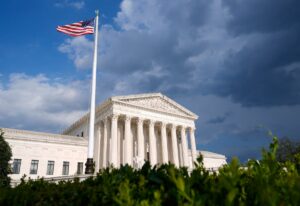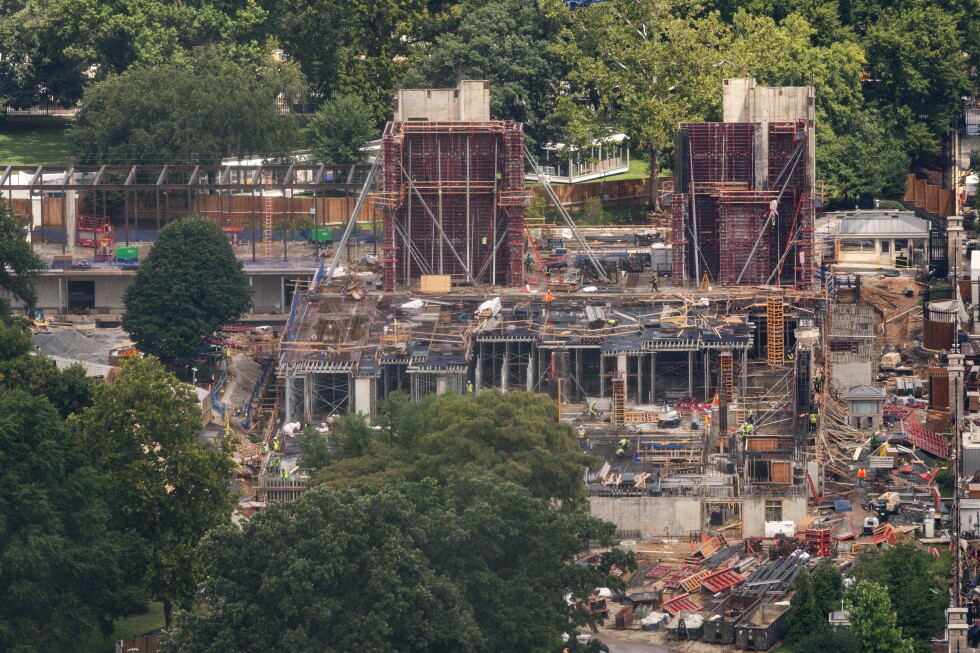
The Trump administration’s plan to construct a new $400 million ballroom at the White House has hit a judicial roadblock. Despite a recent setback in a lower court, President Trump’s team is making an urgent plea to the U.S. Supreme Court to allow work to continue while an appeal is underway.
A panel from the U.S. Court of Appeals for the District of Columbia Circuit recently ruled against the project’s continuation, citing a lack of Congressional approval. The president had initiated the construction of a 90,000-square-foot ballroom, replacing the East Wing, which was demolished under Trump’s directive last fall. However, the lower court has temporarily paused its decision, providing a two-week window for the administration to seek relief from the Supreme Court.
In its appeal, the administration argues that halting the construction would disrupt a vital military complex designed for national security purposes. “This case involves an extraordinary and unlawful injunction that will halt the ongoing construction of the integrated military complex, including a totally secure ballroom space, at the East Wing of the White House, which is vitally required by national security,” the solicitor general stated.
However, the 2-1 ruling from the appeals court favored historic preservationists who challenged the project’s legality. The administration maintains that the president holds sole authority over White House renovations, beyond the reach of Congressional or judicial interference. They also assert that the National Trust for Historic Preservation lacks legal standing to contest the ballroom construction.
During the appeals process, government representatives defended the president’s control over national landmarks. In a provocative hypothetical, Justice Department lawyer Yaakov Roth suggested that even significant landmarks such as the Statue of Liberty or the White House itself could be altered without legal challenge from descendants connected to these sites.
With the deadline looming, the administration has requested a Supreme Court decision before the lower court’s ruling becomes effective on August 21.