Amidst ambitious promises of a massive deportation initiative, President Donald Trump’s immigration policies are encountering legal challenges in U.S. courts. One significant setback occurred when a federal appeals court prevented the administration from employing an 18th-century law to expedite deportations of suspected Venezuelan gang members.
Alien Enemies Act
The Alien Enemies Act of 1798, a rarely used wartime measure, has been invoked by the Trump administration to deport individuals alleged to be part of the Tren de Aragua gang. The administration deported these individuals to El Salvador, claiming they were an invading force. Historically, this act has been applied only during the War of 1812 and the two world wars.
This summer, over 250 deportees were sent back to Venezuela in a diplomatic arrangement, yet legal proceedings persist. The 5th U.S. Circuit Court of Appeals recently supported lower court rulings against using this act for gang-related deportations, a decision immigrant rights advocates, like ACLU’s Lee Gelernt, argue limits the administration’s emergency declarations.
White House spokeswoman Abigail Jackson defended the president’s authority in national security matters, expressing optimism about the case’s outcome.
Birthright Citizenship
Through an executive order, President Trump sought to change the interpretation of the 14th Amendment’s Citizenship Clause, which guarantees citizenship to all born or naturalized in the U.S. The administration’s stance is that children born to certain non-citizen parents should not receive citizenship. This has led to lawsuits from states including Washington and Arizona, citing a historical Supreme Court decision that affirmed citizenship by birthright.
A federal appeals court in San Francisco deemed Trump’s order unconstitutional, aligning with a lower-court ruling that blocked its nationwide enforcement.
Third-Country Deportations
The administration’s policy of deporting individuals to countries like El Salvador and South Sudan, where they have no connections, is also under scrutiny. Legal challenges argue that these actions violate due process rights by sending individuals to nations with poor human rights records.
While a federal judge initially paused such deportations, the Supreme Court later allowed them to proceed. In one case, five men deported to Eswatini have reportedly been detained without charges.
California Immigration Stops
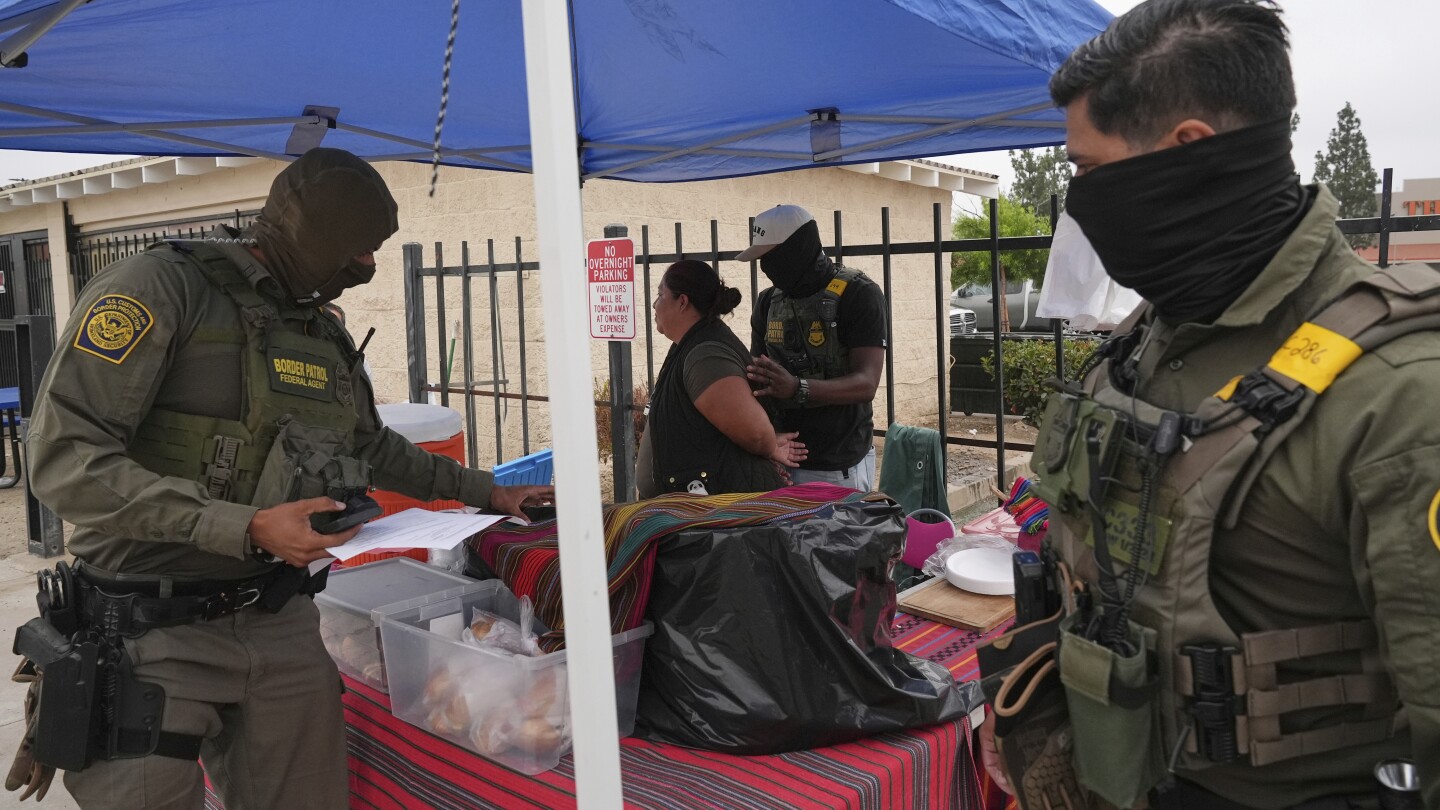
Mass immigration raids in Southern California, allegedly targeting Latino communities, have led to lawsuits claiming racial profiling. The Justice Department has defended these actions as targeting high-priority enforcement areas.
A federal judge ruled these practices unconstitutional in several counties, a decision upheld by an appeals court. The Trump administration has requested the Supreme Court to reverse this ruling.
Temporary Protected Status
Efforts to terminate Temporary Protected Status (TPS) and humanitarian parole, affecting over 1.5 million individuals, have sparked nationwide legal battles. TPS offers temporary legal status to those from countries with unsafe conditions, while humanitarian parole allows entry from countries experiencing turmoil.
The Supreme Court permitted the revocation of these protections during ongoing lawsuits, risking deportations. However, Judge Edward Chen recently reinstated TPS for certain groups, a decision supported by the 9th Circuit Court of Appeals.
Fast-Track Deportations
The Department of Homeland Security’s expansion of expedited removal, a fast-track deportation process, has faced legal challenges for potentially infringing on due process rights. Previously limited to specific conditions, its broader application has been temporarily blocked by legal rulings.
Judge Jia Cobb highlighted the need for individuals to have the opportunity to present their cases within a fair system.