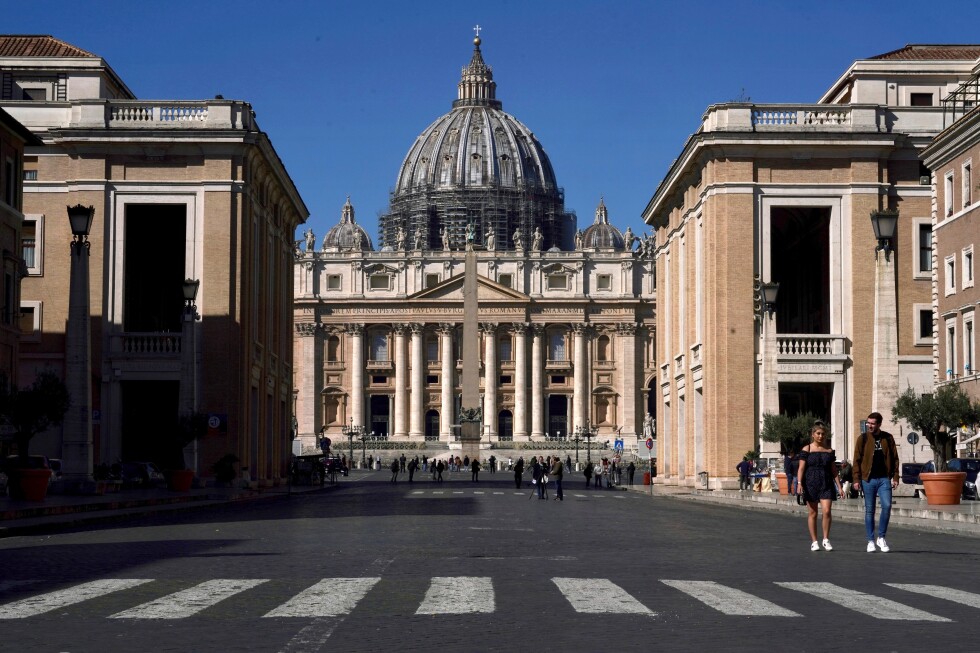
ROME (AP) — A critical moment has emerged in the Vatican’s significant financial trial as prosecutors chose not to comply with an appeals court directive that required sharing all evidence with the defense. This decision may lead to further complications in a case already fraught with controversy.
Prosecutors stated in a letter spanning three pages that they would permit the appeals court judges to review the evidence. However, they refrained from making the documents available to the defense, labeling them as “irrelevant” and potentially harmful to the Vatican’s interests. The next court date is set for June 22, leaving the court’s response to this development uncertain.
A Comprehensive Investigation
This legal battle revolves around the Vatican Secretariat of State’s 350-million-euro investment in a London real estate venture. The trial, which stretched over two years, concluded in December 2023 with a cardinal and eight others found guilty on various financial charges. However, the prosecution’s main argument of an overarching conspiracy to defraud the Holy See was dismissed.
Defense attorneys have consistently maintained that withheld or redacted evidence hindered their clients’ right to a fair trial. They highlighted the absence of complete interrogations from a crucial prosecution witness and the contents of his confiscated electronic devices.
The prosecution justified the redactions as necessary to safeguard ongoing investigations, ignoring an initial court order from October 6, 2021, to provide the documentation.
Mandate to Release Evidence
Defense lawyer Luigi Panella, representing money manager Enrico Crasso, has argued since the trial’s inception in July 2021 that the lack of evidence disclosure rendered the indictment void. On March 17, the appeals court sided with the defense, ordering prosecutors to hand over “all the acts and documents of the investigation in their integral version” by April 30.
In a recent response, prosecutors reiterated their stance, deeming the materials “irrelevant” and potentially harmful to public interests. They offered the judges access to the information via USB drive for consultation rather than providing it to the defense.
Calls for a Retrial
The appeals court’s decision to declare a partial mistrial was based on the prosecution’s failure to disclose all evidence, leading to a retrial order. Defense lawyers have interpreted the prosecutors’ recent actions as contempt of court.
“In what country in the world can it be that the acts (of an investigation) are shown to the judge but not to the defense?” questioned Panella during a phone interview. “What concept of ‘fair trial’ can this type of statement represent?”
Defense Demands Case Dismissal
Attorneys Cataldo Intrieri and Massimo Bassi, representing former Vatican official Fabrizio Tirabassi, criticized the prosecutors’ response as unprecedented and called for the trial’s dismissal.
Lawyers Fabio Viglione and Maria Concetta Marzo, speaking for Cardinal Angelo Becciu, accused the prosecution of failing to comply with the court’s order, stating, “This is precisely the selective discretion that the court has ruled out: the prosecution cannot unilaterally decide which documents the defense has the right to access.” They emphasized the necessity of full access to documents for a fair trial.
A Separate Legal Setback for the Vatican
In a related development, Swiss prosecutors have closed an investigation launched in 2020 following allegations by the Vatican Secretariat of State against Crasso for embezzlement, fraud, and disloyal administration. These charges were similar to those leveled against Crasso in the Vatican tribunal.
Crasso, who managed assets for the Secretariat while at Credit Suisse Italia and Credit Suisse in Switzerland, later founded his own firm, taking over Vatican accounts.
Swiss federal prosecutor Annina Scherrer, in a ruling dated April 23, highlighted the Vatican tribunal’s decision to acquit Crasso and his firm, effectively ending the Swiss case. Yet, she expressed surprise at the Vatican’s refusal to allow questioning of key witnesses, citing this as evidence of the Secretariat of State’s undue “influence” over the Vatican’s judicial system, which is meant to operate independently.
___
Associated Press religion coverage receives support through the AP’s collaboration with The Conversation US, with funding from Lilly Endowment Inc. The AP is solely responsible for this content.