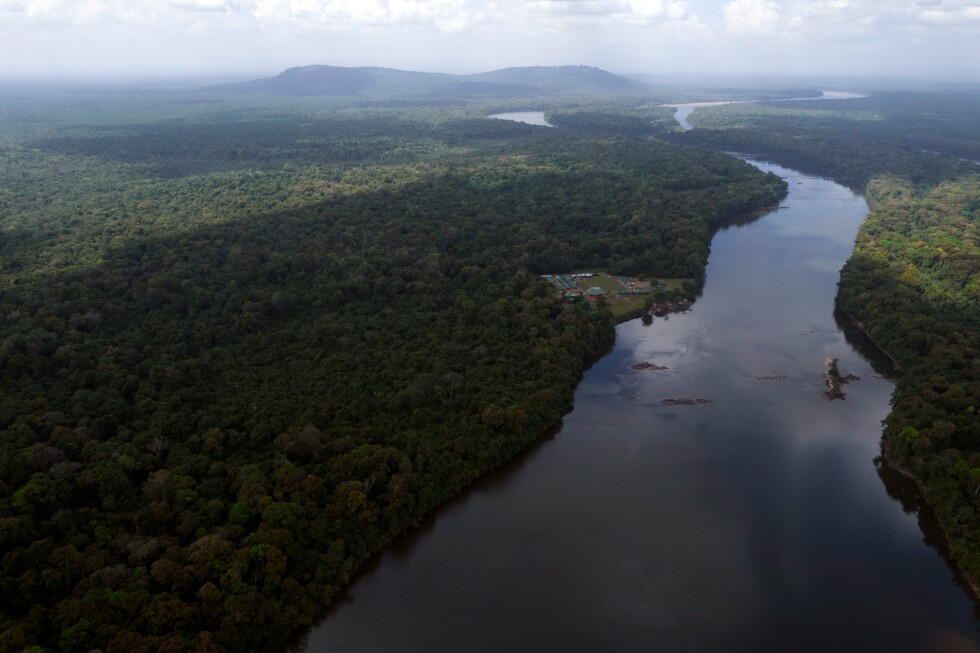
In a complex territorial dispute dating back to colonial times, Venezuela has renewed its claim over a mineral-rich region of Guyana, asserting that the territory was unjustly acquired in the 19th century. The ongoing hearings at the International Court of Justice highlight tensions over the Essequibo region, an area abundant in natural resources and near significant offshore oil reserves.
The controversy stems from an 1899 arbitration involving Britain, Russia, and the United States, which delineated the border along the Essequibo River, favoring Guyana. Venezuela, represented by the U.S. at the time due to severed ties with Britain, claims this decision was a result of collusion designed to deprive it of its rightful territory.
Venezuela has historically considered Essequibo part of its domain, tracing back to the Spanish colonial era. The nation posits that a 1966 Geneva agreement was intended to address and rectify the perceived injustices of the earlier arbitration.
“Guyana presents itself as the true, legitimate heir to British and Dutch territories, but the reality is that it is the beneficiary of colonial dispossession, formalized through fraudulent arbitration. The Geneva Agreement seeks to correct this century-old injustice,” stated Samuel Reinaldo Moncada Acosta, representing Venezuela at the court.
Venezuela disputes the court’s authority, which it claims was improperly asserted in a 2020 ruling, and argues that the 1966 agreement outlines a path for negotiated settlement rather than judicial intervention.
Conversely, Guyana’s Foreign Minister High Hilton Todd conveyed to the international judges that the territorial conflict has significantly burdened the nation’s sovereignty, with a substantial portion of its land at risk. He emphasized that the ongoing dispute has overshadowed Guyana’s development from its inception as a sovereign state.
The International Court of Justice, located in The Hague, is anticipated to take several months to deliver a final, binding decision on the matter, which affects both countries’ interests in the resource-rich region.