In a decades-long territorial dispute over a resource-rich region, Venezuela’s acting President Delcy Rodríguez has arrived in the Netherlands to present her country’s case at the United Nations’ highest judicial body. The International Court of Justice (ICJ) in The Hague is set to hear arguments from Venezuela and its South American neighbor, Guyana, over the control of the Essequibo region.
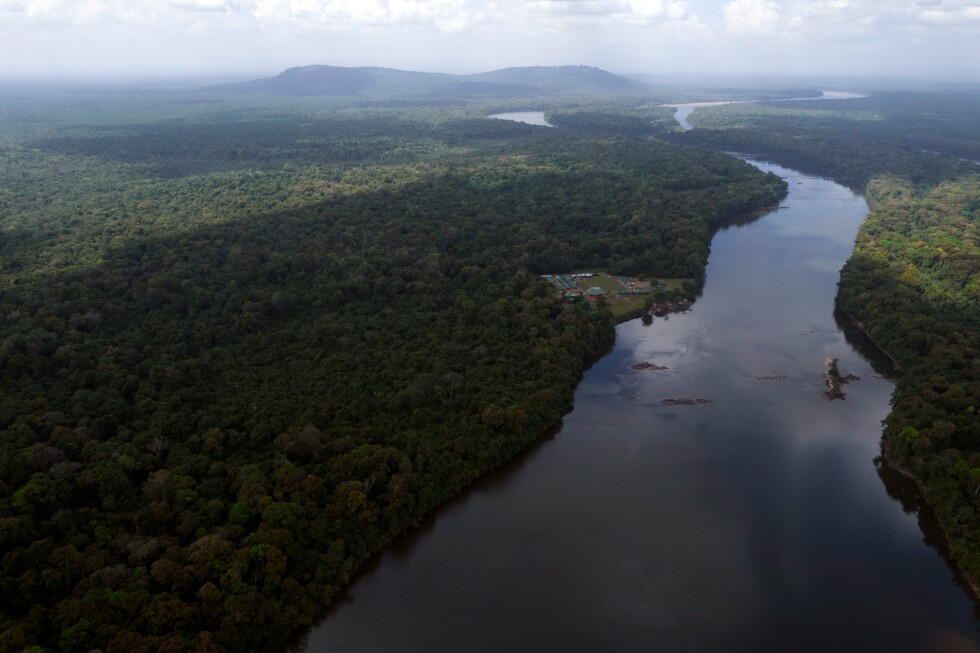
The contested area spans nearly 62,000 square miles and is rich in various natural resources, including gold, diamonds, timber, and significant offshore oil deposits. Both nations claim ownership of this territory, which has been a point of contention since the colonial era.
Historically, Venezuela has considered the Essequibo as part of its territory dating back to the Spanish colonial period. However, an 1899 arbitration decision involving Britain, Russia, and the United States drew the border in favor of Guyana, aligning it with the Essequibo River.
Venezuela contends that a 1966 agreement made in Geneva effectively nullified this 19th-century arbitration ruling. Rodríguez’s appearance in the final court hearing on Monday marks a significant moment in this ongoing dispute, though the ICJ’s final, binding decision is expected to take several months.
Upon arrival at Amsterdam’s Schiphol Airport, Rodríguez, who assumed her role following the U.S. military’s removal of Nicolás Maduro in January, stated that Venezuela has “demonstrated at every historical stage what our territory has meant since we were born as a Republic.”
Guyana initiated the case at the ICJ in 2018, seeking confirmation that the 1899 arbitration, rather than the 1966 agreement, rightfully determines the boundary lines. Venezuela has cautioned that its involvement in the hearings should not be interpreted as an acceptance of the ICJ’s jurisdiction.
Guyanese Foreign Minister Hugh Hilton Todd, addressing the judges at the start of the hearings, asserted that the territorial dispute “has been a blight on our existence as a sovereign state from the beginning,” emphasizing that 70% of Guyana’s land is implicated in this case.