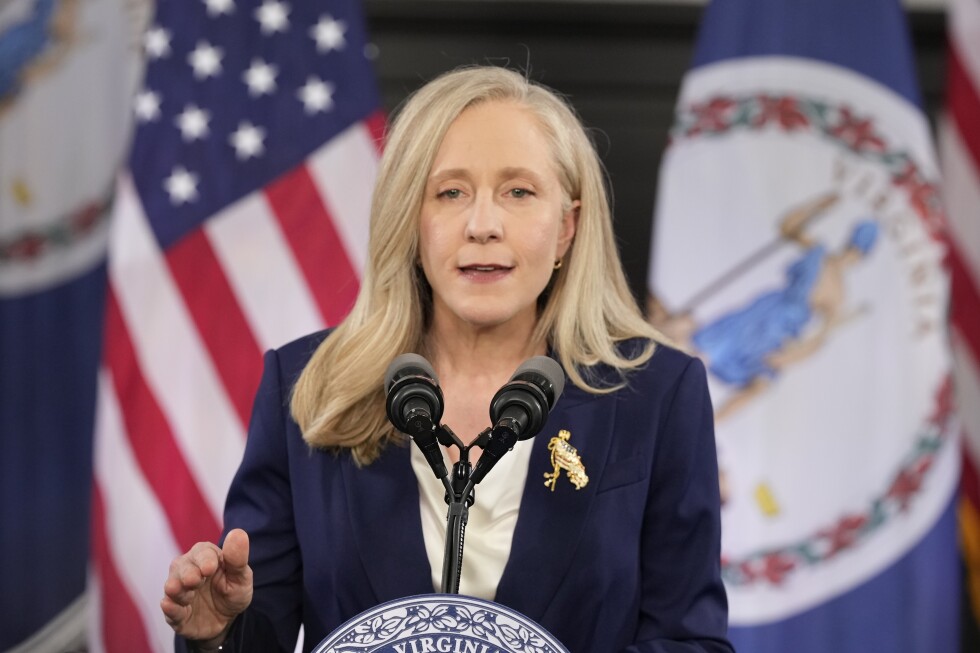
In a significant legislative shift, Virginia Governor Abigail Spanberger has enacted a new law prohibiting the sale and production of certain semi-automatic firearms, igniting legal challenges from gun-rights organizations. This move represents a dramatic policy change from the previous administration and aligns Virginia with states like California, Illinois, and New York, which have similar restrictions under Democratic leadership.
Virginia Joins States Targeting Semi-Automatic Weapons
Effective July 1, the Virginia legislation makes it illegal to purchase, sell, transfer, import, or manufacture “assault firearms,” now classified as certain semi-automatic rifles or pistols with magazine capacities exceeding 15 rounds, among other characteristics. Violating this law could result in up to a year of imprisonment and a $2,500 fine. However, the law does not penalize individuals for merely possessing such firearms.
Virginia becomes the twelfth state, along with Washington, D.C., to impose such restrictions, although the specifics vary. For instance, Hawaii restricts certain semi-automatic pistols but not rifles.
Gun-Rights Advocacy Groups React
Shortly after the bill’s signing, the National Rifle Association and other groups filed lawsuits in federal and state courts, arguing that the law infringes on the right to bear arms. Adam Kraut, executive director of the Second Amendment Foundation, stated, “The firearms and magazines banned in this law aren’t bizarre and unusual outliers; they’re among the most commonly owned guns and magazines in the country.” The U.S. Department of Justice has also pledged legal action to prevent enforcement of the legislation.
Judicial Precedents on Semi-Automatic Weapon Bans
Court decisions thus far have generally supported restrictions on semi-automatic weapons. The 4th Circuit Court of Appeals, covering Virginia and nearby states, has upheld Maryland’s ban on similar firearms, labeling them as “military-style weapons” not meant for self-defense. The U.S. Supreme Court opted not to review a challenge to Maryland’s law, though some justices have expressed concerns about the constitutionality of such bans.
Shift in Virginia’s Political Landscape
Spanberger’s administration marks a departure from former Republican Governor Glenn Youngkin, who vetoed comparable bills. Her background as a former CIA officer and volunteer with Moms Demand Action, an advocacy group formed after the Sandy Hook shooting, underscores her commitment to gun control. John Feinblatt, president of Everytown for Gun Safety, commented, “The fact that a former Moms Demand Action volunteer just signed an assault weapons ban in the home state of the NRA speaks volumes about how dramatically the political calculus around gun safety has shifted.”
Contrasting Approaches in Republican-Led States
While Virginia tightens gun laws, several Republican states are moving in the opposite direction. On the same day as the Virginia legislation, Missouri’s legislature approved a program allowing trained volunteers to carry firearms in schools. Additionally, Virginia’s recent increase in the handgun purchase age contrasts with West Virginia’s law lowering the age for concealed carry without a permit. In another divergence, Virginia is opening avenues for lawsuits against gun manufacturers, whereas Utah recently moved to limit such legal actions.