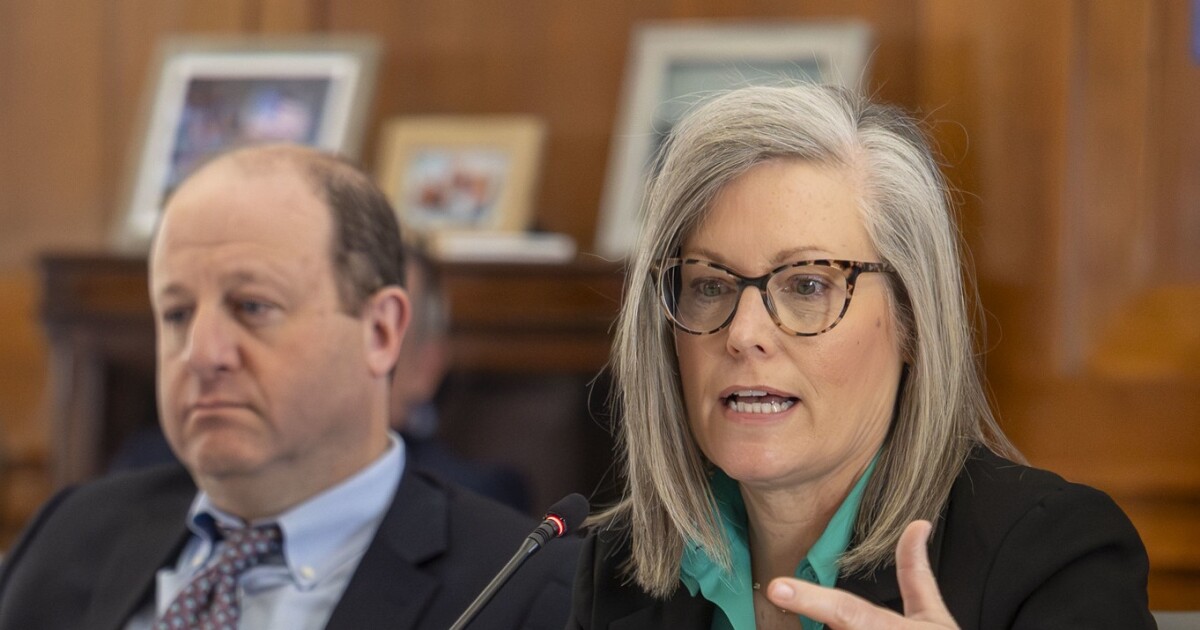
The ongoing conflict over water rights from the Colorado River brought together Arizona Gov. Katie Hobbs and six other Western state leaders in a crucial meeting on Friday. Despite the absence of a final agreement, signs of progress emerged, hinting at a potential resolution to the longstanding impasse.
Governor Hobbs noted a shift in attitude from upstream states, expressing optimism about the discussions. “I was encouraged to hear Upper Basin governors express a willingness to turn water conservation programs into firm commitments of water savings,” she shared on social media after the meeting.
Among the participants was Colorado Gov. Jared Polis, who reiterated his state’s commitment to protecting the river while ensuring Colorado’s water needs are met. “We have offered sacrifices to ensure the long-term viability of the Colorado River and we remain committed to working collaboratively to find solutions that protect water for our state, while supporting the vitality of the Colorado River and everyone who depends on it,” he said in a statement.
Arizona’s reliance on the Colorado River is substantial, with about 40% of its water sourced from this vital river, as reported by the Arizona Department of Water Resources. The state’s efforts to negotiate water cuts have been met with resistance from Upper Basin states such as Colorado, New Mexico, Utah, and Wyoming.
Doug MacEachern from the Arizona Department of Water Resources highlighted Arizona’s proposal to cut 1.5 million acre-feet of water usage. However, Upper Basin states have yet to agree to mandatory reductions. “They’re not interested in any kind of mandatory cuts,” MacEachern noted. “That’s pretty radical. It’s not exactly what one would call a negotiating posture, but that’s where we’re at.”
The Colorado River is a crucial resource, supplying water to nearly 40 million people across seven states. Originally, a 1922 compact allocated 7.5 million acre-feet of water annually to each of the basins. Yet, in recent years, the river has only provided 12.5 million acre-feet annually, less than half of the originally promised amount.
As demand continues to rise amid dwindling reservoir levels, the seven states reached a temporary agreement in 2023, set to expire in 2026. Efforts to establish a long-term plan have been ongoing for two years, with a federal deadline looming in February.
In a bid to break the deadlock, Interior Secretary Doug Burgum convened the governors for Friday’s meeting. “This is one of the toughest challenges facing the West, but the Department remains hopeful that, by working together, the seven basin governors can help deliver a durable path forward,” Burgum stated, emphasizing the importance of collaboration.
Notably absent was California Gov. Gavin Newsom, who was represented by the state’s natural resources secretary. Burgum’s intervention was praised by Hobbs, who remarked, “That level of leadership is necessary, overdue and essential if we are going to break the logjam and reach a durable agreement.”
With an ongoing drought affecting the region for over two decades, Lake Powell and Lake Mead have experienced significant declines in water levels. The Upper Basin states attribute these shortages to climate factors, whereas the downstream states—California, Nevada, and Arizona—point to overuse as the primary issue.
Governor Hobbs has emphasized Arizona’s proactive approach, stating, “Arizona has been and will continue to be at the table offering solutions to the long-term protection of the river so long as every state recognizes our shared responsibility.”
Highlighting Arizona’s economic contributions, Hobbs underscored the state’s importance in sectors like artificial intelligence, semiconductors, and agriculture to advocate for its water share. These industries align with federal priorities, potentially strengthening Arizona’s position in negotiations.
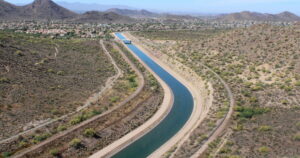
Much of Arizona’s water supply comes through the Central Arizona Project, an extensive system of aqueducts that delivers water from Lake Havasu, downstream of Lake Mead.
Andrea Gerlak, a University of Arizona professor, commented on the situation’s complexity. While recent agreements have offered temporary relief, a sustainable solution remains elusive. “There have been a lot of good incremental steps over the past 10 years,” Gerlak noted, but acknowledged, “No one, me included, would have predicted that the states would not have been able to move forward with a post-2026 agreement.”
This article first appeared on Cronkite News and is republished here under a Creative Commons Attribution-NoDerivatives 4.0 International License.