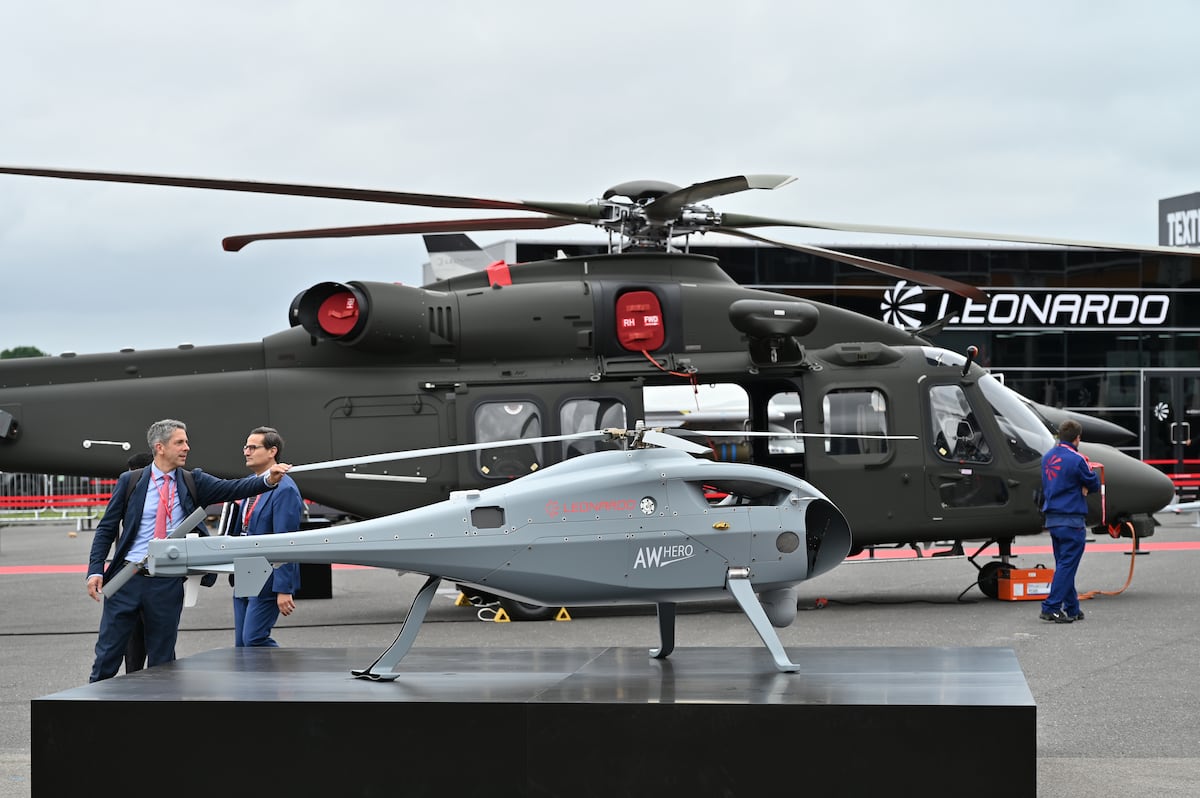
In a significant boost to the UK’s defense and manufacturing sectors, a £1 billion contract has been awarded to Leonardo for the production of 23 AW149 helicopters at its Yeovil facility. This decision, announced by the British Ministry of Defense, concludes a period of uncertainty surrounding the program.
The production deal is set to preserve 3,300 jobs at Yeovil, the nation’s final helicopter manufacturing hub. The Ministry of Defense highlighted the broader economic impact, stating, “Thousands of skilled British jobs have been secured with a major helicopter deal that will boost the U.K. Armed Forces’ battlefield kit and makes Britain Leonardo’s global centre for military helicopter production and exports.”
Prior to the contract finalization, Leonardo had warned of potential site closure if the project was shelved due to funding issues. However, with Yeovil now tasked to fulfill the UK order, the ministry anticipates subsequent export orders.
The Ministry of Defense elaborated, “There are around 20 countries with requirements for new medium-lift helicopters (NMH). Together with Leonardo’s other helicopters, international orders for NMH could generate over £15 billion in exports over the next 10 years.”
The jobs secured at Yeovil include 650 positions directly related to the NMH project, while others are linked to the support of the UK’s Merlin and Wildcat helicopter fleets. Nigel Colman, Managing Director of Helicopters U.K., Leonardo, noted the additional impact on 12,000 supply chain jobs across the UK.
Yeovil’s continued operations have also been buoyed by ongoing work on the unmanned rotary wing platform Proteus at the site. The Ministry of Defense remarked, “The £1 billion deal will also make Yeovil the centre of excellence for military helicopter autonomy, as the Ministry of Defence invests further in Proteus — the UK’s first autonomous uncrewed air system which is built by Leonardo and recently undertook its first flight,” highlighting its capability in missions such as anti-submarine warfare.
The development of autonomous and uncrewed technology aligns with the UK government’s Defence Industrial Strategy and presents opportunities for platforms like the NMH to be optionally-crewed. Defence Secretary John Healey described the contract as, “a major vote of confidence in British industry, British workers, and British innovation.”