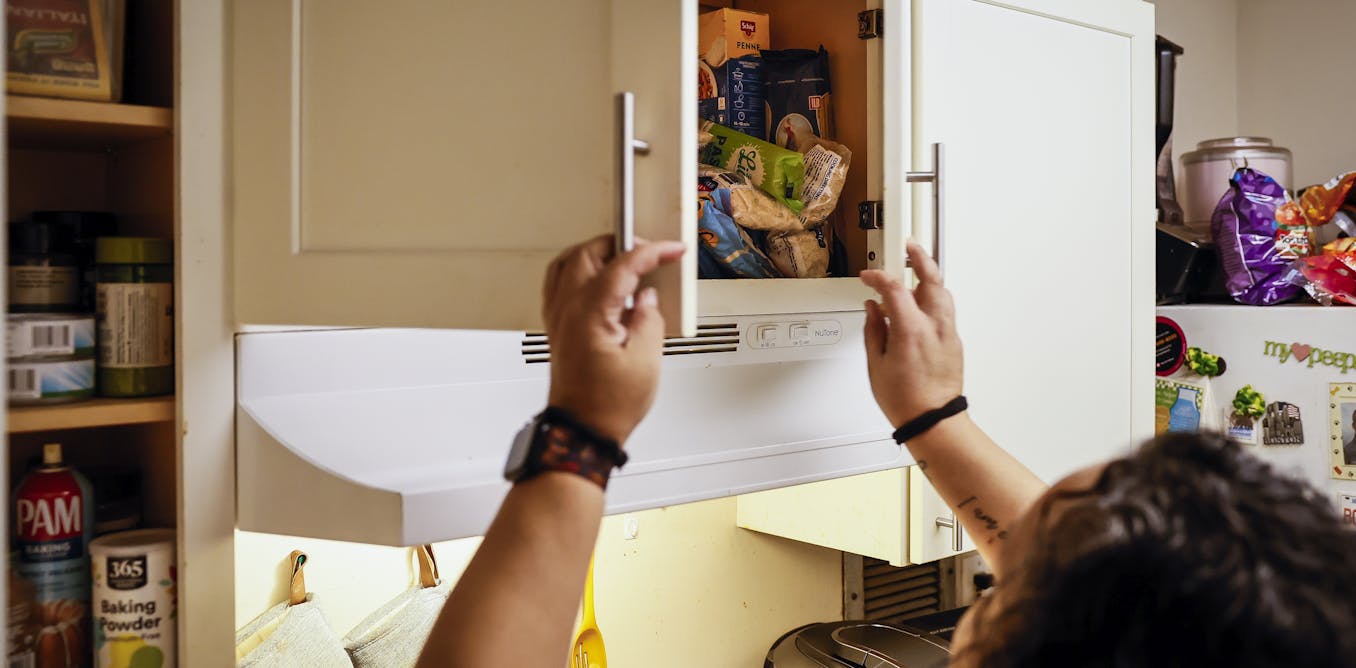
In a world where hard work can change lives, Millie Morales stands as a testament to perseverance. At 58, she reflects on the opportunities available to American citizens, questioning, “Are you willing to put in the work, or are you not?” This question resonates deeply, especially for those navigating the complexities of government assistance.
Morales, whose identity has been altered to maintain her privacy, transitioned from a stay-at-home mom to a college student after her divorce, while raising eight children. Her financial challenges intensified when her ex-husband ceased child support payments, leading to the threat of eviction.
Grateful for the government benefits she received, Morales credits the Supplemental Nutrition Assistance Program (SNAP) for helping her sustain her family. These benefits enabled her to complete her education and secure employment, eventually assisting families in making critical medical decisions.
Exploring Perceptions of Work and Assistance
Morales is among over 100 individuals interviewed for research on public attitudes towards work and government aid, revealing that SNAP often provides essential support during job searches. Most recipients, with notable exceptions due to age discrimination, eventually find employment.
This research underscores that recipients of SNAP and similar programs are generally eager to work, contrary to assumptions that assistance might dampen their work ethic.
Employment Needs and Government Aid
A study involving both SNAP beneficiaries and academic researchers highlighted that many recipients would prefer not to rely on government aid. Their employment is often precarious and low-paying, necessitating benefits to meet basic needs.
In 2025, SNAP benefits average US$188 per month per person, benefiting approximately 42 million low-income Americans.
Notably, 58% of SNAP beneficiaries are under 18 or over 60. Others may have disabilities or care responsibilities, further complicating employment prospects.
Impending SNAP Benefit Reductions
While Morales accessed needed support, others face application denials, with looming reductions in safety net provisions. A significant tax and budget bill passed in July 2025 may threaten benefits for many, including imposing a three-month limit on benefits.
Starting in fiscal year 2028, the federal government will reduce its financial contribution, potentially forcing states to cut or eliminate benefits, affecting millions.
Agriculture Secretary Brooke Rollins states the new rules will emphasize “the importance of work and responsibility.”
Work Requirements and SNAP Benefits
Work requirements for SNAP have existed since the 1970s, with time limits established for “able-bodied adults without dependents” since 1996. These requirements can hinder employment when beneficiaries need to provide employment proof due to misplaced paperwork by caseworkers.
A Study on Caseworker Impact
Research by economists Jason B. Cook and Chloe N. East, revised in 2025, examined the influence of caseworker assignments on SNAP applications. While caseworkers do not decide approvals, their thoroughness affects application outcomes.
The study tracked nearly 200,000 SNAP applicants, comparing employment outcomes based on caseworker diligence. Contrary to assumptions, those who received benefits were more likely to be employed and earning more two to three years later.
For those without previous steady employment, receiving benefits made no difference in future work opportunities, indicating that SNAP support can enhance work prospects.
Morales articulates the critical role of such support: “If I don’t have a decent place to eat and sleep and shower and take care of myself, how am I then supposed to go look for a job, or go to a job, or go to school?”