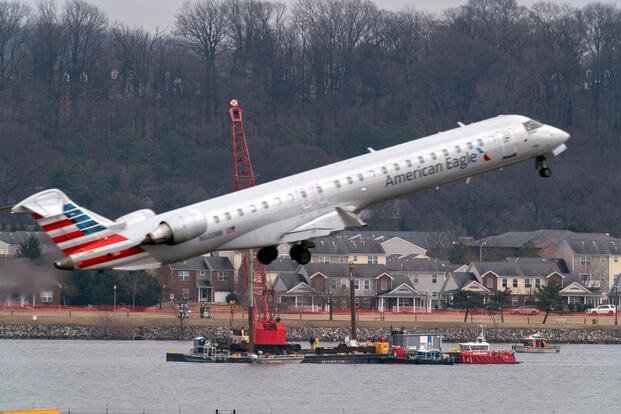
A significant step towards enhancing aviation safety was taken when the House approved an aviation safety bill. Stemming from the tragic midair collision between a jet and an Army helicopter near Washington, D.C., this legislative move, however, faces scrutiny from the victims’ families and some senators who believe more robust measures are necessary.
The Alert Act, as it is named, has garnered backing from prominent industry groups but awaits a Senate compromise. The National Transportation Safety Board (NTSB) has updated its stance, indicating that the revised bill now aligns with their recommendation for mandatory locator systems around busy airports to enhance aircraft visibility.
These systems have been advocated by the NTSB since 2008, and Chairwoman Jennifer Homendy emphasized their potential to have averted the deadly crash between an American Airlines jet and an Army Black Hawk helicopter over the Potomac River.
The bill progressed through two key House committees without opposition last month. Although it passed in the House, families of the 67 victims insist on strict timelines for reforms and express concerns that the bill permits military flights to omit location broadcasts during non-secretive missions.
“January 29, 2025 made clear what is at stake. The 67 lives lost that day should be honored with an improved system that prevents this from happening again,” the main families group stated. They urged for expedited protections for the flying public.
Representatives Sam Graves (R-MO) and Rick Larsen (D-WA) sponsored the bill, which cleared the House with a 396-10 vote. The Senate’s ROTOR Act, another safety legislation, narrowly missed passing in the House. Senators Ted Cruz (R-TX) and Maria Cantwell (D-WA) have both noted the Alert Act’s need for further refinement.
Senator Cruz cautioned, “A warning to my colleagues in the House: the Alert Act would not deliver the safety measures necessary to prevent another midair collision, as it lacks the critical improvements our aviation system needs.”
The NTSB’s Homendy previously criticized the initial draft as insufficient, but acknowledged that the updated version addresses identified deficiencies and mandates action from key agencies including the FAA and the military.
Democratic Rep. Suhas Subramanyam, representing a district affected by the crash, stressed the importance of addressing all 50 NTSB recommendations, noting, “It wasn’t just one issue that led to this crash. It was a combination of systemic problems that made our national airspace unsafe.”
During a January hearing, the NTSB expressed alarm over longstanding unheeded warnings about helicopter traffic and related hazards. The crash, resulting in the loss of all aboard the jet from Wichita, Kansas, was the deadliest on U.S. soil since 2001 and impacted the figure skating community heavily.
Issues with helicopter route design and air traffic control practices at Reagan National Airport contributed to the tragedy. The bill mandates installation of Automatic Dependent Surveillance-Broadcast In systems to alert pilots about other aircraft, aimed at preventing similar collisions.
While the House bill includes requirements for future collision avoidance systems, the Air Line Pilots Association raised concerns about potential delays due to ongoing system certifications.
Tim and Sheri Lilley, parents of the crash’s copilot, emphasized the need for legislation that addresses current risks and equips pilots with necessary technology. The NTSB identified systemic weaknesses and oversight failures as key factors, while noting that active ADS-B In systems could have prevented the crash.
Families affected by the tragedy advocate for stringent oversight on military exemptions from locator system use, ensuring transparency and safety in all flight operations.
___
This story has been updated to correct the last name of the Democratic congressman. It is Larsen, not Larens.
© Copyright 2026 Associated Press. All rights reserved. This material may not be published, broadcast, rewritten or redistributed.