The Future of Autonomous Aviation: U.S. Army’s Chinook Lands Without a Pilot
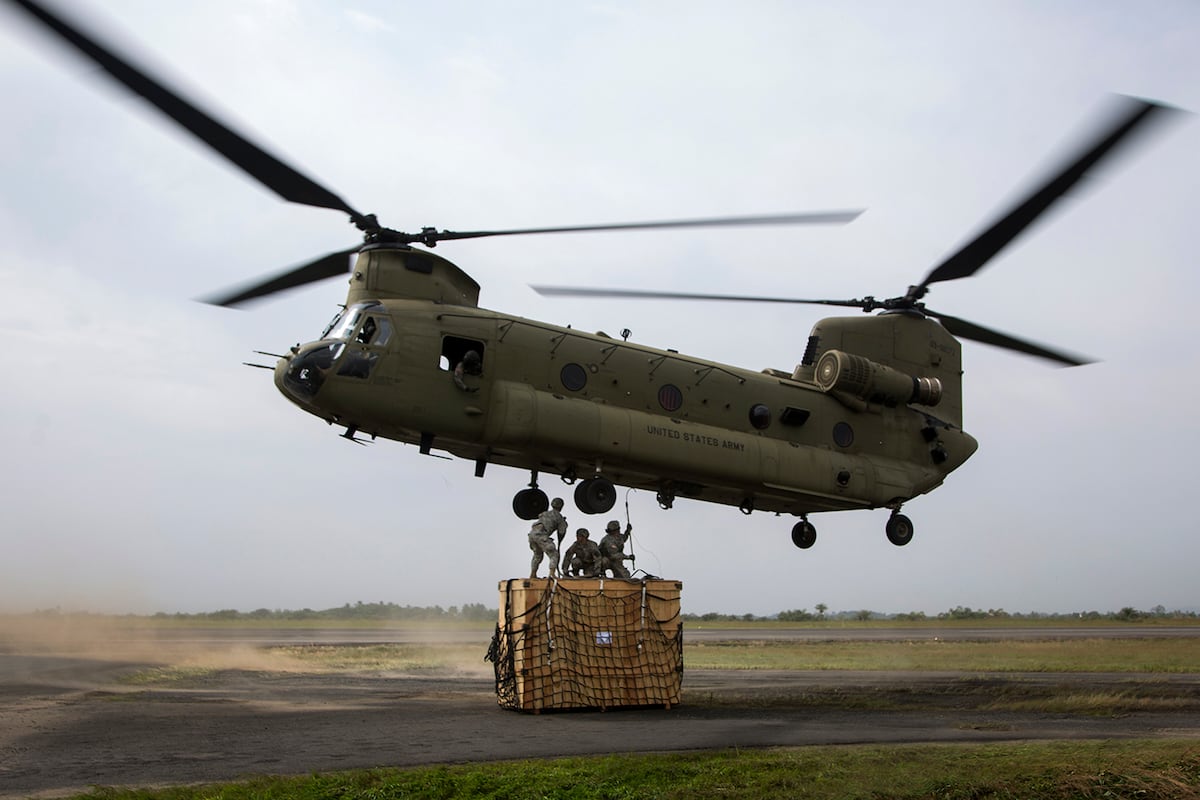
In a groundbreaking demonstration, the U.S. Army has successfully landed a CH-47 Chinook helicopter without a pilot at the controls, as announced by Boeing. This accomplishment marks a significant step forward in the Army’s initiative to incorporate autonomous technology into its aviation fleet.
This test is part of a broader effort to enhance autonomy within the Army’s aviation capabilities, following the recent introduction of a pilot-optional Black Hawk helicopter. This Black Hawk can operate with fewer crew members, and in some scenarios, fly without a pilot onboard.
During the Chinook’s test flight, Boeing’s Approach-to-X, or A2X, software played a crucial role. According to a statement from the company, the software autonomously directed the aircraft through its final approach and landing. This software is particularly vital as the Chinook is frequently used for transporting heavy loads, including troops and supplies, and has been a staple in the Army’s fleet since the 1960s. It was also notably utilized in the mission that led to the capture of Venezuelan President Nicolás Maduro.
The A2X software allows pilots to set critical parameters such as landing zone, final altitude, approach angle, and initial speed. As the helicopter approaches its destination, pilots can make real-time adjustments to contend with environmental changes, Boeing noted.
Boeing has successfully completed over 150 autonomous approaches with the A2X, demonstrating precision with an average final position error of less than five feet. This innovation aims to alleviate pilot workload during crucial phases like approach and landing, enabling crew members to concentrate on other mission aspects.
“We built the interface and control laws around how pilots would naturally fly an approach,” stated Deanna DiBernardi, Boeing’s H-47 program human factors engineering lead. “Our goal is to reduce pilot workload so crews can maintain more eyes-out awareness in a tactical situation.”
Looking ahead, Boeing plans to refine the software before delivering it to the Army, although no specific timeline has been provided for this release.
This Chinook test complements the Army’s acquisition of the pilot-optional H-60Mx Black Hawk, which features advanced “fly-by-wire” controls and autonomy systems that similarly allow for pilot input.
These developments are part of the Army’s broader strategy, which includes the creation of the MV-75 “Cheyenne II” — a tilt-rotor aircraft designed for enhanced speed and range, particularly for operations in the Pacific theater.