The strategic Strait of Hormuz has become a focal point of tension, with blockades from both the United States and Iran creating a precarious situation. On Saturday, the United States continued its blockade of Iranian ports while Iran retaliated by firing upon a ship attempting to navigate the critical waterway.
The escalating situation has raised concerns of an intensifying energy crisis and potential conflict, even as diplomatic efforts suggest that a resolution might be possible. Iran’s military asserts that they have resumed control over the Strait of Hormuz, enforcing restrictions as long as the U.S. maintains its blockade.
The United Kingdom Maritime Trade Operations, part of the British military, confirmed that Iranian gunboats fired on a tanker in the strait. The tanker and its crew were reported safe, though the vessel’s identity remains undisclosed. TankerTrackers.com noted that ships, including an Indian-flagged supertanker, were forced to retreat after being targeted by Iran.
Iran had lifted restrictions briefly following a U.S. blockade but reinstated them as tensions rose. Ebrahim Azizi, head of Iran’s National Security Commission, emphasized that transiting ships would need Iranian authorization and must pay tolls.
This development comes after Iran’s Foreign Minister Abbas Araghchi announced the strait’s reopening, coinciding with a 10-day truce between Israel and Hezbollah in Lebanon. The truce was a key Iranian demand, following accusations against Israel of violating a previous ceasefire.
Initially, U.S. President Donald Trump seemed supportive of reopening the strait but later affirmed that the blockade would persist until a broader agreement is achieved, including discussions on Iran’s nuclear program. The strategic strait, crucial for global oil transit, remains at the heart of potential diplomatic and military conflict.
As the U.S. and Iran navigate these tensions, the strait’s control remains a significant point of leverage for Iran. The U.S. has reinforced its blockade in efforts to encourage Iran to agree to a Pakistan-brokered ceasefire to end nearly seven weeks of conflict involving Israel, the U.S., and Iran.
Progress Toward a Diplomatic Resolution
Despite the heightened tensions, Pakistan reports progress in negotiations between the U.S. and Iran. The recent ceasefire in Lebanon could remove a significant hurdle to reaching an agreement. Pakistan’s Foreign Minister, Ishaq Dar, expressed optimism at a diplomatic forum in Turkey, highlighting recent advancements in talks.
High-level meetings have occurred, including Pakistan’s army chief visiting Tehran and Prime Minister Shehbaz Sharif’s discussions with leaders in Turkey and Qatar. Pakistan is poised to host further dialogue between the United States and Iran.
Uncertainty Surrounding Lebanon Ceasefire
While diplomatic efforts continue, the situation in Lebanon remains fragile. The truce with Hezbollah, unilaterally announced, leaves questions about its sustainability, especially with Israeli forces still present in certain areas.
President Trump has cautioned Israel against further offensives, stating that “enough is enough,” though the U.S. allows for defensive actions. Israeli Prime Minister Benjamin Netanyahu acknowledged the ceasefire at Trump’s request but emphasized that Israel’s campaign against Hezbollah is not complete.
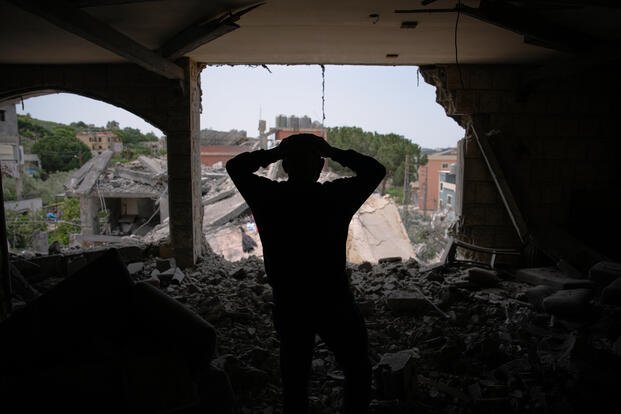
Meanwhile, in Beirut, displaced individuals cautiously began returning to southern Lebanon and its suburbs. Nevertheless, sporadic shelling has been reported despite the ceasefire, mirroring the conflict’s severe human toll: over 3,000 fatalities in Iran, 2,290 in Lebanon, 23 in Israel, and casualties among U.S. forces.