Controversy Clouds Katseye’s Rise to Stardom
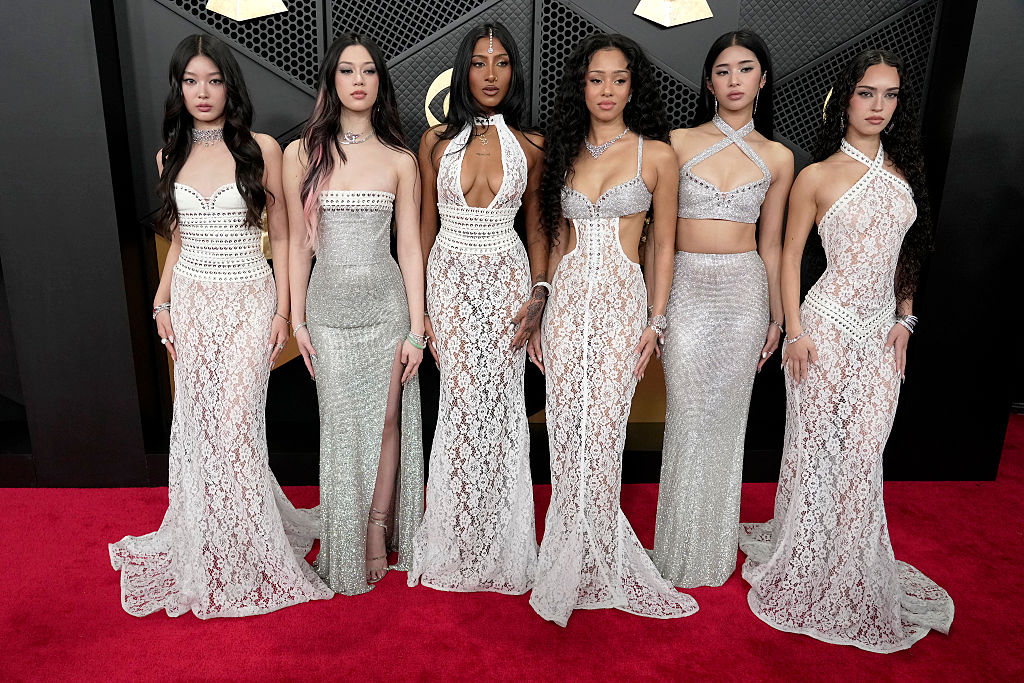
Amidst a year that promised to be transformative for Katseye, the celebrated girl group finds itself embroiled in controversy. Fresh from their groundbreaking 2026 Grammys performance, where they became the first girl group in over twenty years to grace the stage, Katseye seemed poised for pop culture dominance. Known for hit singles such as “Touch,” “Gnarly,” and “Gabriela,” and with lucrative partnerships with GAP, Laneige, and Matrix, the group seemed unstoppable.
However, instead of riding a wave of success, Katseye is now facing a situation that echoes familiar challenges in the industry. On February 20, 2026, Hybe x Geffen announced that Manon Bannerman, one of the group’s standout members, would be taking a temporary break due to mental health concerns. The news initially garnered support from fans.
Yet, when Manon addressed her supporters, the narrative shifted. In a succinct statement, she claimed to be “healthy” and mentioned, “things unfold in ways that we don’t fully understand.” This prompted a broader discussion about representation and the treatment of Black women in global girl groups.
Fans began to revisit past instances, pointing out that in music videos, Manon was often less visible or highlighted. Promotional materials sometimes excluded her, and in the group’s 2024 documentary Popstar Academy: Katseye, she was depicted as “lazy,” “selfish,” or the “weakest link,” which many now perceive as racially biased narratives.
This situation extends beyond Katseye, drawing parallels with the experiences of artists like Normani from Fifth Harmony and Leigh-Anne Pinnock from Little Mix, who have spoken about being the only Black members in their groups. Support from musicians such as SZA, Kehlani, Chlöe Bailey, and newcomer Chase Infiniti highlights the issue’s relevance.
For fans, this reflects a recurring theme where Black members are simultaneously hyper-visible and marginalized, often subjected to harsher scrutiny and less consistent praise. They are expected to represent their community while navigating an industry still grappling with embracing Black femininity on a global stage.
The situation worsened with comments from Daniella Avanzini’s father, Rafael Avanzini, suggesting the group could function with five members and needed “girls who can grind.” Although he later apologized, his remarks added to the existing tension about how Manon was treated.
With Hybe x Geffen remaining silent and the group’s other members yet to comment, fans are left speculating. Meanwhile, Manon has kept her message simple, expressing her love for her fans. The uncertainty of her return for Katseye’s upcoming Coachella performance in April only fuels the conversation further.
The central question persists: Why is the sole Black member often the subject of contention? Why are stereotypes of “attitude,” “laziness,” or “not fitting in” easily attributed, and why must fans identify patterns before the industry acknowledges them?
Katseye’s vision of global unity among six diverse women is revealing its cracks. This is no longer just about one group but an industry still learning to treat Black women as integral and protected rather than optional in the narrative.
Kannon Trowell is a journalism major at Howard University. She is interested in entertainment reporting. You can follow her on LinkedIn at www.linkedin.com/in/kannontrowell
SEE ALSO:
Keke Palmer Handled It Gracefully, But Why Did She Have To?
From Chicago To Milan: Why Drill Music Hits Different In Italy