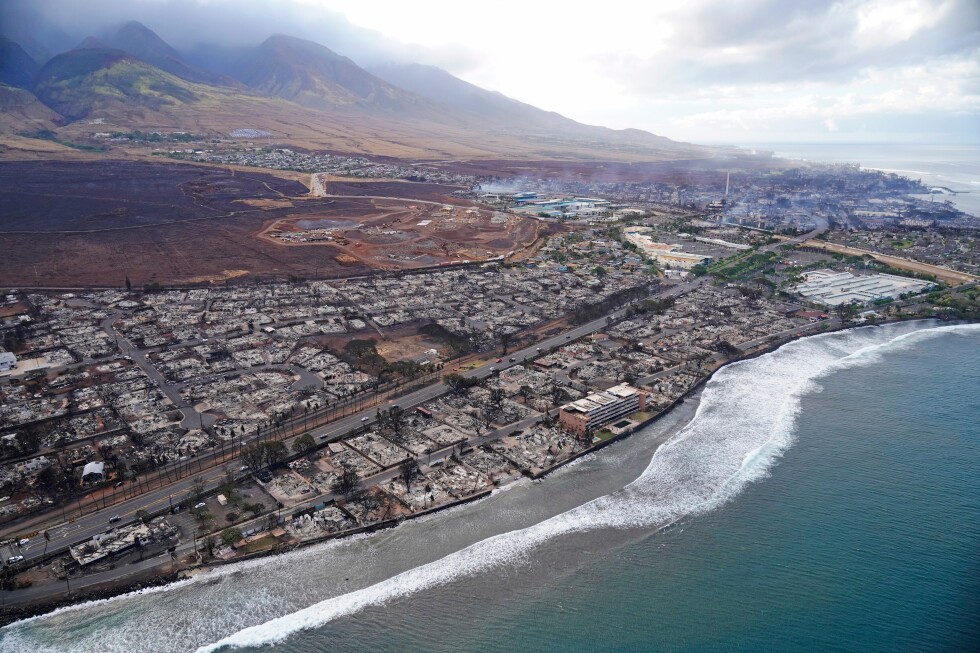
Anticipation is building for many Maui residents who are awaiting their share of a $4.03 billion wildfire settlement. However, Leslie Clark, whose home near Lahaina’s Front Street was lost in the tragic August 2023 fires, remains cautious about relying on the settlement for rebuilding.
“Worrying about something out of her control ‘is not good for your health,'” shared Clark, 62. Despite having property insurance, Clark and others are realizing that the settlement may not fully compensate for their losses.
According to Jake Lowenthal, a Maui lawyer leading the case, settlement payments could begin as soon as June. However, the exact amount each victim will receive is uncertain, as claims are categorized into ten groups based on varying criteria, such as personal injury or home loss.
Legal representatives are striving for a 25% fee from the settlement, pending approval from Judge Peter Cahill of Maui Circuit Court. Cahill has proposed establishing a fund to manage legal costs, which might reduce the attorneys’ cut. The judge has yet to decide on the final framework for these fees.
Payments to victims will be distributed in four installments, as explained by Lowenthal. Furthermore, insurance companies will claim 10% from the settlements of those like Clark who had insurance coverage.
Despite the sizeable settlement, victims may see up to a third of it consumed by legal and insurance fees. Moreover, unless Congress reinstates a lapsed tax exemption, survivors could face up to a 37% federal tax on their settlements.
Sherry Peterson from United Policyholders, an insurance advocacy group, points out that the settlement funds may not suffice for many victims who were underinsured. Approximately 21,750 plaintiffs have filed claims, resulting in 94,816 distinct claims across the ten categories, with displacement being the most common.
Legal Fees Under Scrutiny
Judge Peter Cahill is scrutinizing the legal fees associated with the settlement. He is considering a “common benefit fund” to fairly distribute fees among all lawyers, especially those who contributed significantly to the case.
While plaintiffs’ lawyers are advocating for a 25% fee, Cahill challenges this approach. He has suggested a more modest fee structure to ensure fairness for all parties involved, questioning whether victims are aware of the proposed attorney fees.
Insurers Eyeing Settlement Shares
Both property and medical insurers are preparing to claim parts of the settlement. Medical insurers can place liens on claims, but property insurers face a different situation. Unlike previous cases, such as the PG&E California fires, there is no precedent for property insurers in the Maui settlements.
In a notable deviation, HECO avoided bankruptcy through negotiation, excluding property insurers from direct claims. Insurers have paid $3.03 billion in claims, and they are set to receive $216 million from the settlement, according to the Hawaiʻi Insurance Commission.
Homeowners like Clark, who received $1.3 million from her insurance to rebuild, are frustrated that a portion of the settlement will go to insurers. “It’s a disgrace,” Clark expressed regarding the situation.
Underinsurance Compounds Challenges
Maui County estimates that the fires destroyed over 5,500 housing units, with 28% of owner-occupied homes lacking insurance. Even among insured properties, approximately 40% were underinsured, leaving significant gaps in rebuilding costs.
Peterson highlights that many victims face a shortfall, with typical policies falling $400,000 short of rebuilding costs. The impending 10% cut to settlements for insurers adds to the survivors’ financial burdens.
As victims await their settlement payouts, uncertainties remain regarding the sufficiency of these funds to cover their losses. “People need to see what they’re going to get from the lawsuit before they rebuild,” Peterson emphasized.
___
This story was originally published by Honolulu Civil Beat and distributed through a partnership with The Associated Press.