The Shifting Political Landscape in Michigan Raises Concerns for Republicans
Michigan Republicans had their eyes set on 2026 as the year to regain power in the swing state dominated by Democrats. However, recent events have cast doubts on their prospects.
Factors such as surging gas prices, an unpopular war in Iran, and tariffs impacting the auto industry have contributed to worries about the political climate for Michigan Republicans.
In a recent special election, a Democrat won by almost 20 points in a state Senate district, signaling potential challenges for the GOP. This result indicates a strong message being sent to the Trump administration by Democrats and independent voters.
Economic Concerns and Voter Sentiment
Nationally, a shift in Trump’s approval rating on the economy has been noted, particularly with rising gas prices due to the Iran conflict. Michigan, with gas prices averaging $4.80 per gallon, is feeling the impact acutely.
Michigan voters like Jared Kaufman, expressing frustration over escalating costs and the distant war, are reflecting their sentiments through their voting choices.
Furthermore, tariffs have added to the anxiety in Michigan, affecting industries reliant on cross-border trade and manufacturing. The uncertainty surrounding tariffs has made it challenging for businesses to plan investments and growth.
Challenges at the Top of the GOP Ticket
Internal divisions within the Michigan GOP have also surfaced, particularly regarding the governor’s race. With Governor Gretchen Whitmer leaving office, Republicans viewed this as a prime opportunity for a pickup.
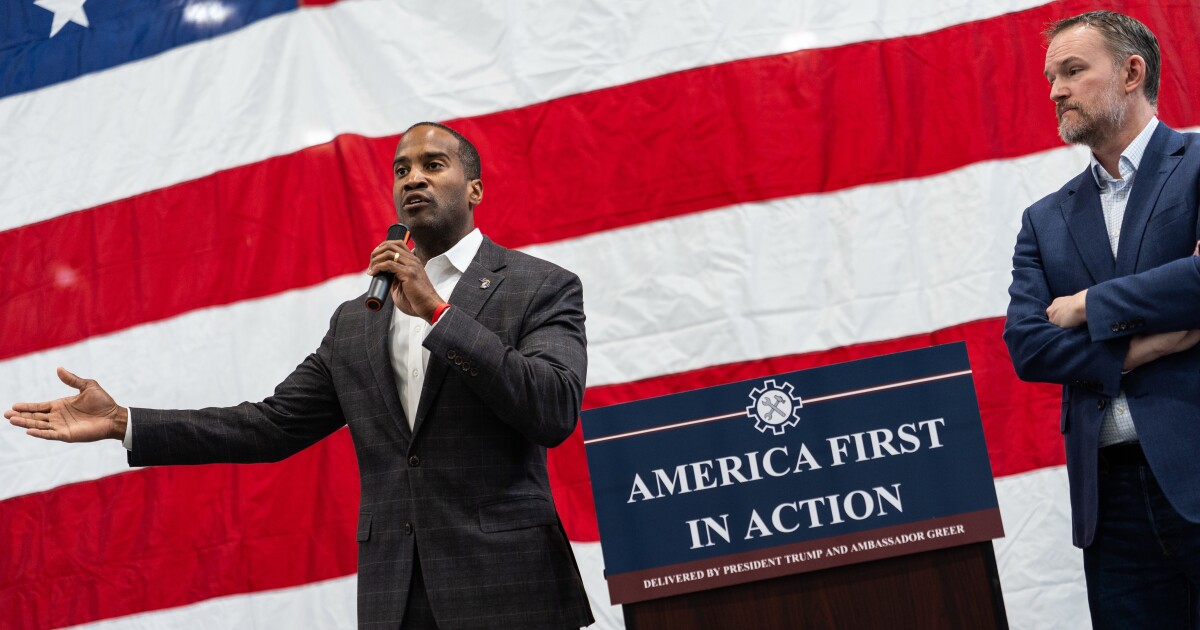
Rep. John James was initially seen as a strong contender, endorsed by Trump in previous races. However, recent criticisms of his campaign have raised concerns within the party, with some members suggesting his nomination could lead to a loss in the general election.
Meanwhile, Democrats are navigating their own challenges, with Secretary of State Jocelyn Benson expected to lead the Democratic field but facing competition from other candidates.
As Michigan gears up for pivotal races in 2026, the shifting political landscape and economic concerns are setting the stage for a closely watched election cycle.
The upcoming 2026 Senate race in Michigan is shaping up to be a fierce battle between Republicans and Democrats vying for control of the Senate seat. With former U.S. Rep. Mike Rogers leading the GOP ticket and facing tough competition from Democratic candidates like Mallory McMorrow and Dr. Abdul El-Sayed, the race is heating up.
Despite losing in 2024 by a narrow margin, Rogers is determined to secure victory this time around. His spokesperson, Alyssa Brouillet, emphasized that Michigan is a prime opportunity for Republican pickup and highlighted Rogers’ commitment to fixing what Democrats have allegedly broken during their reign.
Although Rogers boasts the highest cash reserves among Senate candidates, he faces challenges in fundraising compared to his Democratic counterparts. The Senate Leadership Fund, a key super PAC supporting Senate Republicans, has already pledged a significant investment of $45 million in the Michigan race.
However, political analysts like Czuba caution that an influx of outside money may not necessarily work in Rogers’ favor if it further nationalizes the race. With considerations about how President Donald Trump’s approval ratings could impact undecided voters, the path to victory for Rogers remains uncertain.
On the Democratic side, the primary race is intensifying as three prominent candidates compete for their party’s nomination. The stakes are high as both parties aim to secure the Senate seat and break the three-decade losing streak that Republicans have faced in Michigan.
As the campaign unfolds, the focus remains on how candidates will connect with voters and address key issues that matter to Michiganders. With the Senate Leadership Fund’s significant investment and the candidates’ strategies taking shape, the Michigan Senate race is set to be a closely watched and highly contested battle in the upcoming election cycle.