New Election Oversight Policy Implemented by Michigan Secretary of State
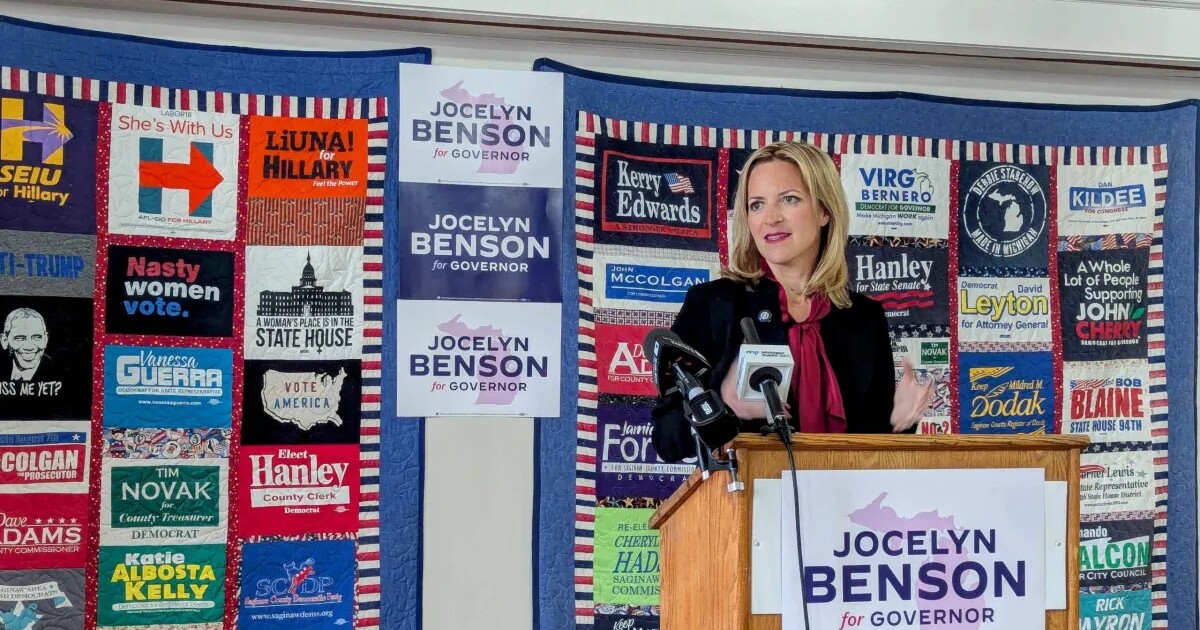
In a move aimed at addressing concerns of potential conflicts of interest, Michigan Secretary of State Jocelyn Benson has announced a new election oversight policy as she pursues a gubernatorial run. The policy, dubbed the “firewall” policy, will see most election functions handled by the state Bureau of Election without Benson’s direct involvement.
The policy, which has been in development since 2025 and recently released, aims to ensure transparency and prevent any perception of bias in the electoral process. This decision comes in the midst of calls from some GOP candidates for Benson to recuse herself from election-related matters due to her gubernatorial aspirations.
Under the new policy, Benson will recuse herself from decisions and administrative tasks that directly impact the gubernatorial election. The Bureau of Elections will handle these functions independently, with Benson only being informed of finalized decisions to maintain impartiality.
Outlined in the policy are six key areas where Benson will avoid conflicts of interest:
- Petitions for ballot access: Benson will only receive Bureau of Elections reports on candidate petition signatures once they are publicly available online.
- Affidavits of identity: Benson will not be informed of candidate disqualifications due to errors on affidavits until the review process is completed.
- Recount petitions: Benson will not be informed of pending recount petitions until they are received by the Board of State Canvassers.
- Post-election audits: Benson will only see finalized post-election audit results.
- Campaign finance questions and complaints: Benson will delegate authority on campaign finance rulings until after the election is certified.
- Supervising local elections: Benson will not be involved in decisions to strip local officials of election duties if found unfit.
Notably, the policy does not add any extra steps for Benson’s office to complete “certificates of election” once results are certified, maintaining the integrity of the election process.
In a recent development, tensions have risen in Michigan as GOP candidates express concerns about Secretary of State Jocelyn Benson’s dual role as a candidate for governor and the state’s chief election officer. These concerns have sparked calls for federal oversight of the upcoming elections, with claims that Benson’s candidacy could compromise the integrity of the electoral process.
Republican gubernatorial candidate Perry Johnson has been vocal in his criticisms, suggesting that Benson should recuse herself from overseeing the elections due to conflicts of interest. Johnson, who was previously excluded from the ballot in 2022, emphasized the need for an impartial election supervisor. He stated, “I just think that because we end up having the secretary of state in charge of her own election, that she ought to recuse herself.”
Additionally, GOP candidate Aric Nesbitt has taken steps to involve the US Department of Justice in monitoring Michigan’s primary and general elections. Nesbitt raised concerns about Benson’s ability to manage the elections effectively and called for external oversight to ensure fairness and transparency.
Despite these assertions, bipartisan officials involved in Michigan’s election administration have refuted claims that Benson could influence the signature verification process or election outcomes. The Board of State Canvassers, responsible for certifying election results, has dismissed concerns about Benson’s involvement in the verification process, emphasizing that she remains separate from the signature review.
Republican Chair Richard Houskamp emphasized, “Secretary Benson’s nowhere near those signatures,” highlighting the division of responsibilities in the electoral process. Democratic Vice Chair Mary Ellen Gurewitz echoed this sentiment, dismissing claims of Benson’s interference and labeling them as baseless. Gurewitz clarified that the secretary of state does not play a direct role in signature verification, emphasizing the established procedures in place.
It is crucial to note that past secretaries of state have participated in elections while overseeing them, with reelection bids being a common occurrence. The current situation reflects a contentious debate over the balance between political aspirations and electoral duties, underscoring the need for clarity and transparency in the electoral process. As Michigan prepares for upcoming elections, the discourse surrounding Benson’s dual roles and the calls for federal oversight continue to shape the political landscape in the state.