In Georgia, the consequences of the 2020 election continue to play a significant role in shaping political dynamics. As the Republican primary for the state’s top election official intensifies, the legacy of former President Donald Trump’s refusal to concede defeat to Joe Biden remains a pivotal issue.
The current secretary of state, Brad Raffensperger, gained national attention by standing firm against Trump’s baseless claims of widespread voter fraud, resisting pressure to alter the election outcome. With Raffensperger now pursuing the governorship, the question of election integrity dominates the race for his successor. Some Republican candidates are echoing Trump’s unfounded allegations.
A looming deadline over vote counting
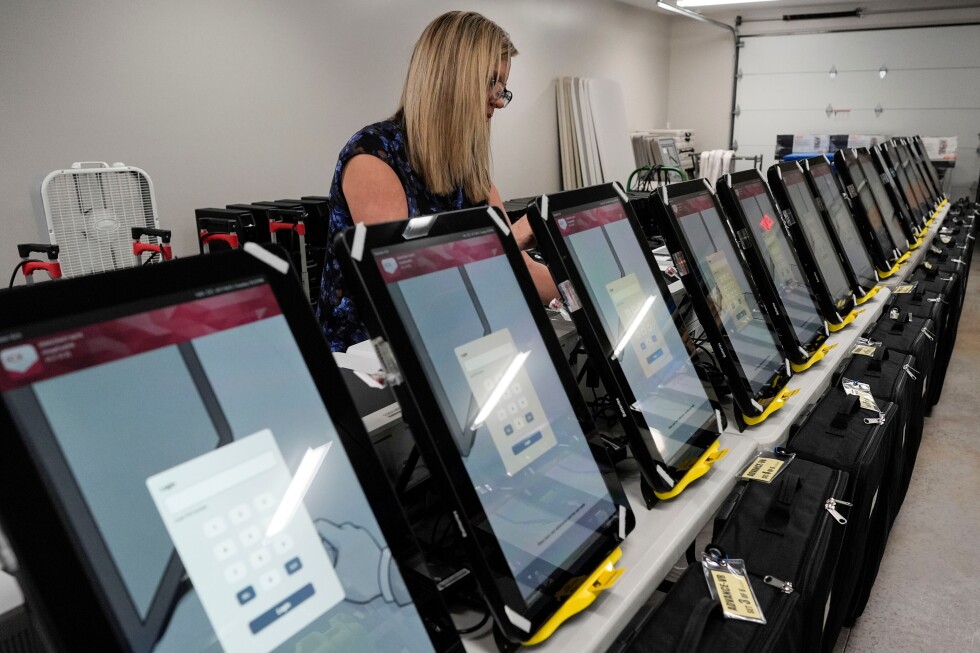
The election for Georgia’s secretary of state comes at a critical time as lawmakers face a complex situation regarding voting procedures. Governor Brian Kemp has called a special session to address redistricting and an impending deadline affecting vote counting methods. A law passed two years ago mandates that QR codes on voting machines cannot be used for official vote counts after July 1 this year, but no alternative has been agreed upon, risking legal challenges.
The special session may offer a temporary solution, but the incoming secretary of state will be tasked with overseeing a new voting system by 2028.
The shadow of the 2020 election
Gabriel Sterling, formerly a top aide to Raffensperger, stands as the sole Republican candidate defending Georgia’s 2020 election results. Sterling is recognized for urging Trump to prevent threats against election workers, asserting in a recent debate that Georgia hosts “the best and safest elections in America.”
In contrast, Vernon Jones, a former Democrat turned Trump-supporting Republican, claims, “I believe there were many irregularities. I believe violations have taken place.” Kelvin King, who previously ran for the U.S. Senate, shares some skepticism, stating, “I think 2020 is still in question to be frank with you.” State Rep. Tim Fleming acknowledges past “irregularities” but emphasizes progress made to rectify issues, focusing more on future solutions rather than conspiracy theories.
What they’re saying
Fleming advocates for a provisional solution during the special session to eliminate the QR code from ballots with minimal disruption to county election officials. He, along with other Republicans, supports a transition to hand-marked paper ballots.
Critics of Raffensperger’s tenure, including Jones, King, and Ted Metz, accuse him of incompetence and lack of transparency, calling for changes to the current voting system. Sterling, defending the existing system, argues his experience makes him best suited to challenge a Democrat in the general election.
Cole Muzio, leader of a conservative organization, suggests Jones is gaining momentum but acknowledges his past party switch and changing positions might become a focal point in a potential runoff.
The Democrats
Democratic candidates prioritize safeguarding voting rights and countering attacks on election processes. The field includes financial planner Cam Ashling, Fulton County Commissioner Dana Barrett, nonprofit founder Adrian Consonery Jr., and former judge Penny Brown Reynolds.