New Legislation Requires AED Location Reporting Following Tragic Death
In Atlanta, a new law, inspired by a personal tragedy, has been enacted to enhance emergency response capabilities across Georgia. The “Mason Sells AED Coordination Act,” named after the late Mason Sells, mandates that all owners of automated external defibrillators (AEDs) must report their locations to 911 services. This comes as a result of advocacy by Scott Sells, Mason’s father, who testified in favor of the bill during the legislative session.
Mason Sells, a 20-year-old accounting student at Mercer University, died after his heart stopped during a soccer game. Despite the presence of an AED on campus, it was inaccessible as it was locked away, a fact Scott Sells learned only after his son’s passing.
The incident highlighted a critical gap in emergency preparedness at the university. A spokesperson for Mercer University declined to comment on the situation, but The Telegraph reported that the campus had over 40 AEDs, none of which were utilized during Mason’s emergency. CPR was administered promptly, according to university representatives and the local coroner.

Mason’s death followed two other cardiac-related fatalities of college students in Macon, including Baba Agbaje and Nefertari Holston. According to the American Heart Association, sudden cardiac incidents are infrequent but more common among male athletes during sports events. The organization notes an improvement in survival rates, potentially due to better health screenings and increased awareness of CPR and AED accessibility.
After the loss of his son, Scott Sells began collaborating with Georgia lawmakers, including Sen. Marty Harbin, who introduced the bill. The newly signed law not only focuses on AED location reporting but also mandates training for 911 operators in CPR and AED guidance by the end of the next year. Additionally, a separate state law requires K-12 schools to have at least one AED and a designated individual for its maintenance and deployment.
Although many colleges acquire AEDs voluntarily, there is no statewide mandate for higher education institutions. Scott Sells is advocating for changes in this area. He and his wife manage property and have taken steps to educate others on AED use, training 100 members of a homeowners association and equipping several associations with AEDs.
Sells emphasizes the importance of AED availability at sports events, having purchased a personal device for his vehicle. Reflecting on his son’s friends graduating from Mercer, Scott Sells mentioned the bittersweet nature of witnessing such milestones, knowing his son will never have the same opportunities.
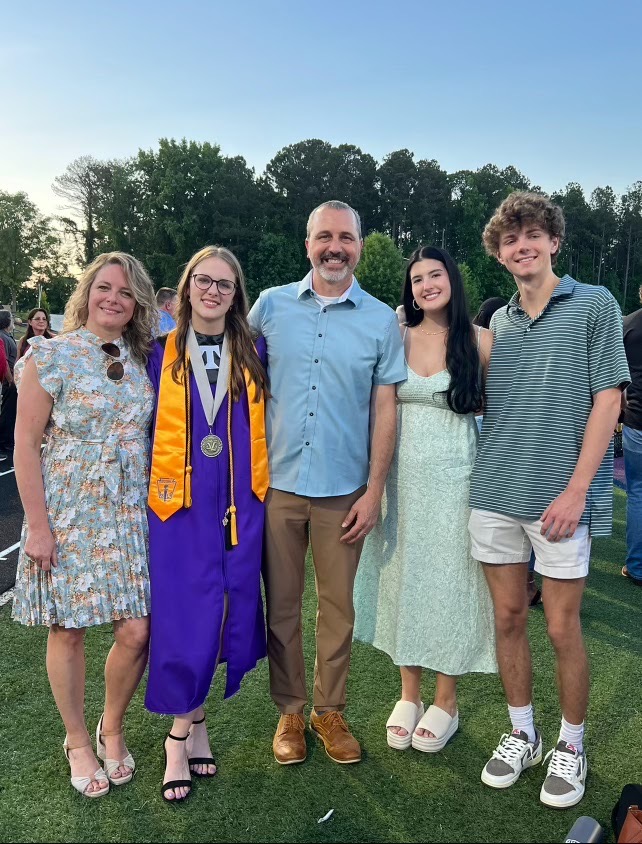
in Macon. (Contributed by Scott Sells)