This morning, you made a choice that felt different. Instead of defaulting to your laptop’s previously opened tab, you navigated to Etsy and purchased a ceramic mug from a creator you’d been following on Instagram. Just yesterday, your sister’s birthday present came from a Shopify store owned by a kitchenware designer based in Sacramento, California. Clicking “buy” brought a warm feeling, knowing it wasn’t from a giant corporation, but from a real person.
The package will reach you in two days, neatly packed in an unadorned brown box.
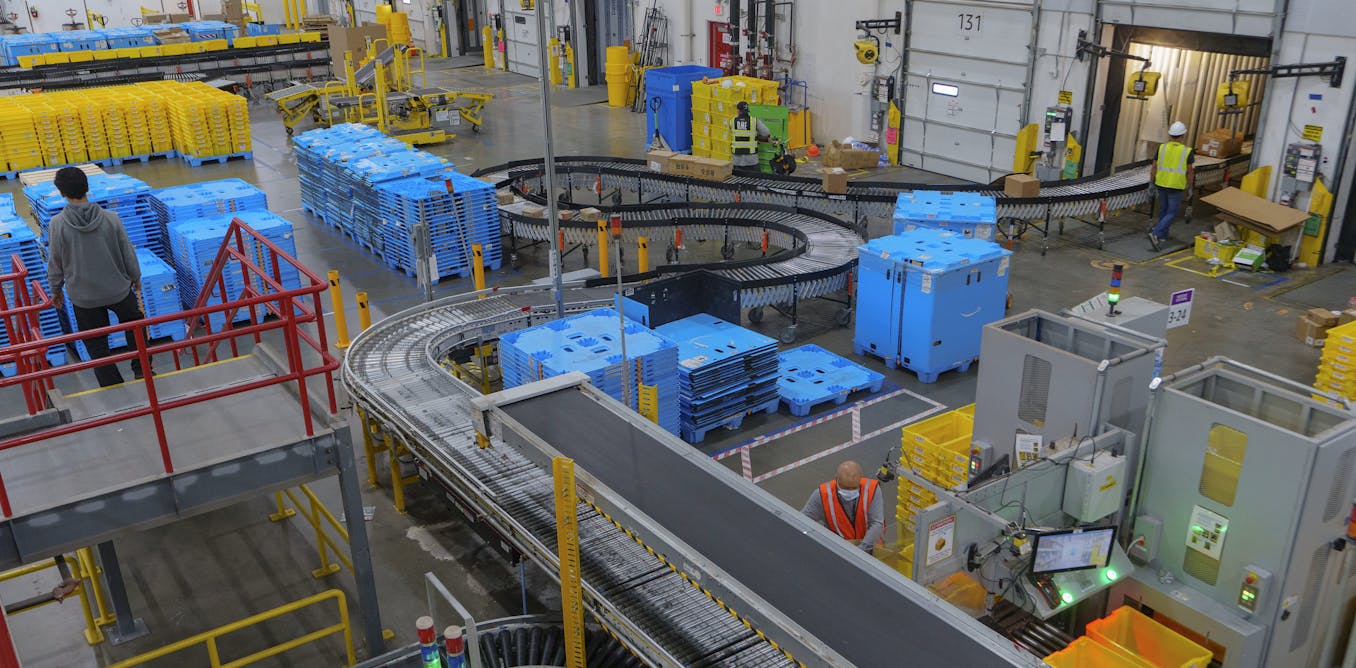
This is possible because Amazon is handling the delivery.
On May 4, 2026, Amazon announced the introduction of Amazon Supply Chain Services. This new service allows businesses of all sizes to utilize Amazon’s extensive network of warehouses, trucks, and delivery systems, originally developed for its own products. Initial clients include Procter & Gamble, 3M, Lands’ End, and American Eagle. While many headlines deemed it a logistics shake-up potentially challenging UPS and FedEx, the story runs deeper.
The real transformation is less visible to consumers and affects their support for small businesses. A 2024 Pew Research survey revealed that 86% of Americans view small businesses positively. For those steering away from large corporations to support small and local businesses, this announcement challenges the effectiveness of their efforts.
As scholars of consumer behavior and marketing, we examine how ethical considerations influence purchasing decisions. We see a growing dilemma: choosing a small brand over a giant might still channel part of your payment to unexpected places. What seems like a conscious choice may just be a different entry into the same store.
The challenge of escaping this cycle is intensifying.
Unseen but Expanding Influence
Consider Dragon Glassware, a small kitchenware company that started in a Sacramento garage in 2017. You might have purchased their wine glasses from their Shopify site, attracted by the founder’s narrative and the small-business vibe. Yet, these orders were fulfilled by Amazon.
Another example is Poppi, which began at a Texas farmers market and gained popularity on TikTok as a healthier alternative to major soda brands. For years, cans ordered from Poppi’s website, seemingly a stand against big soda, were shipped by Amazon. Eventually, Poppi was acquired by PepsiCo for nearly $2 billion in 2025, marking its own transformation from David to Goliath.
These are not isolated cases. Amazon’s Multi-Channel Fulfillment program, which handles such orders, now serves over 200,000 U.S. merchants, expanding by about 70% in 2024. This service also supports sellers on platforms like Shopify, Etsy, eBay, and TikTok Shop, with packaging intentionally left unmarked.
The May 4 shift allows Amazon to extend this service to all businesses, encompassing all sizes, from American Eagle’s retail orders to Procter & Gamble’s raw material shipments.
Peter Larsen, quoted in the May 4 press release, said Amazon is revolutionizing shipping akin to what Amazon Web Services did for the internet. Many users are unaware of which sites run on AWS, and similarly, this invisibility is now extending to the physical realm.
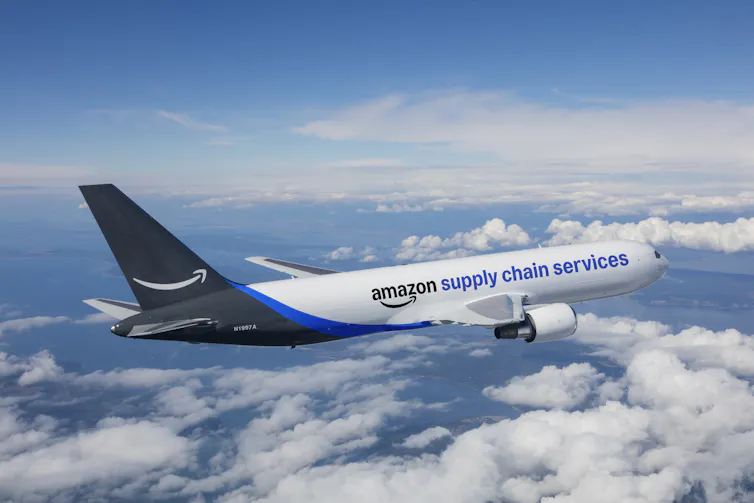
Business Wire photo illustration
This strategy is also financially rewarding. Amazon earns a fulfillment fee from every order it processes for external brands, approximately $15 for a three-pound package with two-day shipping, based on Amazon’s published rates. Additionally, it charges monthly storage fees and gains insights into competitors’ sales data, customer demographics, and sales timing.
Amazon CEO Andy Jassy called Supply Chain Services a “major growth opportunity.” When Amazon speaks of growth opportunities, it’s akin to AWS’s potential to rival its retail division.
Why Small Businesses Turn to Amazon
It might be easy to assume small brands are compromising their values, but that isn’t the case. They’re making calculated decisions.
A small kitchenware entrepreneur working from a garage might take three to five days to deliver a wine glass. Amazon’s network can do it in two. With 15 years of Amazon Prime setting expectations, two-day delivery is now a standard, not a luxury for consumers. Small brands risk losing sales if they can’t compete. While independent fulfillment services exist, Amazon often offers a more cost-effective solution that integrates seamlessly with platforms like Shopify, Etsy, TikTok Shop, and eBay.
The broader impact is further upstream. Amazon now commands about 40% of U.S. online retail spending, over four times that of its nearest competitor. Small brands seeking new customer exposure have little choice but to sell on Amazon. Once onboard, using Amazon’s warehouses for all orders, including those from Shopify and Etsy, becomes the path of least resistance.
For consumers, choices exist, but the economics often make them illusory. As more small brands utilize Amazon’s network, Amazon gains the ability to increase fees and alter terms, shaping the landscape of small commerce. Notably, Multi-Channel Fulfillment prices have risen for three consecutive years.
If even Procter & Gamble opts for Amazon’s logistics, what options does a kitchenware entrepreneur in Sacramento truly have?
For years, supporting small businesses seemed significant, diverting funds away from the same large corporations. But what does it mean to shop with values when the underlying system is obscured?
Shopping with values is not naive, but executing it is increasingly challenging. As small businesses become more reliant on Amazon’s logistics, they face rising fees and limited leverage. For consumers seeking alternatives, it presents an uncomfortable reality: avoiding giants becomes more difficult as they continue expanding.
The mug will arrive on Tuesday, beautifully handcrafted and wrapped in brown paper with twine. The delivery truck will be unbranded, all meticulously planned by design.