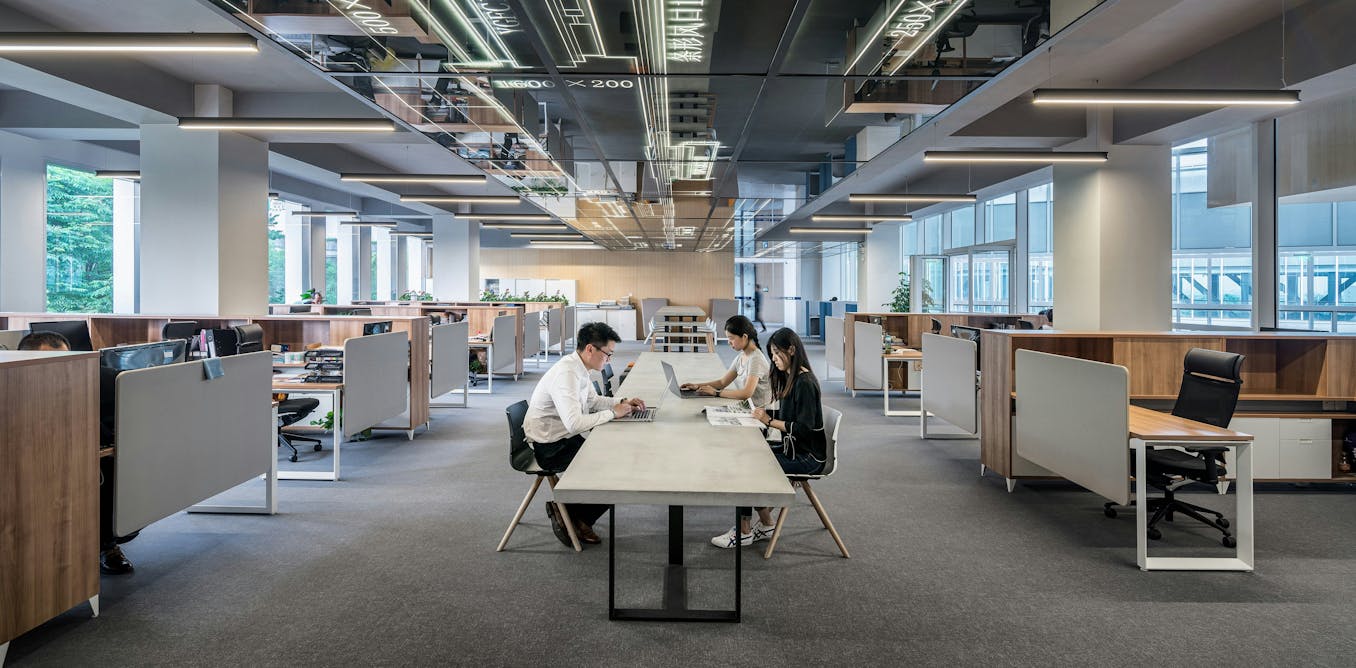
In the evolving landscape of post-pandemic work arrangements, the initially heated debate over returning to the office has largely given way to a widespread adoption of hybrid work models.
Hybrid work arrangements, which blend in-office and remote work, are increasingly prevalent. In 2023, just 20% of organizations employed hybrid work policies. This figure rose to 38% in 2024 and reached 42% in 2025, according to a survey conducted by the Flex Index.
Proponents of hybrid work highlight research that suggests such policies enhance employee retention and reduce turnover, with some human resources experts noting that job seekers now often expect hybrid options when exploring new opportunities.
The Complex Reality of Hybrid Work
However, insights from business scholars who study management and communication technologies reveal a more nuanced reality. Their research indicates that employee opinions on hybrid work are mixed, with some becoming disillusioned over time. Hybrid solutions, it seems, may not always be the sustainable compromise they’re touted to be.
Tracking employees from three major financial services companies since 2022, researchers observed varied reactions to different work policies: one company returned fully to the office, another remained entirely remote, and the third adopted a hybrid model.
Unsurprisingly, employees showed diverse preferences. Still, the hybrid policy had the least support, with only 44% of employees expressing satisfaction. By 2025, approval had increased to 63% for hybrid work, yet this improvement masked underlying instability.
For the companies with fixed policies, employee preferences remained stable. In contrast, only half of those who initially favored the hybrid model continued to do so by 2025, with the other half shifting to either in-office or remote work preferences.
Challenges in Hybrid Work Models
Employees who opted for office work praised the opportunities for collaboration and team-building. One employee noted, “Because I like my team and my work is somewhat collaborative, I tend to find it more enjoyable and productive to be in most of the time.”
Conversely, those who preferred remote work often cited personal arrangements, such as one employee who mentioned, “My wife and I have made decisions about childcare based on me being able to work from home.”
Preference Fluidity and Implementation Errors
While traditional in-office and fully remote policies fostered more consistent employee preferences, hybrid models led to more fluid preferences. This fluidity often resulted from poorly implemented hybrid policies, such as hiring across different geographies and allowing employees to choose their office days, which led to empty offices and defeated the purpose of in-office requirements.
Hybrid work’s unpredictability posed challenges, with some employees experiencing “paradox management fatigue” as they struggled to balance the competing demands of work and home environments.
For companies embracing hybrid models, ensuring their success requires addressing these challenges. Implementing a structured hybrid schedule, where certain in-office days are mandatory, can help overcome coordination issues. Additionally, making the office a vibrant community space and aligning hiring practices to support team cohesion are vital steps.
In the end, successful hybrid work models may depend on thoughtful implementation and fostering environments where employees feel engaged and supported.