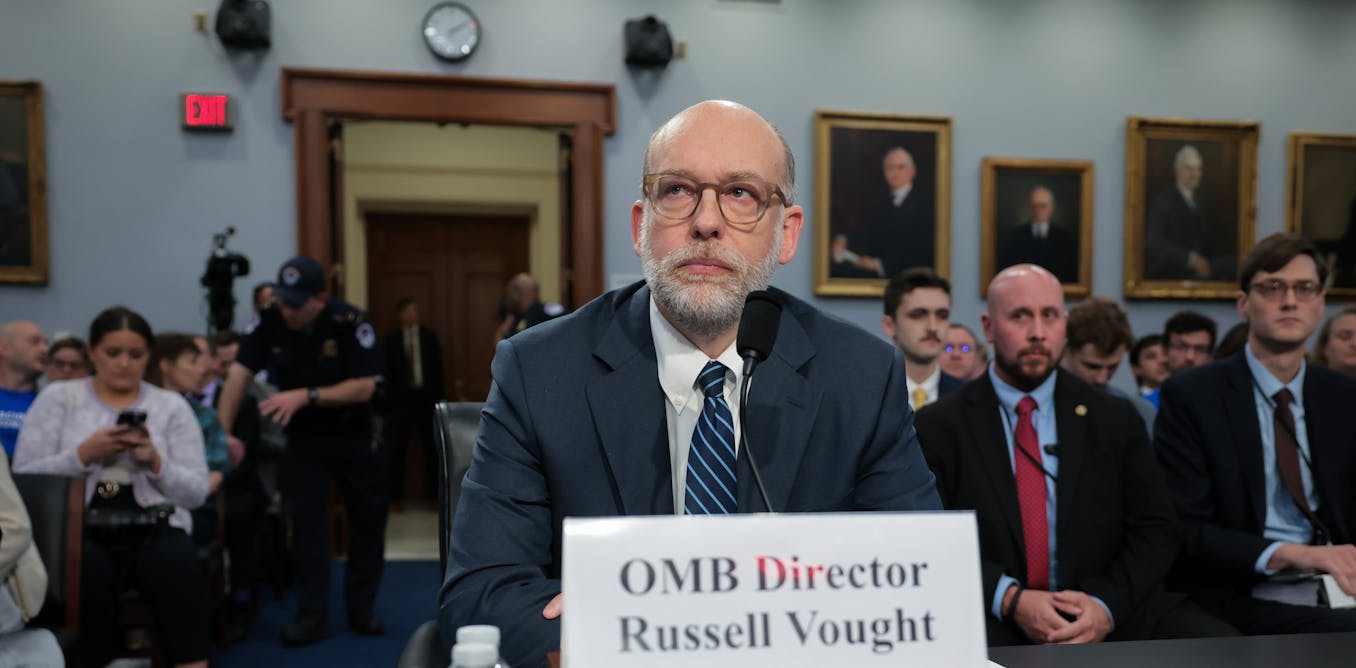
In a sweeping effort to reshape federal grant distribution, the Trump administration has proposed significant changes to how funds are allocated, potentially impacting a wide range of sectors from medical research to early childhood education. This shift in policy could concentrate decision-making power in the hands of politically appointed officials, aligning funding more closely with the President’s policy priorities.
The federal government annually allocates at least $1.2 trillion through grants and transfers. Traditionally, these funds have been distributed based on statutory, regulatory, and competitive criteria, with a focus on serving the public interest. However, the proposed changes, revealed in a 400-page document by the Office of Management and Budget (OMB), aim to ensure grants “demonstrably advance the President’s policy priorities.”
The revisions, if enacted, would shift the emphasis from the amount of money spent to who decides the allocation. This would give political appointees, rather than career civil servants, more influence over directing grants toward projects that align with the White House’s preferences.
Implications for Grantmaking
Grants play a crucial role in supporting essential services such as housing assistance and disaster preparedness. Currently, some grants are awarded based on formulas set by law, while others are discretionary, requiring agency review. The proposed changes could allow political considerations to override these established processes, altering the balance between political accountability and administrative neutrality.
Political Influence Over Grant Decisions
This proposal is not the first attempt by the Trump administration to increase political appointees’ authority in federal grantmaking. An executive order issued in August 2025 emphasized that appointees should exercise independent judgment in grant decisions, rather than merely approving staff recommendations. However, the current proposal by the OMB seeks to formalize these changes in official grant regulations, potentially making them mandatory.
The OMB has justified the need for clearer guidelines to prevent waste and misuse of funds, while criticizing grants that it perceives as advancing ideological goals rather than what Congress authorized.
Reactions from Affected Groups
Organizations representing grant recipients have voiced strong objections. The National Council of Nonprofits argues that the proposal may prioritize partisan ideology over community needs. Similarly, major higher education groups have expressed concerns about the impact on the peer-review process and predictability of research funding.
Recent issues with National Institutes of Health grants highlight potential risks, where some projects were terminated for not aligning with agency priorities, prompting concerns about the influence of political appointees.
Concerns for Research Funding
Significant apprehension exists regarding the ramifications for scientific and health research funded by the National Institutes of Health and the National Science Foundation. These agencies, which collectively account for about $44 billion in federal research funding, rely on expert reviews to evaluate grant proposals. Critics warn that the proposed changes could undermine this process, making funding less predictable.
Potential Legal and Legislative Challenges
The public has until July 13, 2026, to comment on the proposal, with the OMB aiming for implementation by October 1, 2026. While the OMB must consider relevant feedback, the final rule could face legal challenges or legislative action. Congress has the power to block the rule, though this would require substantial political consensus.
As debates continue, the controversy underscores the struggle to balance political influence, expertise, and statutory guidelines in federal grant distribution.