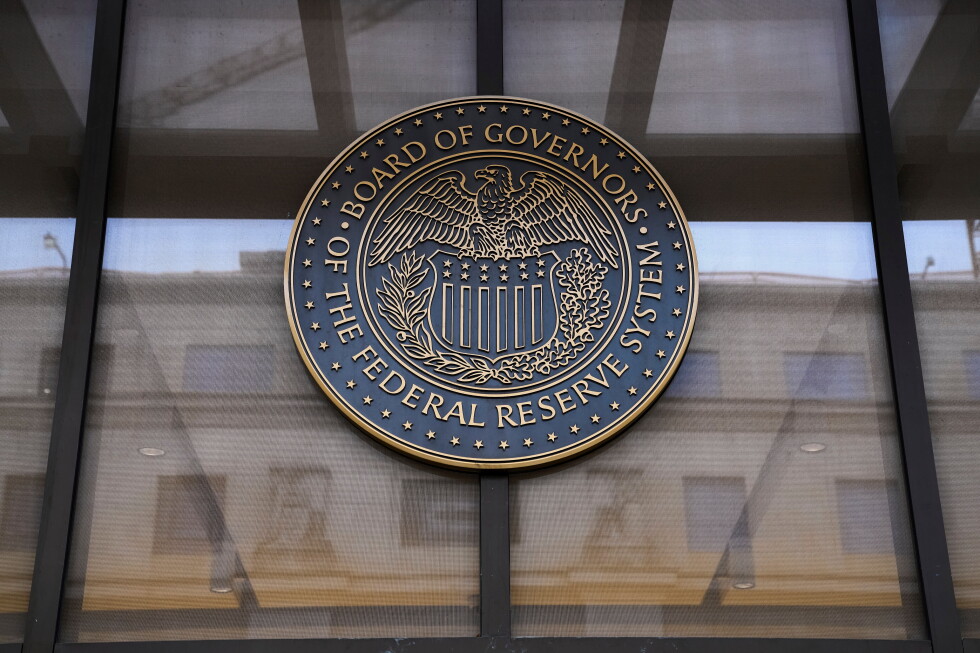
The Supreme Court has addressed a significant aspect of the Federal Reserve’s operations, highlighting its unique autonomy within the U.S. government landscape. This decision, however, does not entirely delineate the breadth of this independence.
The ongoing contention between the Federal Reserve and former President Donald Trump has reached new heights. Any shift in the Federal Reserve’s political independence could significantly impact global financial markets, which closely monitor its interest rate policies.
Trump has consistently urged the Federal Reserve to reduce its key interest rate to ease borrowing costs across various sectors. Additionally, he attempted to remove Fed governor Lisa Cook, accusing her of mortgage fraud, a claim she has refuted. Cook’s appointment by former President Joe Biden makes her removal a pivotal opportunity for Trump to install a more favorable figure.
In a narrow 5-4 decision, the court ruled against the president’s ability to dismiss the Federal Reserve’s board of governors without justified cause. This decision affirms the Fed’s independent structure, even as similar protections for other agencies, such as the Federal Trade Commission, have been dismissed.
“That’s a big deal,” remarked Scott Alvarez, the former top lawyer at the central bank, emphasizing the importance of the Fed’s independence.
The ruling offers a degree of protection for Cook, yet leaves the door open for future attempts by Trump to dismiss her. Trump has indicated on his social media platform, Truth Social, that he will take “appropriate action immediately” to remove Cook. For now, Cook maintains her position as the case proceeds through lower courts.
The Fed’s Unique Position Affirmed by the Court
On the same day, the justices decided 6-3 that the president can dismiss the heads of federal agencies previously deemed independent. However, they made a special exception for the Federal Reserve in the Cook case.
Chief Justice John Roberts wrote that the Fed has a “unique historical status and role,” akin to the First and Second Banks of the United States, which operated “at a deliberate remove from the ordinary political process.” He emphasized that allowing presidential dismissal without cause would erode the Fed’s independence.
“Nothing could be more corrosive of the independence that Congress sought to preserve,” the chief justice noted.
This ruling also extends some security to Kevin Warsh, the new Fed chair nominated by Trump, who has prioritized reducing inflation to the Fed’s 2% target. While about half of the Fed’s policymakers advocate for a rate hike to achieve this, Trump opposes such increases.
Kathryn Judge, a law professor at Columbia University, pointed out that while the Fed’s independence remains intact, the broader erosion of agency independence in Washington could diminish its future standing. “Fed independence lives on for another day, but is not as robust as it was prior to these decisions,” she commented.
Vulnerability of Fed Governors
The court’s decision does not entirely shield Cook from Trump’s dismissal efforts. Trump’s legal team argued that he could define “for cause” and that courts should not challenge this definition.
The Supreme Court clarified that “for cause” likely pertains to severe misconduct unrelated to professional duties but did not provide extensive details. They rejected a higher standard that Cook’s lawyers sought, which would limit dismissals to inefficiency, neglect of duty, or job-related malfeasance. Given the alleged mortgage fraud occurred before her Fed tenure, this standard might have ended the case.
The court also stipulated that Cook must receive official notice of any dismissal and a chance to respond, an area where the previous attempt on Truth Social fell short. Chief Justice Roberts noted that while Trump could try again, he must follow proper procedures.
Legal experts suggest Trump might attempt a minimal procedure to strengthen his case in lower courts. “That’s an area of vulnerability still for the Federal Reserve and for Lisa Cook,” Alvarez noted.
The Importance of Fed Independence
The broader implications of this legal battle will likely further define the framework of the Federal Reserve’s autonomy.
The Federal Reserve plays a crucial role in the U.S. economy by adjusting short-term interest rates, thereby influencing borrowing costs and economic activity. Independent central banks are often favored by economists for their ability to make unpopular but necessary decisions to combat inflation.
The significance of an independent Fed was highlighted during the inflationary period of the 1970s and early 1980s. Former Fed Chair Arthur Burns faced criticism for succumbing to political pressure to keep rates low, leading to prolonged inflation.
Paul Volcker, appointed in 1979, took aggressive measures with high interest rates to curb inflation, causing economic recession and high unemployment but ultimately stabilizing prices. Volcker’s actions are often cited as evidence of the benefits of an independent Fed.
Investors generally favor an independent Fed for its predictable decision-making and effective inflation management, which reduces the need for higher yields on Treasurys and keeps borrowing costs lower throughout the economy.