Arizona Election Rules Under Scrutiny: Court Decides on Electioneering Restrictions
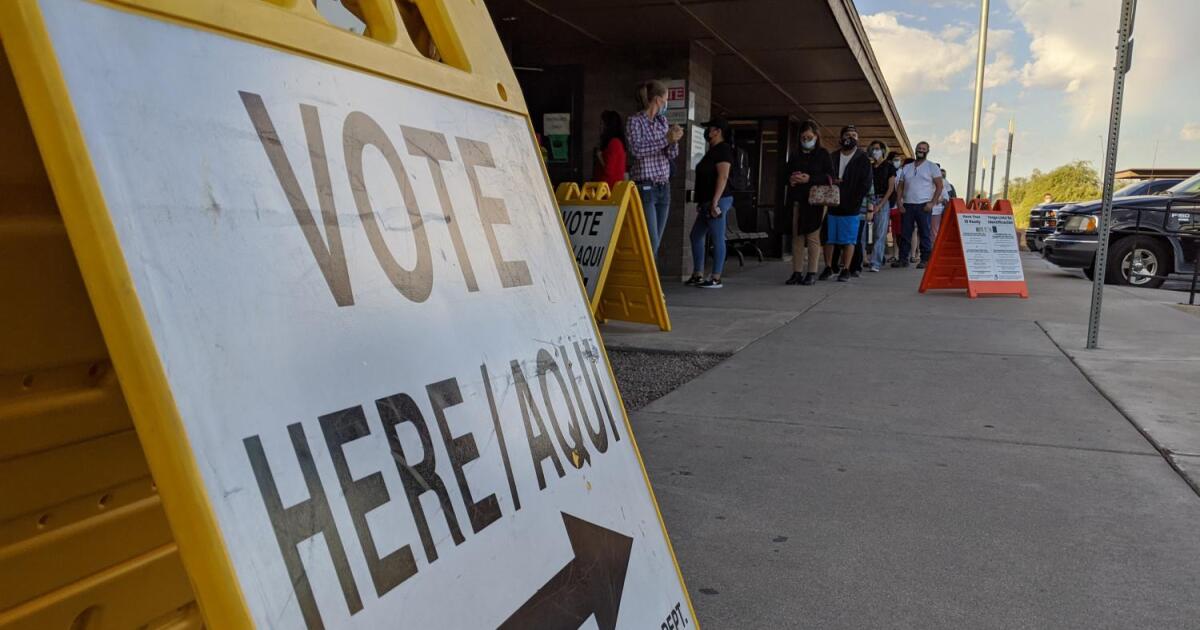
In an ongoing legal battle, the Pima County Republican Party challenges the election procedures in Arizona, potentially allowing individuals to engage in vocal electioneering beyond 75 feet from polling stations. The case, currently under review by U.S. District Court Judge Michael Liburdi, could redefine the boundaries of permissible political activities at voting locations.
State Elections Director Lisa Marra testified that while state law clearly prohibits electioneering within a 75-foot radius of polling places, the Elections Procedures Manual extends this ban if the activity is audible from within the voting location. This manual provision, contested by the Republicans, is argued to exceed the authority of Secretary of State Adrian Fontes to impose restrictions beyond what the legislature has stipulated.
Attorney Jeffrey Clark, representing the Pima County Republican Party, argues that any rules restricting activities beyond the 75-foot mark infringe upon First Amendment rights. The legal dispute hinges on whether the manual’s provision can legally enforce restrictions on electioneering audible within polling places.
The issue extends beyond vocal electioneering. The Republicans are also challenging the manual’s language that permits election workers to turn away individuals in police or military uniforms. Marra clarified that this is not a blanket ban, sharing her experience from Cochise County, where individuals in uniform have not been denied voting rights. The rule targets those aiming to intimidate voters, which Clark contends is beyond Fontes’ authority to regulate.
Central to the case is Arizona law’s definition of electioneering, which prohibits expressing political support or opposition within 75 feet of a polling station. However, activity outside this boundary, such as distributing materials and displaying signs, remains common. Fontes’ manual stipulates that such activities are not exempt if they intentionally reach voters inside the polling area, a point heavily scrutinized by Clark.
Marra compared the need for a quiet voting environment to that of a library, arguing for the necessity of maintaining voter concentration and clear communication between election officials and voters. She stated, “People need to be able to concentrate,” emphasizing the importance of an undisturbed voting process.
Clark countered by referencing a statute allowing electioneering outside the 75-foot limit, questioning whether the manual’s audibility requirement infringes upon this right. Marra responded that the provision’s intent, developed with input from election officials and approved by state leaders, focuses on preventing interference within polling locations.
Assistant Attorney General Karen Hartman-Tellez highlighted the legislative intent behind the 75-foot rule, emphasizing its role in preventing voter interference. Drawing parallels to a phone call, she explained that interference is determined by the communication’s effect on the recipient, not just the sender’s location.
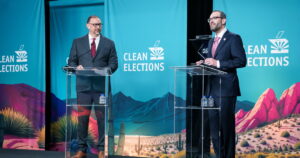
This case also revisits First Amendment concerns, drawing attention due to Judge Liburdi’s 2022 ruling involving Clean Elections USA. The ruling restricted armed or armored individuals from approaching ballot drop boxes, balancing First Amendment rights with voter protection. Hartman-Tellez invoked this precedent, arguing for reasonable regulation around polling places to safeguard voter rights.
As the legal proceedings continue, the decision will have significant implications for electioneering activities near polling stations in Arizona. Judge Liburdi has yet to announce a ruling date.