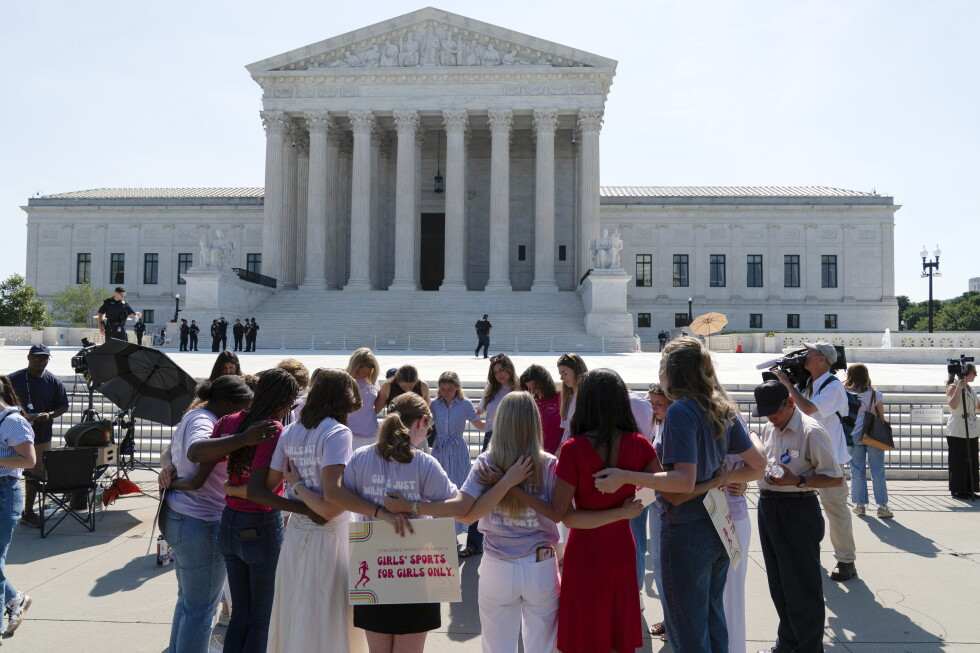
The ongoing debate over gun control in the United States is set to take center stage once again as the Supreme Court agrees to review cases concerning bans on semiautomatic firearms. These cases challenge current restrictions in Connecticut and the Chicago area, questioning whether such limitations align with the Second Amendment.
The Supreme Court, which recently expanded gun rights, will examine the legitimacy of prohibitions on semiautomatic rifles, including the popular AR-15, under the Constitution. This review could potentially impact similar laws in place across approximately a dozen states, affecting major metropolitan areas like New York, Los Angeles, and Washington, D.C.
After the federal assault weapons ban lapsed in 2004, legislative efforts to reinstate it have been supported by Democrats, especially in the wake of numerous mass shootings. States like Virginia and Rhode Island have enacted their own measures to control firearm use, reflecting a continued response to gun violence.
The current legal challenge arises following a historic Supreme Court ruling in 2022, which broadened Second Amendment rights and triggered nationwide disputes over gun legislation. The court’s conservative majority played a pivotal role in this decision, sparking further examination of firearm regulations.
Oral arguments regarding the bans are scheduled for the fall. The Connecticut law, for instance, was enacted post the tragic 2012 Sandy Hook Elementary School shooting, where an AR-15 was used to claim 26 lives. State officials argue these firearms resemble military-grade weapons and, therefore, can be restricted.
Janet Carter of Everytown Law supports the bans, stating, “These laws are critical public safety measures, and they are consistent with the Second Amendment.” Conversely, gun rights advocates claim these restrictions infringe on constitutional rights, as semiautomatic rifles are widely owned by Americans.
Adam Kraut from the Second Amendment Foundation argues, “The Second Amendment protects arms in common use for lawful purposes, and it’s hard to argue that a type of rifle that potentially outnumbers Ford F-150 trucks in America doesn’t meet that standard.”
Cook County, Illinois, implemented its ban in 1993, and both the Connecticut and Cook County laws have been upheld by lower courts. Opponents of these laws highlight their popularity, questioning the extent of Second Amendment protections beyond handguns kept at home.
Attorneys defending Cook County’s legislation argue that the broader trauma from assault weapon incidents justifies the bans, as stated, “The trauma that assault weapon massacres have inflicted on the public at large has been staggering.”
In recent terms, the Supreme Court has reinforced Second Amendment rights by negating gun carry restrictions in Hawaii and overturning a ban on gun ownership by marijuana users, while upholding some constraints, such as those involving domestic-violence restraining orders.
For more detailed coverage of the U.S. Supreme Court, visit AP’s Supreme Court hub.