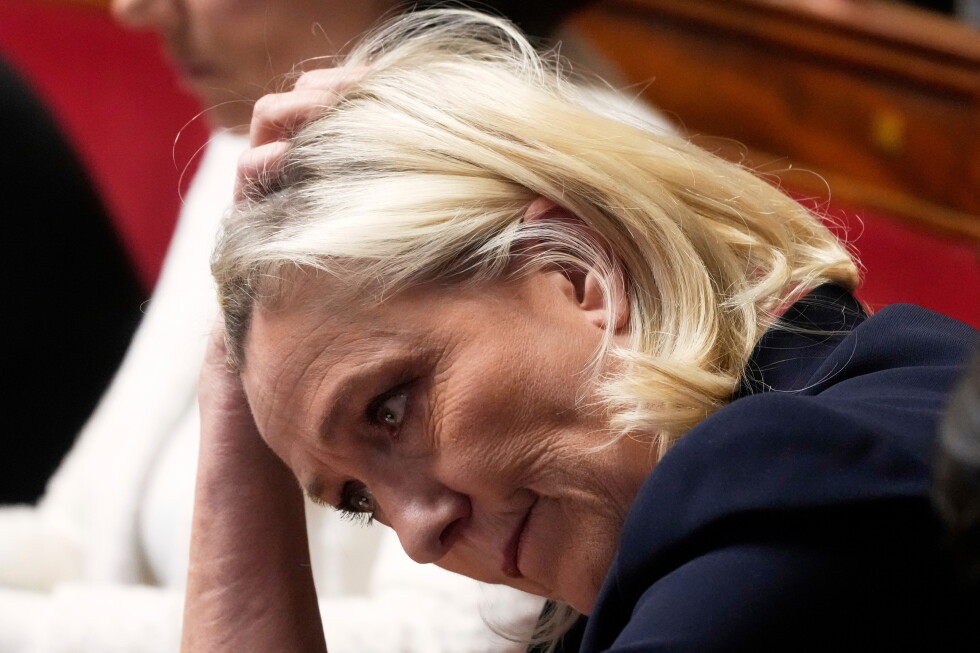
The future of France’s political landscape could hinge on a critical ruling set for Tuesday by Paris’ appeals court. The decision concerns Marine Le Pen, a prominent presidential hopeful, embroiled in an embezzlement scandal that could hinder her participation in the upcoming election cycle.
Le Pen, aged 57, is contesting a March 2025 ruling that implicated her and her National Rally party in misappropriating European Parliament funds. The funds, intended for EU parliamentary assistants between 2004 and 2016, were allegedly redirected to pay party staff. This conviction led to a suspended prison sentence and a five-year prohibition from holding elected office. Despite these charges, Le Pen maintains her innocence and aims to pursue a fourth presidential campaign.
Should she be disqualified, Jordan Bardella, her 30-year-old protégé, might emerge as the party’s candidate, potentially altering the dynamics of the race to succeed President Emmanuel Macron.
Acquittal: Le Pen’s Best-Case Scenario
Le Pen’s optimal outcome would be a full exoneration by the appeals court. During her appeal, she admitted to a “mistake” but defended her actions by asserting her belief that employing EU parliamentary aides for party work was permissible, citing a lack of warnings from European Parliament officials. Her lawyer, Rodolphe Bosselut, emphasized the stakes, noting, “is entrusting you with the work of her life, and the question is thus whether it will end here or whether it can be rebuilt.” However, even an acquittal could face a challenge from prosecutors at the Court of Cassation, France’s supreme court.
Possible Reduction in Office Ban
The court might find Le Pen guilty but lessen the ban to two years or even lift it entirely. As the lower court ruled the ban effective immediately, Le Pen has been under its constraints since March 31 of last year. A reduced ban could conclude before the 2027 presidential election’s first round. Nonetheless, Le Pen has expressed reluctance to run under conditions that could restrict her campaign activities, stating, “If I’m allowed to be a candidate but am effectively prevented from campaigning freely, then you understand that wouldn’t be possible.”
Potential for a Severe Sentence
Prosecutors have advocated for a four-year prison term, with three years suspended, and a five-year disqualification from public office. They have accused Le Pen of orchestrating a “system” to “siphon off” EU public funds for her party’s benefit. The appeals court retains the authority to enforce an immediate ban, paralleling the lower court’s decision. While Le Pen could appeal to the Court of Cassation, it’s uncertain if this would pause the sentence.
Le Pen’s Timely Decision-Making
Le Pen has emphasized the necessity of resolving her legal status promptly, stating, “You can’t launch a presidential campaign at the last minute.” The ongoing legal uncertainties, including a potential appeal to the Court of Cassation, could deter her candidacy due to the risk of compromising her party’s prospects. As the presidential race is set to intensify next year, securing endorsements from 500 elected officials is crucial, leaving little room for last-minute candidate changes. “If I’m prevented from running but the Court of Cassation rules in my favor three or four months later, it will be too late to conduct a proper presidential campaign,” Le Pen remarked on RTL radio.