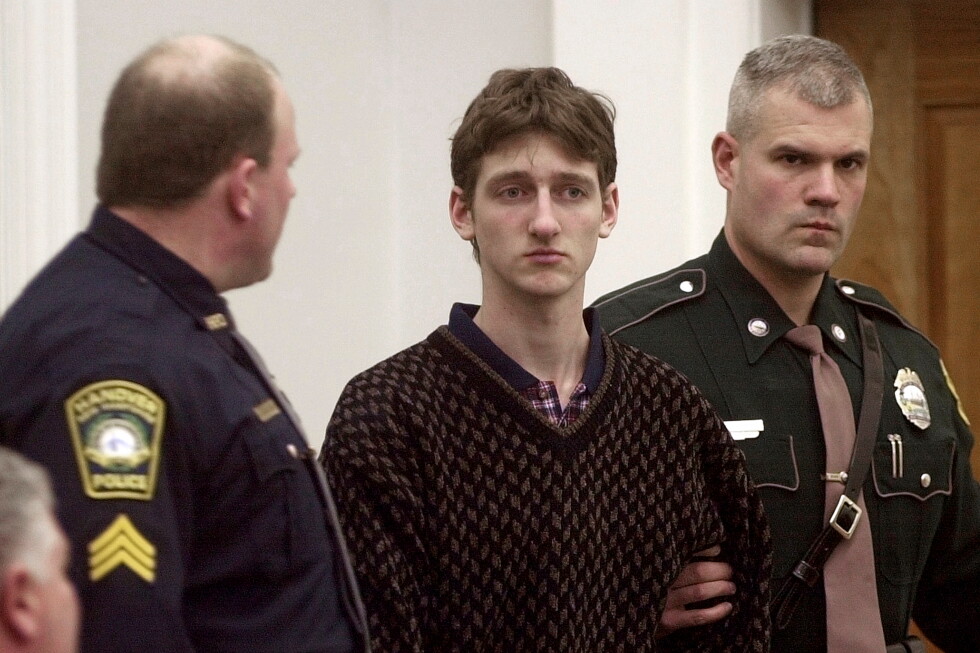
A Vermont man involved in a notorious double homicide at Dartmouth College as a teenager is now facing a potential release after serving decades in prison. Robert Tulloch, who was 17 when the crime occurred, was resentenced by a judge on Monday, granting him the possibility of parole after 45 years, thus avoiding a prolonged resentencing process.
At 43, Tulloch’s case unfolded in a New Hampshire court where he appeared visibly distressed as past events were recounted. Originally sentenced to life without parole following a guilty plea for the 2001 murders of Half and Susanne Zantop, Tulloch’s sentence was revisited after the U.S. Supreme Court’s 2012 ruling against mandatory life sentences without parole for juveniles.
This landmark decision has since allowed hundreds of juvenile offenders, including five in New Hampshire, to be reconsidered for release. Tulloch’s resentencing, the final of the group, was scheduled in Grafton County Superior Court.
A Daughter’s Plea for Justice
During the hearing, Veronika Zantop, one of the victims’ daughters, expressed her desire for Tulloch to serve the maximum sentence. A psychiatrist herself, she acknowledged the potential for individuals to change over time but remained skeptical about Tulloch’s transformation. She described the murder as a calculated and predatory act devoid of any mitigating circumstances.
“This wasn’t a crime of passion or retribution,” she stated, urging that Tulloch remain incarcerated “for the longest possible sentence.” Tulloch, visibly moved by her words, decided against delivering his prepared remarks.
Legal Perspectives and Sentencing
Tulloch’s defense team argued for a reduced sentence of 30 to 40 years, citing similar juvenile cases affected by the Supreme Court rulings. However, Judge Lawrence MacLeod imposed a 45-year minimum sentence, aligning Tulloch’s potential parole with the age of one of his victims at the time of his death.
New Hampshire Attorney General John Formella supported the decision, stating it ensures Tulloch’s extended incarceration while allowing for rehabilitation efforts, thus balancing community safety and the possibility of future reintegration.
Defense attorneys highlighted Tulloch’s progress in prison, noting a lack of major disciplinary issues since 2012 and his expressed remorse for the crimes. They referenced therapy records indicating Tulloch’s acknowledgment of his past actions as “heinous and unforgivable.”
A Deadly Plan Unfolds
The crime, orchestrated by Tulloch and his accomplice James Parker, involved a plot to murder, steal, and flee overseas. Disguised as environmental surveyors, they gained entry to the Zantops’ home, leading to the tragic events. Parker, who was 16 at the time, later cooperated with authorities and served a reduced sentence, earning parole at 40.
Reflecting on his actions during a parole hearing, Parker described his involvement as “unimaginably horrible.” Despite his remorse, he acknowledged that no action could undo the harm caused.
Shifting Legal Landscapes
While the U.S. remains the only nation permitting discretionary life sentences for juveniles, many states have banned such sentences outright. Although New Hampshire hasn’t abolished life sentences for minors, Tulloch’s case may influence future legislative efforts. His legal team successfully argued that the state’s constitution prohibits life without parole for juveniles as “cruel or unusual” punishment.
Nationwide, more than 75% of juvenile offenders resentenced after the Supreme Court ruling received terms under 40 years, as per a 2024 study. New Hampshire’s cases vary, with outcomes ranging from life without parole to sentences of 25 to 45 years.