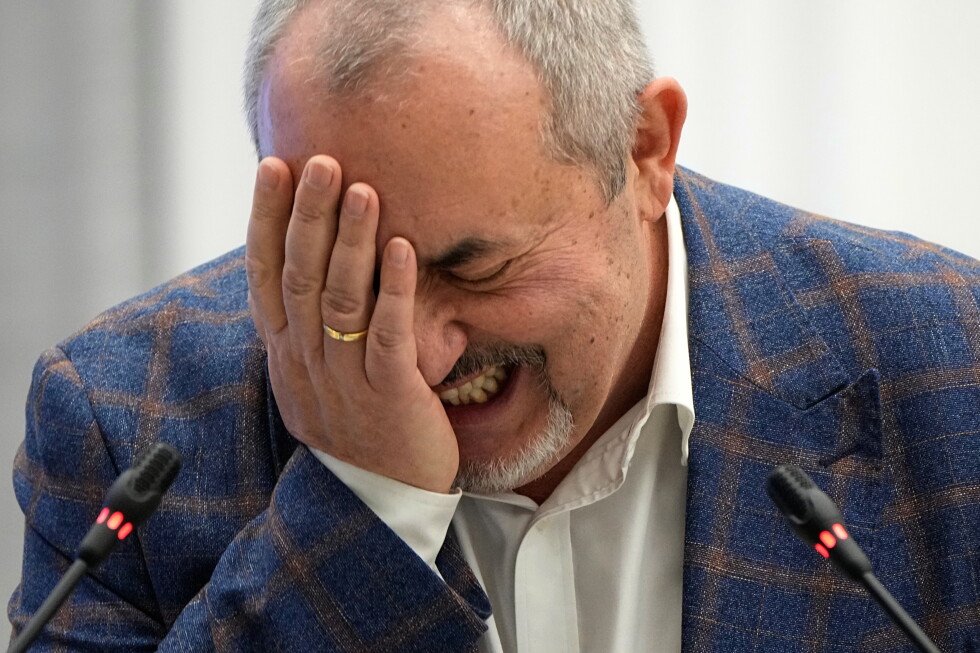
Liberal Russian politician Boris Nadezhdin, known for his opposition to Moscow’s military involvement in Ukraine, faced a temporary detention by police on Monday, highlighting ongoing tensions within Russian politics. Nadezhdin, who previously aspired to challenge President Vladimir Putin in the presidential election, was confronted by law enforcement in the town of Dolgoprudny, located on the outskirts of Moscow.
Nadezhdin, aged 63, shared on his Telegram channel that he was brought to a police station and subsequently released a few hours later. He was charged with displaying “extremist symbols,” a claim stemming from a 2023 online interview where he showed an image of Alexei Navalny, a prominent opposition leader. Navalny was serving a 19-year sentence on charges widely perceived as politically driven, according to Zona.media, an independent outlet.
Navalny’s death in an Arctic penal colony on February 16, 2024, stirred controversy. Official Russian reports suggested a natural cause following a bout of illness, but five European nations alleged in a joint statement that he was poisoned by the Kremlin using a rare toxin from poison dart frogs.
Recently, the Russian Justice Ministry labeled Nadezhdin as a “foreign agent,” a designation that carries negative implications and subjects individuals to heightened governmental oversight. Despite these challenges, Nadezhdin has expressed his intention to run for parliamentary elections as an independent, although the “foreign agent” label legally restricts him from candidacy.
Nadezhdin’s disqualification from the 2024 presidential ballot followed a Supreme Court ruling that invalidated over 9,000 of his campaign signatures. His political stance, advocating for the cessation of the conflict in Ukraine, has made him a notable figure in Russia’s constrained political landscape.
The Russian government’s intensified crackdown on dissent has been evident since its military actions in Ukraine commenced in February 2022. This suppression has targeted rights groups, independent media, civil society members, LGBTQ+ activists, and certain religious organizations, leading to numerous incarcerations and mass exoduses.