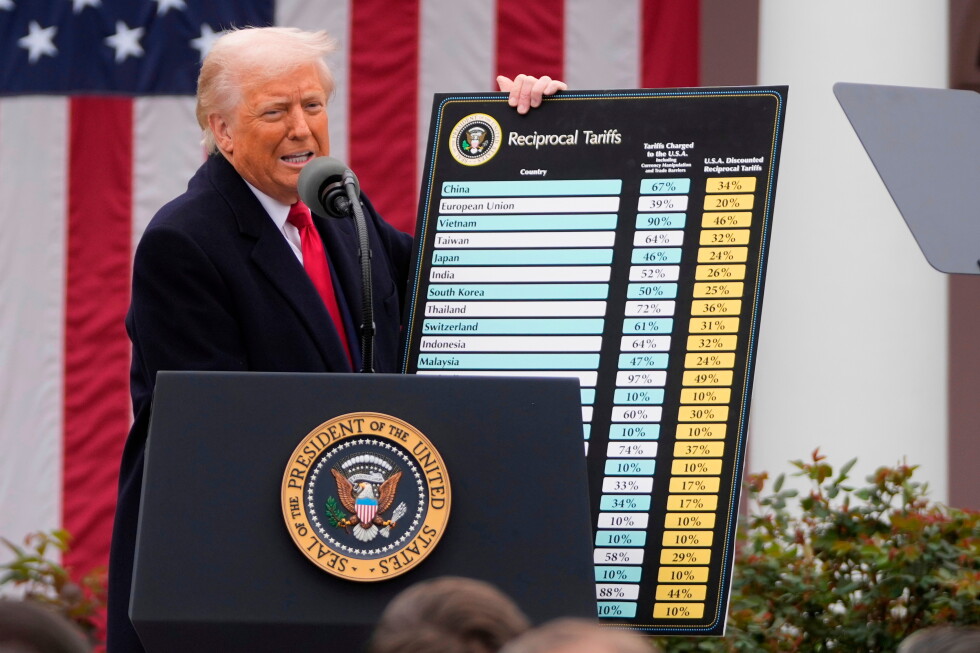
In a bold move that has the potential to reshape North American trade dynamics, President Donald Trump announced sweeping 50% tariffs on the majority of Canadian goods. This decision, aimed at countering what Trump perceives as unfair treatment of American automobiles, alcohol, and dairy products by Canada, may trigger significant economic repercussions.
As tensions rise, the White House disclosed that these tariffs, which will exclude certain key sectors such as energy, potash, fish, and critical minerals, will bypass protections previously afforded under the United States-Mexico-Canada Agreement (USMCA). This trade agreement, not renewed by the U.S., is set for renegotiation with talks possibly extending into 2036.
According to a senior administration official who spoke on condition of anonymity, the tariffs are a direct response to Canada’s retaliations against Trump’s earlier tariffs, a stance that the U.S. administration finds unacceptable. The tariffs, outlined in three presidential proclamations under Section 338 of the 1930 Trade Act, are scheduled to take effect in 30 days, leaving a window for negotiations.
Prime Minister Mark Carney of Canada expressed readiness to negotiate, emphasizing the importance of “free and fair trade” and highlighting Canada’s commitment to economic partnerships. “This trade dispute has raised costs for families, particularly in the U.S.,” Carney stated, signaling a willingness to address outstanding issues.
Potential for a Broader Trade Conflict
With the new tariffs poised to escalate into a broader trade war, Ontario Premier Doug Ford has already suggested that Canada should respond with equivalent measures. Meanwhile, Candace Laing, CEO of the Canadian Chamber of Commerce, urged both nations to utilize the negotiation window effectively to progress towards a formal agreement.
Industry voices, such as Chris Swonger of the Distilled Spirits Council of the United States, echoed the sentiment, advocating for a negotiated solution to restore market access for U.S. spirits and avert further harm to industries.
However, the invocation of a Great Depression-era law to justify these tariffs raises concerns, potentially impacting other U.S. trading partners and introducing significant uncertainty into the global economy, as noted by Scott Lincicome of the Cato Institute.
Political and Economic Implications for Trump
The tariffs also present political challenges for Trump, particularly with the midterm elections looming. Previously, his tariffs led to market instability and concerns over inflation, forcing a temporary rollback. The recent Supreme Court ruling highlighted legal limitations on Trump’s authority to impose tariffs, necessitating alternative legal routes for this action.
With tariffs effectively acting as a tax on imports, there is a risk that costs will be passed on to American consumers, contradicting Trump’s pledge to reduce prices. Critics, including Rep. Suzan DelBene, warn of potential retaliation against U.S. industries and further economic strain.
The tariffs could exacerbate existing challenges, affecting Trump’s economic ratings negatively as voters grapple with rising costs amid ongoing geopolitical tensions.
Contentious Trade Relations with Canada
Trump has consistently targeted Canada over trade issues, including recent threats linked to environmental concerns from Canadian wildfires. Despite sharing time at the World Cup final, Trump and Carney’s relationship remains strained, rooted in previous trade disputes and differing economic philosophies.
Trump has accused Canada of discriminatory practices, particularly in the auto, alcohol, and dairy sectors, citing retaliatory tariffs and market access restrictions as evidence of unfairness. The ongoing tension reflects broader geopolitical dynamics, with both leaders leveraging national interests in a complex economic landscape.