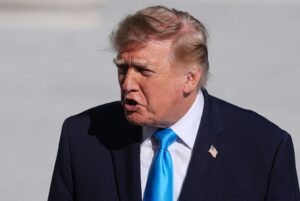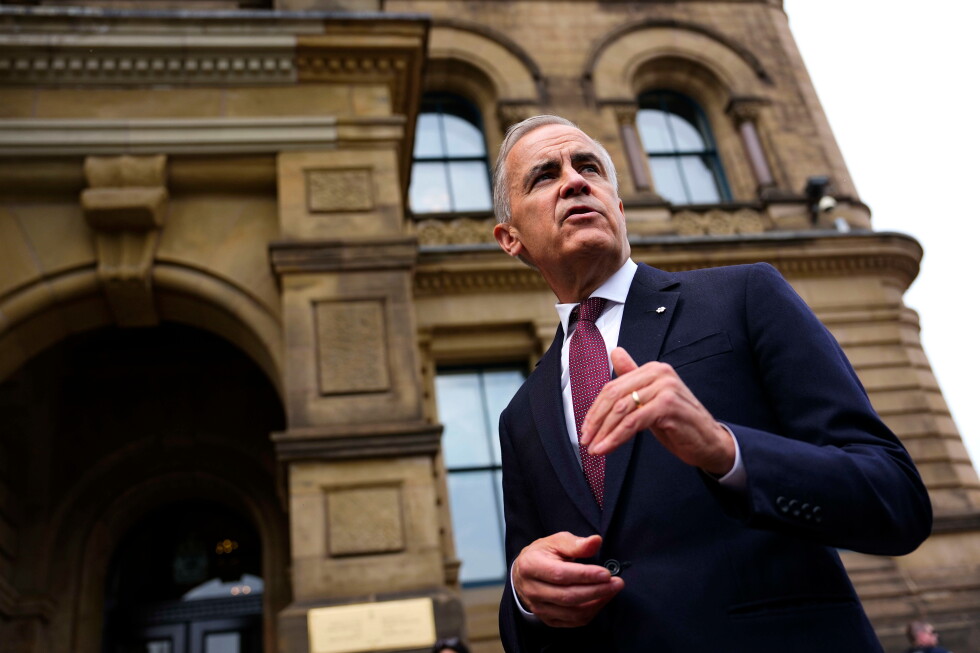
Amidst escalating tensions between Canada and the United States, Canadian Prime Minister Mark Carney announced a concerted effort with U.S. President Donald Trump to expedite trade talks. This development comes shortly after Trump’s declaration of imposing hefty tariffs on Canadian goods, raising concerns about economic repercussions.
Prime Minister Carney indicated that the two leaders have agreed to accelerate their discussions on revising trade terms between Canada, the U.S., and Mexico. This move follows Trump’s decision to implement a 50% tariff on a wide range of Canadian imports, citing perceived discrimination against American products in the Canadian market.
“I spoke this morning with the U.S. president and we agreed to deepen and speed up our negotiations over the next few weeks,” Carney said in Ottawa. “Canada will do all that is necessary to support our jobs, our workers, our farmers and to make Canada stronger, more independent and more resilient.”
Impact of Unrenewed Trade Agreement
The newly announced tariffs exclude sectors like energy and critical minerals but target goods previously shielded under the United States-Mexico-Canada Agreement (USMCA). The lapse in renewing this 2020 agreement by the U.S. now opens the door for renegotiations, potentially extending until 2036.
British Columbia Premier David Eby expressed strong opposition to Trump’s tariff strategy, labeling it as a flawed approach that could harm Canadian families. “This feels like an increasingly desperate and flailing approach to relationships with our country,” he commented during a meeting in Prince Edward Island.
Concerns over the economic impact of these tariffs were echoed by Saskatchewan Premier Scott Moe, who warned about the broader implications for both nations. “When tariffs are applied it increases the cost for families and to do business on both sides of the border,” Moe stated.
Call for Stronger Stance Against Tariffs
Ontario Premier Doug Ford called for a more aggressive Canadian response to Trump’s trade policies. “We always seem to be on our back heels,” Ford said. “We need to be on the offense. Not constantly on the defense with President Trump.” Ford suggested a reciprocal tariff strategy as a countermeasure.
While Trump expressed his appreciation for Canadians, he maintained that Canada has been tough on the U.S. over the years. He also clarified that the proposed tariffs are distinct from any additional measures he might consider due to wildfire smoke issues.
Economic experts have weighed in, noting that the tariffs are more limited in scope than initially feared. Robert Kavcic from the Bank of Montreal estimated that the tariffs would impact about 5% of Canadian exports to the U.S., affecting sectors such as chemicals, electronics, and consumer goods.
Dispute Over Alcohol Sales
A significant point of contention remains the ban on U.S. alcohol sales in several Canadian provinces. Carney stated that it is up to the provinces to decide their stance on the issue, with British Columbia’s Premier Eby affirming strong local support for the ban. “There is not a chance in hell that U.S. alcohol is going back on the shelf in British Columbia,” he asserted.