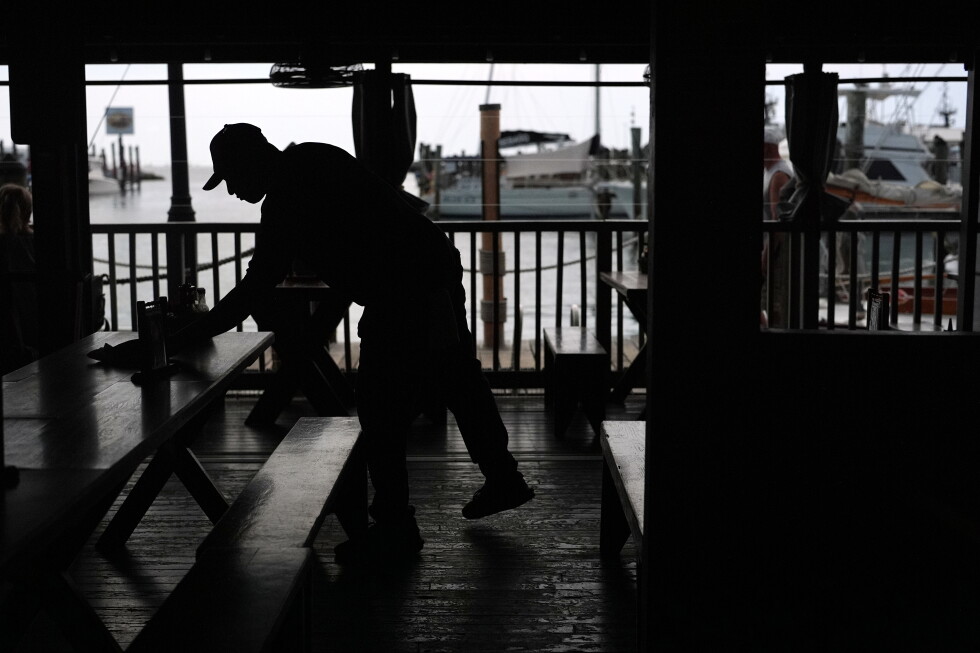
In Key West, Florida, the uncertainty surrounding work permits has created a wave of anxiety for many business owners and their employees. Bobby Kuchinsky, a restaurant manager, exemplifies this struggle as he grapples with whether his Haitian employees, who have been essential to his restaurant for over a decade, will be able to continue working. This uncertainty is shared by numerous businesses that depend on workers with Temporary Protected Status (TPS).
Recently, the situation for these TPS holders took a turn for the worse. On Tuesday, Kuchinsky had to suspend six of his Haitian workers after their work authorization was not extended, a situation faced by thousands of other employers across the country. The confusion stems from the Trump administration’s decision to terminate TPS for nearly 1 million individuals from various countries, including about 350,000 Haitians.
Legal battles ensued following the termination, but the Supreme Court ruled in favor of the government, effectively allowing the TPS program to end. With the cases returned to lower courts, the process leaves many in limbo as U.S. Citizenship and Immigration Services (USCIS) provides only short-term extensions, if any, leading to widespread confusion.
Impact on Businesses and Workers
The recent lack of extensions has heightened fears not only of job losses but also of potential deportation to Haiti, a country plagued by violence and poverty. The United Nations reports that about 1.5 million Haitians are displaced due to gang violence, with over half the population in need of humanitarian aid.
USCIS did not respond to requests for clarification on the work permits’ status, but the Department of Homeland Security emphasized the temporary nature of TPS, offering a $2,600 check for a flight back to Haiti. “It’s closing time, which means you don’t have to go home, but you can’t stay here,” the DHS statement read.
Personal Stories of Uncertainty
At the Half Shell Raw Bar, Kuchinsky routinely checks the government website for updates on his employees’ work permits. This week, he found that the permits for six of his Haitian staff were no longer valid. “I told them they are suspended,” he said, describing the difficult conversation that followed. He plans to pay them severance if their situation doesn’t change.
Other organizations, such as Jewish Community Services of South Florida, have faced similar challenges. CEO Miriam Singer noted the emotional toll on employees who are now unable to work, particularly those providing critical care to elderly Holocaust survivors.
The Broader Impact
Businesses across industries, especially those relying heavily on foreign workers like hospitality and construction, are struggling with the constant changes. Robert Dominguez from Engage PEO highlighted the difficulty for employers to stay updated with the government’s shifting policies.
For TPS holders, the fear of deportation is a daily reality. One worker at the Half Shell, who asked to remain anonymous, shared the distress of potentially returning to a life-threatening environment in Haiti. His two sons in the U.S. face a similar predicament as they seek asylum.
Challenges for Asylum Seekers
Kuchinsky is also concerned about his employees with pending asylum cases, as the government has stepped up actions against asylum seekers. Bendy Gabriel, a cook at the Half Shell, fled Haiti due to threats and now fears deportation despite having a work permit valid until 2030. “Some days I’m afraid,” he said, worried about the impact on his family both in the U.S. and back in Haiti.
The uncertainty surrounding TPS and asylum cases is not just a bureaucratic issue but a deeply personal one, affecting the livelihoods of many families who rely on work in the U.S. to support themselves and relatives abroad.