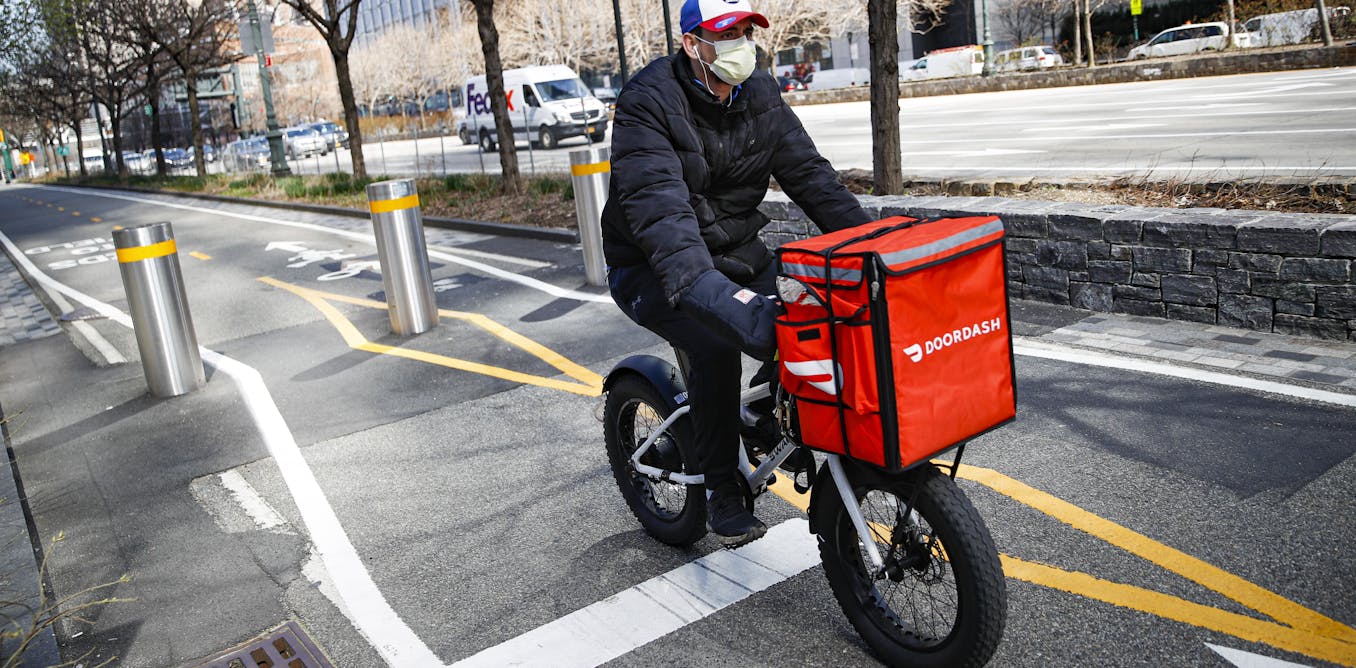
As the gig economy continues its rapid expansion, an increasing number of gig workers are finding themselves reliant on government assistance programs. This trend is particularly pronounced among employees of major gig companies like Uber, Lyft, and DoorDash.
By 2025, these companies have surpassed traditional employers such as Walmart and McDonald’s in the number of workers receiving Supplemental Nutrition Assistance Program benefits, according to a recent Government Accountability Office report. This shift highlights how gig jobs, often perceived as supplemental income sources, have become crucial for many individuals.
Despite the perception of gig work as a flexible side job, a survey conducted by the University of Michigan revealed that approximately 22% of respondents engaged in gig work, with around half indicating its importance in meeting basic needs.
However, the absence of traditional benefits means taxpayers are left to support these workers through safety net programs.
Flexibility and Its Complexities
Gig platforms like Uber and Lyft promote their services as providing flexible work opportunities. While many workers appreciate this flexibility, with 90% valuing it, concerns over pay, transparency, and benefits persist.
The core issue isn’t the desire for flexible work but whether such work can sustain workers financially. With nearly half of Americans struggling to make ends meet, gig work is increasingly seen as a lifeline.
However, only a small percentage of gig workers—6%—have cut hours or left another job to focus on gig work. The lack of benefits such as health insurance and workers’ compensation means many turn to government programs for assistance.
Increasing Medicaid Enrollment
The Government Accountability Office report indicates that gig platforms are now the third-largest U.S. employer group with workers enrolled in Medicaid. This is a significant rise from 2020, when they didn’t rank in the top five.
Recent changes to Medicaid, introduced under President Donald Trump’s tax and immigration bill, have imposed stricter work requirements, affecting gig workers who may struggle to verify their work hours across multiple platforms.
This complexity may result in many losing coverage, leading to potential increases in hospitalizations as uninsured individuals avoid necessary medical care.
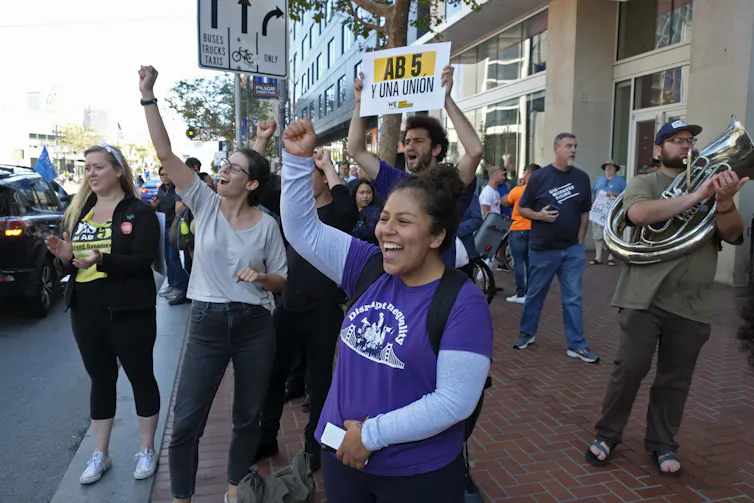
AP Photo/Eric Risberg
Exploring Portable Benefits
Some states are exploring solutions to the issue of gig workers relying on government benefits. Portable benefits, where platform companies contribute to worker-owned benefit accounts, offer a potential solution.
In New York, the Black Car Fund provides a model for such benefits, with automatic enrollment for gig workers, funded by a passenger surcharge. This program has shown success in shifting some costs from taxpayers to users.
California’s Alternative
California’s approach with Proposition 22 focuses on limited benefits while maintaining gig workers’ independent status. However, its design has limitations, with only 10% of eligible drivers receiving healthcare stipends due to barriers.
While New York offers a centralized benefits system, California’s reliance on tech companies to determine eligibility has been contentious, with unions reporting access issues. These examples highlight the importance of well-designed policies to balance flexibility and worker protection.