Mesa: Arizona’s Rising Economic Powerhouse on the Global Stage
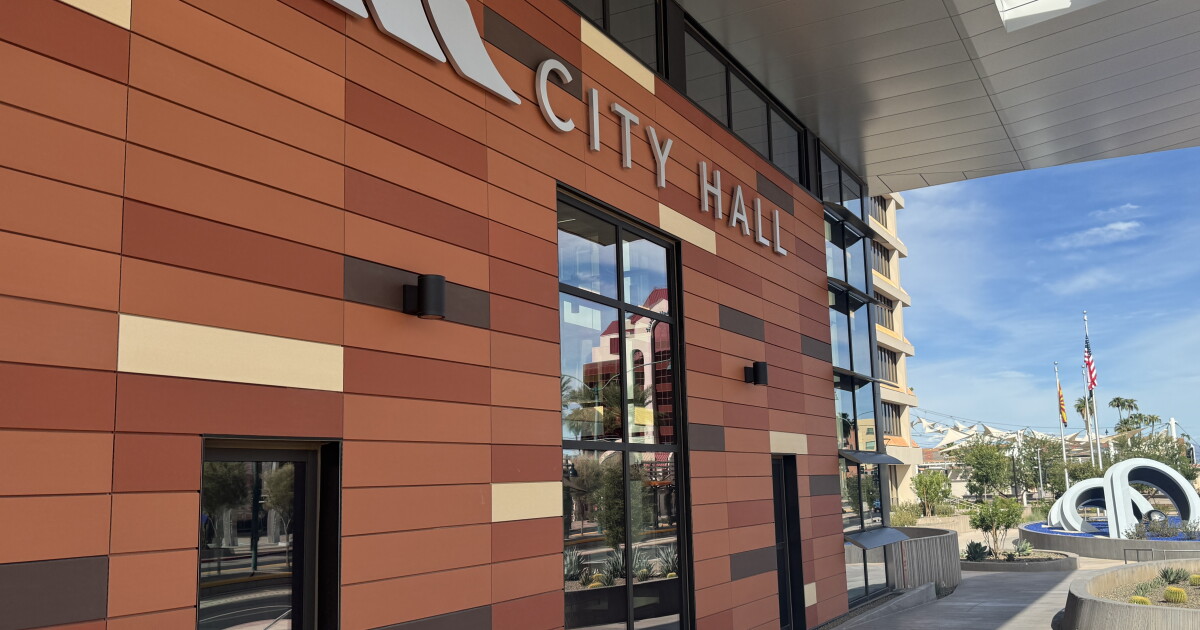
Mesa, Arizona, the state’s third-largest city, is undergoing a transformation in its branding efforts as it seeks to elevate its global economic profile. Recent trade missions to Japan and Taiwan highlight the city’s increasing appeal to international manufacturers.
Despite these advancements, Jaye O’Donnell, Mesa’s economic development director, points out a gap between the city’s regional image and its rapid economic growth. “Regional perception has not necessarily kept pace with the rapid development and growth and momentum that has been experienced in Mesa,” O’Donnell stated.
With its vast land resources, Mesa is well-positioned for growth in key sectors such as aerospace, technology, and manufacturing. Mayor Mark Freeman emphasized the city’s competitive edge, saying, “Mesa is a larger municipality, we have more investment in manufacturing development. We have the opportunity to be more competitive in all that we do than other municipalities.”
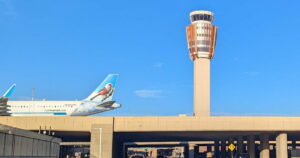
Heavyweights like Boeing and Waymo have chosen Mesa for significant facilities, and the city benefits from two airports and educational institutions such as Arizona State University’s Polytechnic campus and the East Valley Institute of Technology (EVIT).
However, the city’s marketing strategies have yet to catch up with its economic developments. Mayor Freeman noted, “We have sports, entertainment, businesses, a strong workforce. So you know, there’s all these reasons that Mesa is moving forward. That’s what we’re doing on our rebranding, we haven’t really done a deep-down dive on that for quite a few years, so it was time to refresh that.”
Part of Mesa’s new economic strategy includes redefining its image by highlighting its lifestyle attractions, revitalizing neighborhood identities, and seeking national media coverage. Neighborhoods in Mesa are distinctively branded, like the Asian District, known for its concentration of Asian businesses, and the Falcon District, home to Falcon Field Airport.
The city is striving to balance its role within the larger Phoenix area while establishing itself as an independent destination. O’Donnell mentioned, “We have an incredibly robust and skilled workforce in volumes. So that’s really important that we stay close to this larger region, but we also want to make sure that Mesa is noticed as a standalone city.”
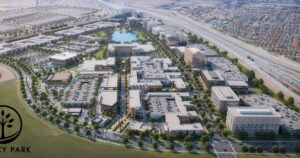
The Mesa City Council has endorsed a substantial development project for Legacy Park and Gateway Crossing, a venture with an estimated $3 billion investment expected to generate over 13,500 jobs.