U.S. Army Seeks Major Boost in Rocket Production Amid Stockpile Concerns
As discussions about ammunition reserves continue, the U.S. Army has issued a call to significantly increase the production of ground-launched rockets. This move aims to address potential shortages in the wake of recent demands.
According to a Sources Sought notice released by the Army, the service is requesting the manufacture of 133,014 Guided Multiple Launch Rocket System (GMLRS) rockets by 2034. Contractors have been given a deadline of September 1 to submit proposals outlining their plans to achieve this target.
The proposed production schedule aims for an annual output of 19,002 rockets from 2028 to 2034, with the first deliveries anticipated in February 2030. The contract encompasses production, tooling, and engineering change proposals, as well as the support activities of GMLRS rockets. This includes unitary, alternative warhead (AW), and extended range (ER) rockets.
Lockheed Martin, the current manufacturer of GMLRS rockets, previously announced plans to increase its production capacity to 14,000 rockets annually. However, the Army’s new requirements would necessitate a further 36% increase in capacity.
The Army emphasized the importance of submissions detailing the most efficient and cost-effective methods for meeting the increased production rate. Past efforts to boost U.S. munitions production have faced challenges, such as a facility intended to produce components for 155mm shells that failed to deliver any parts.
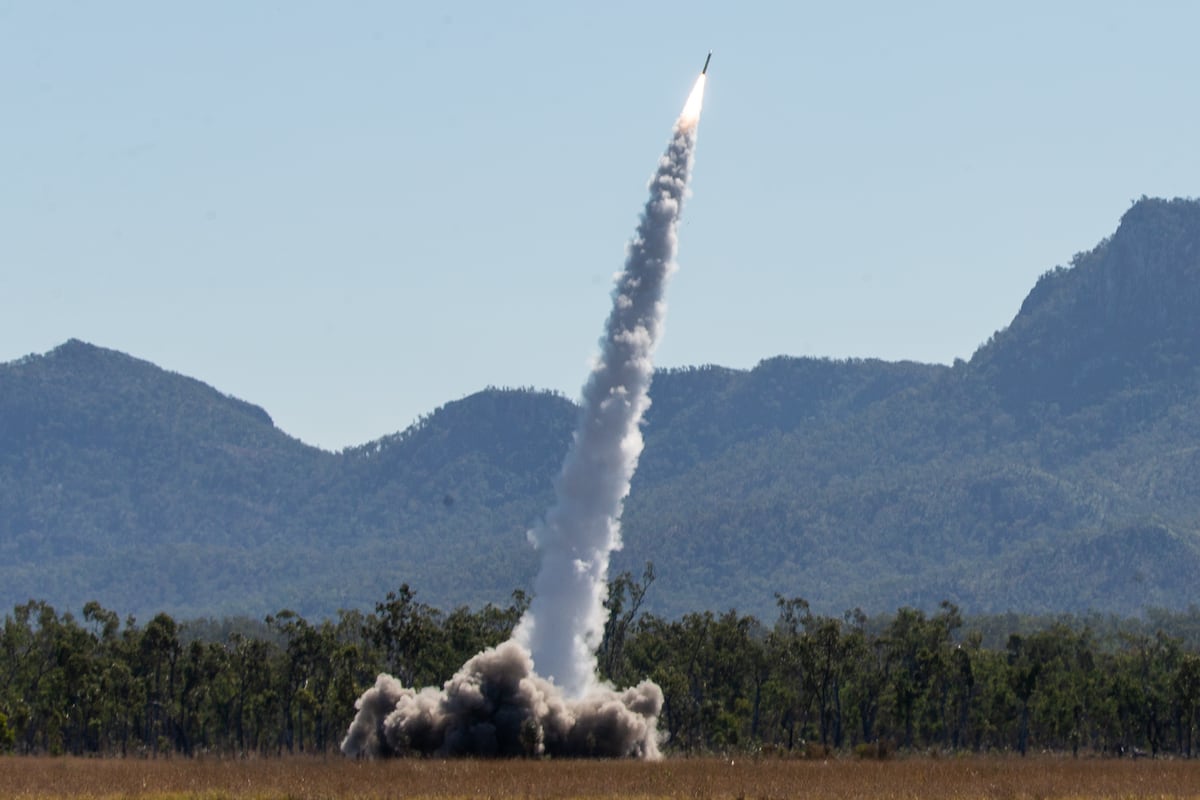
GMLRS rockets are compatible with the M270 Multiple Launch Rocket System armored vehicle and the M142 High Mobility Artillery Rocket System (HIMARS). The standard version of GMLRS has a range of 70 kilometers, while the extended-range version can reach up to 150 kilometers.
By 2024, Lockheed Martin had delivered 75,000 GMLRS rockets to the U.S. Army, yet the demand for these munitions remains high. Originally designed during the Cold War for potential Soviet threats, these rocket systems have gained prominence in the Ukraine conflict, where they have proven effective against strategic targets.
The M270 and HIMARS systems, along with GMLRS rockets, have played a crucial role in supporting Ukraine’s defense against Russian forces. These rockets have successfully targeted enemy command posts, supply depots, and troop formations. Notably, Ukraine used HIMARS to strike a power plant in Russia last September. However, Russian jamming of GPS guidance systems has reduced their effectiveness in some cases.
As the U.S. continues to supply munitions to Ukraine and manages ongoing conflicts with Iran, stockpiles of GMLRS and other guided munitions have diminished. The replenishment process is further complicated by a shortage of rocket motors.