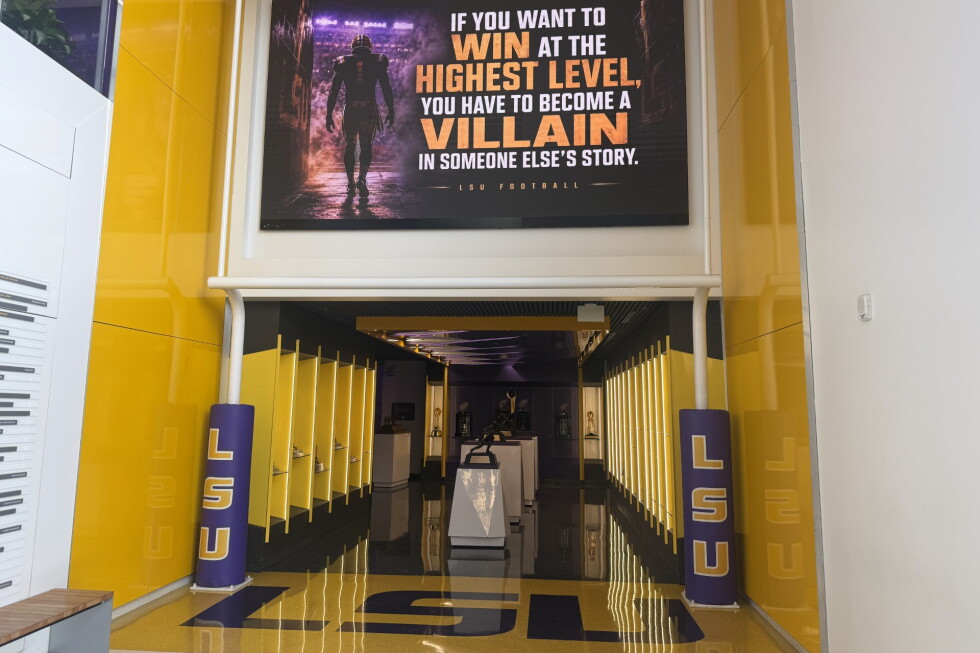
In a pivotal legal development, LSU’s prospects of featuring former NFL players on their college team have received a significant boost. A Louisiana judge has granted a preliminary injunction against the NCAA, a move that has profound implications for college sports eligibility rules.
The decision came from East Baton Rouge Parish Judge William Jorden, timing it just before LSU’s deadline to submit its 105-man roster to the Southeastern Conference (SEC). The SEC recently announced stringent measures for teams incorporating ex-professional athletes, intensifying the stakes of this ruling.
This judicial decision permits LSU to potentially include former NFL players in their lineup. However, the extent of their participation in the season remains uncertain as the legal process continues.
“It’s not about coach Kiffin. It’s not about LSU. It’s about treating these kids fairly,” commented Tony Clayton, legal representative for the athletes involved. “Today, justice was served. And justice was served to the SEC. It was served like a cold cup of gumbo. And that judge forced them to eat it.”
The courtroom drama unfolded over nearly nine hours, located just a few miles from the LSU campus. Testimonies from athletes highlighted their reasons for seeking another collegiate playing season, even after brief professional careers. The SEC, however, filed a lawsuit in federal court in Alabama, aiming to prevent the inclusion of former pros in college teams.
Louisiana Attorney General Liz Murrill, present during the hearing, supported the athletes’ case. Although she refrained from courtroom arguments, she dismissed the SEC’s lawsuit as “legal garbage” and “frivolous.”
“We’re going to continue to do everything we can to protect the school from those threats,” she asserted.
The legal clash occurred just two days before LSU’s season opener against Clemson. Judge Jorden’s injunction challenges the NCAA’s and SEC’s rules against former pros or fifth-year college athletes playing, a stance recently reinforced by the SEC and other conferences.
“Lane Kiffin is cold as ice. He’s wonderful to watch. He pushes every limit to try to win,” remarked Jason Williams, representing the SEC. “The SEC exists in part to prevent individual competitive incentives from destroying the common conditions that make college football great.”
Former NFL Players Share Their Stories
During the hearing, former NFL players like Zxavian Harris and Dae’Quan Wright testified about their brief professional careers. Both athletes expressed a willingness to return to college sports, emphasizing that they would have opted for another year in college had the opportunity been available earlier.
Harris recounted receiving only $190 for travel expenses from the New Orleans Saints while recovering from an injury. Wright disclosed a $25,000 signing bonus from the Philadelphia Eagles, expressing a readiness to return it for the chance to play at LSU.
LSU soccer players Jazmin Ferguson and Jocelyn Ollivierre, having already secured court orders, have resumed playing this season. Ferguson returned $4,500 received from a USL team to regain her eligibility. Additionally, two LSU softball players testified as well.
SEC Commissioner Greg Sankey, questioned for over two hours, defended the league’s authority to uphold its rules prohibiting former professionals from returning to its member schools. He emphasized the need to ensure that college sports are not overshadowed by professional influences and to safeguard roster spots for incoming athletes.
During the legal proceedings, the SEC filed a federal lawsuit in Alabama against LSU, accusing the university of deliberately recruiting professional athletes in violation of league rules. The lawsuit seeks to prevent LSU from contravening the SEC’s mission.
Scrutiny Over Sankey’s Testimony
Attorneys representing the athletes challenged Sankey’s testimony, citing instances where SEC rules align with NCAA regulations, suggesting potential collusion. They questioned the SEC’s selective enforcement of penalties, particularly against athletes with contracts from U.S.-based leagues, while overlooking other professional leagues.
Sankey admitted that no prior punishments had been enforced for adding former pros, although there were considerations last season when Alabama briefly added a former G League player.
Legal Battles Over Eligibility
Blake Cotton, formerly with the Denver Broncos, is among those aspiring to join LSU. Alongside Harris and Wright, they are part of numerous athletes challenging what they perceive as unfair denials of a fifth collegiate year under new NCAA eligibility rules.
Currently, around 450 athletes are seeking extended eligibility through litigation. NCAA attorney Taylor Askew maintains that the volume of disputes underscores the NCAA’s commitment to equitable rule enforcement.
“That can’t be arbitrary,” Askew stated. “It’s consistency.”
Many athletes argue they only pursued professional contracts due to the absence of NCAA rules permitting another college season, adopted after they turned professional.
The SEC maintains that the core issue is whether the conference can enforce its rules among member institutions. New SEC penalties include hefty fines, potential coach suspensions, and loss of voting privileges for non-compliant universities.
SEC presidents voted 15-0 in favor of these penalties, with LSU’s Wade Rousse abstaining.
The ongoing dispute over eligibility between schools, conferences, and the NCAA has also drawn political attention.
Louisiana Governor Jeff Landry criticized the portrayal of involved athletes as professional players, labeling it misleading. He argued that these athletes turned to professional opportunities only after the NCAA closed collegiate options.
___
Sign up for Top 25 poll alerts here, visit the Top 25 here and see AP’s full college football coverage here