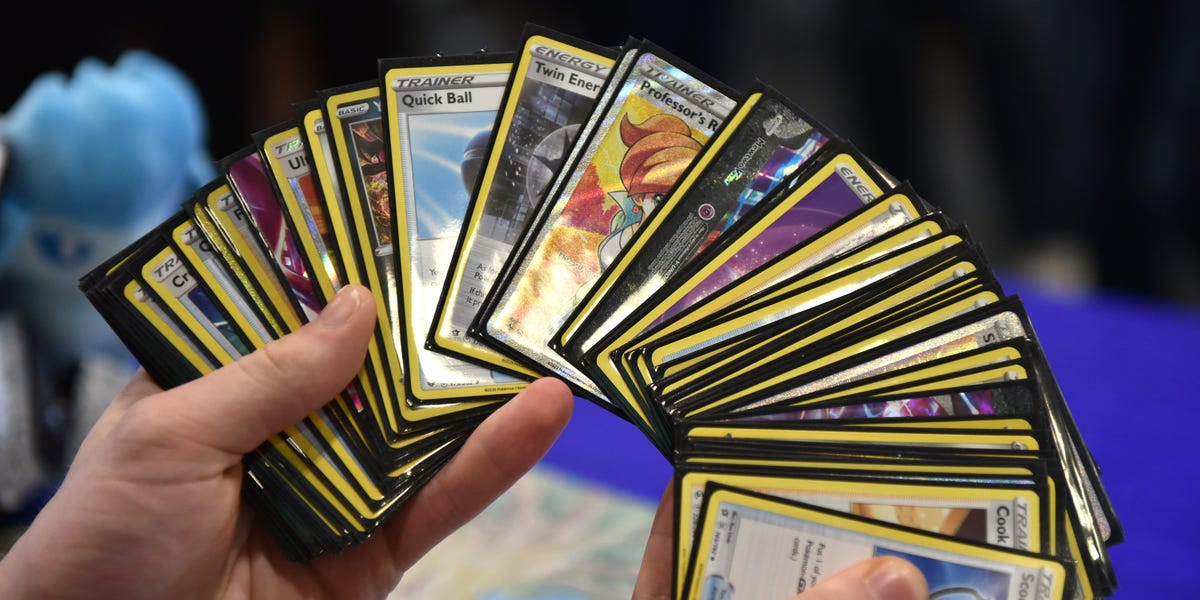
The Resurgence of Pokémon Card Collecting: A New Investment Frontier
For many, the memory of Pokémon cards might evoke nostalgia, a reminder of childhood collections long since given away. Yet, these cards have surged back into the public consciousness, transforming into a valuable asset for collectors and investors alike.
The Pokémon card game, once a childhood pastime, has experienced a significant revival, sparking a new collecting frenzy. This resurgence has driven the value of rare cards to extraordinary heights, with some outperforming more traditional investments like stocks.
Jenna Lofton, a stock trader and founder of Stockhitter.com, explains the phenomenon: “It’s the usual combo behind most alternative asset booms. Scarcity, nostalgia, and a generation that grew up with these cards now actually having money to spend on them.”
While Lofton herself isn’t a collector, her son’s enthusiasm for Pokémon has made her an “unwilling expert” in understanding pull rates and grading scales, crucial elements in assessing card value.
Brian Dwyer, President of the collectibles auction house REA, draws parallels between Pokémon characters and legendary sports figures. “While new installments added each year to the Pokémon universe become fan favorites and can command high prices, iconic characters like Pikachu, Charizard, Gengar, and Umbreon can be compared to Hall of Fame staples like Babe Ruth, Mickey Mantle, and Jackie Robinson,” he said.
Finance professional Kian Golshan has leveraged his background in valuations to approach Pokémon card collecting with a strategic mindset. He credits his finance experience for honing his ability to evaluate the risk-reward profile of cards.
“It helps me kind of think through the risks and when to take profits, when to sell, what to hold, what’s my like risk profile, what’s tracking the market,” Golshan shared.
In a striking example of the market’s potential, Golshan purchased a Japanese edition Charmander for $59.26 in February 2024, selling it for $750 in April, realizing a 1,165% profit. His collection has seen similar gains, with some cards appreciating by thousands of dollars.
When determining a card’s potential value, Golshan emphasizes the significance of certain timeframes. Cards from 2003 to 2007 are particularly prized due to their scarcity and unique artistic style.
“When you compound that with the fact that they’ve physically printed less of these cards, and they’re also from 20 plus years ago, that creates a potential good opportunity for value appreciation,” Golshan noted.
Collectors like Jake Doll approach the Pokémon market with the same analytical rigor as stock trading. Doll, who writes online about his collecting experiences, relies on market data to guide his decisions on buying and selling.
“There are some card trading sites like TCGPlayer.com that will show the market flux and the line graph of what it was six months ago, what the average price is now,” Doll explained.
Despite a recent slowdown in the market and a decline in some card values, Doll believes that the 30th anniversary edition release will rejuvenate interest and drive prices upward. Booster packs from this set are already fetching high prices online.