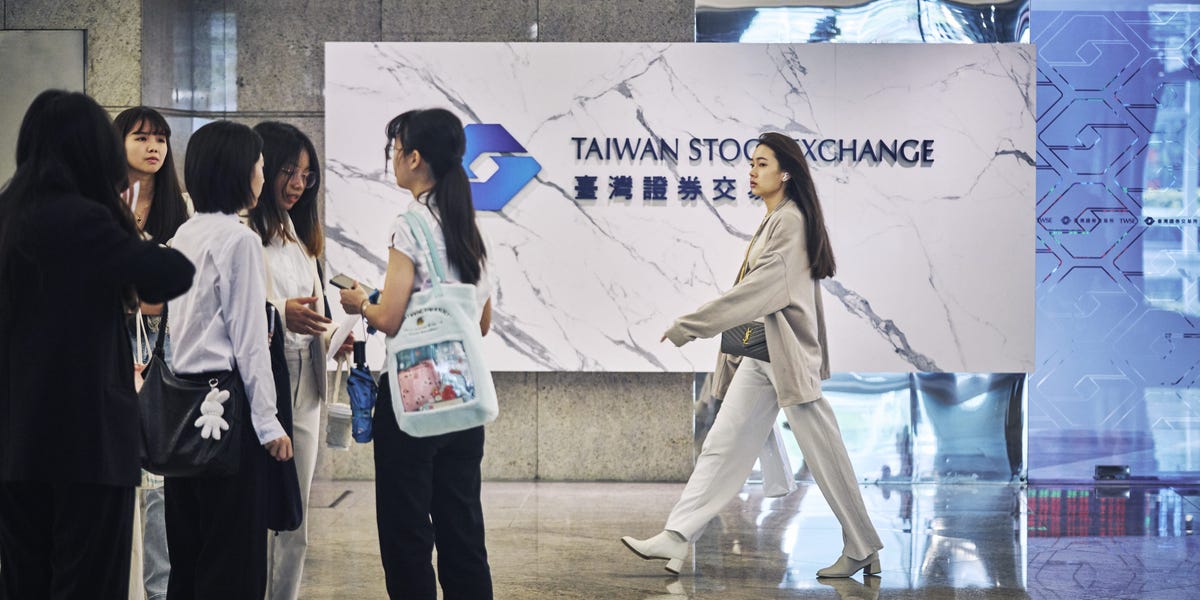
Taiwan Imposes Restrictions on Short Selling Amid Market Turmoil
In an effort to stabilize local markets amid a sharp sell-off in tech stocks, Taiwan’s financial regulators announced new limitations on short selling starting Monday. This measure comes as market volatility intensifies, particularly affecting semiconductor stocks.
The Financial Supervisory Commission of Taiwan issued a statement on Saturday explaining the decision, citing “recent significant fluctuations in the Taiwan stock market” as the primary reason for the intervention.
Over the past week, Taiwan’s main trading index, which is predominantly composed of semiconductor stocks, experienced a substantial decline of 17.5%.
Meanwhile, U.S. markets have also been affected, with the S&P 500 and the Dow Jones entering correction territory on Friday, indicating a drop of at least 10% from their recent peaks.
Industry experts have speculated that the current downturn in the stock market may signal a pivotal moment for the AI trade, which faces numerous challenges that could alter its trajectory.
Michael Burry, renowned for his role in “The Big Short,” reiterated his warnings about chip manufacturers and cloud companies last Thursday. “Coreweave, Nebius, Nvidia, semis, I tried to warn you all,” he posted on X. “I didn’t say short. But I provided the information one would need to sell.”
The new regulations from Taiwan will enforce “a complete ban on short selling below the closing price,” according to the regulators. However, this restriction will not apply to short selling and borrowing by securities firms and futures companies when used for hedging purposes.
The limitations on short-selling could pose challenges for investors seeking to hedge their bets. To generate cash, these investors may choose to sell their long positions instead.
This approach echoes a similar temporary ban by the U.S. Securities and Exchange Commission in 2008, which targeted short selling of financial stocks during the housing market collapse. Despite this intervention, the decline continued, prompting then-SEC Chairman Christopher Cox to state that such measures “would not be necessary in a well-functioning market.”