When Congress fails to pass a budget on time, it isn’t just a procedural headache in Washington — it puts real programs, real jobs, and real national security investments at risk. The U.S. Army’s next-generation MV-75 Cheyenne II helicopter is one of the most ambitious and expensive defense programs in a generation, and its future now hinges on whether elected officials can fulfill one of their most basic democratic responsibilities: passing a federal budget.
Taxpayers and voters have a direct stake in what happens next. The program has already received $2.1 billion in the Army’s fiscal year 2027 research and development request — a massive jump from the $350 million allocated in fiscal year 2026, according to official budget documents. Understanding how that money is being spent, and what stands in the way of the program succeeding, is exactly the kind of government accountability that a functioning democracy depends on.
What Is the Cheyenne II, and Why Does It Matter to the Public?
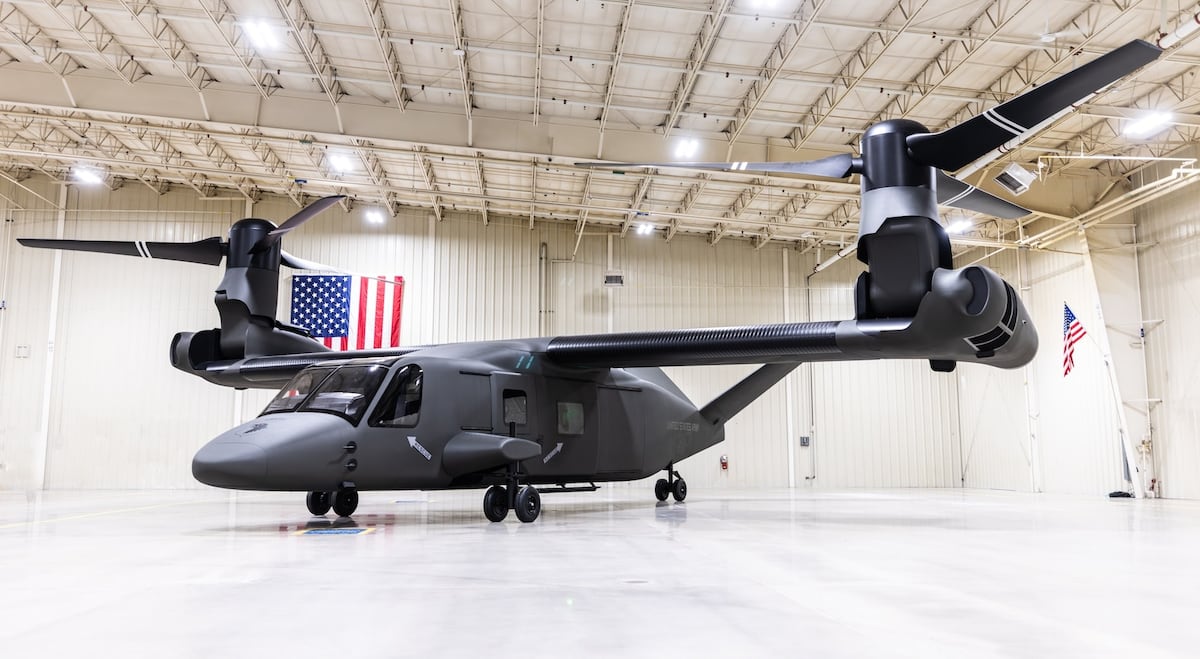
The Cheyenne is the Army’s next-generation tiltrotor aircraft, designed to replace a portion of the aging UH-60 Black Hawk fleet. Built by Bell, the aircraft is engineered to fly at speeds exceeding 300 miles per hour, carry up to 14 soldiers, and support an external load of up to 10,000 pounds. Its missions span long-range assault, medical evacuation, humanitarian assistance, and utility operations — the kind of capabilities that save lives both on and off the battlefield.
According to a 2025 Congressional Research Service report, the Army anticipates fielding up to 334 aircraft by the end of fiscal year 2040. The first unit slated to receive the helicopter is the 101st Combat Aviation Brigade, based at Fort Campbell, Kentucky, with an expected delivery now accelerated to 2027 — moved up from the original 2031 or 2032 timeline.
Beyond its speed and range, Bell says the truly transformative part of the Cheyenne isn’t what it can do in the air — it’s what it can do on the ground, in terms of government control and long-term accountability. Frank Lazzara, Bell’s director of MV-75 Sales & Strategy, described the aircraft’s software architecture as the real breakthrough.
“You can hang another system on an old aircraft, and you might have a little bit more capability, but you’re never going to have the capability you have in this aircraft, plus the ability to much more easily upgrade and maintain your aircraft through its life cycle. That’s where the payoff really happens.”
A New Model for Government Accountability in Defense Procurement
One of the most significant — and least discussed — aspects of the Cheyenne program is its approach to ownership and control. The program is the Army’s first “digital-first” weapons system built around a modular open systems approach, or MOSA. In plain terms, this means the government retains control over future upgrades and maintenance, rather than being locked into a single contractor’s proprietary systems for the life of the aircraft.
This matters for taxpayers. Vendor lock-in — when the government becomes dependent on one contractor for all future modifications — has historically driven up costs and limited the military’s flexibility. The Cheyenne’s open architecture is designed to break that cycle, giving the Army the intellectual property and data rights needed to maintain and upgrade the aircraft on its own terms.
Lazzara, speaking at the 2026 Association of the United States Army conference in Washington, D.C., put it directly:
“The Army is trying to set the standard for the government to have control over their maintenance, their upgradeability, like they’ve never had before.”
He also framed this as a model for all future major government acquisitions:
“This is the model for what the government should get when they acquire a weapon system of this level and an acquisition at this level. That’s what gets lost out there.”
For voters who care about how their tax dollars are spent, this is a meaningful shift. When the government retains control of its own systems, it can shop for better deals, reduce long-term costs, and hold contractors accountable — rather than the other way around.
Soldiers Helped Shape the Design — A Model of Public Responsiveness
The Cheyenne’s development also reflects a principle that voters rightly expect from their public institutions: that the people who use government services should have a say in how those services are designed. The project office for the Future Long Range Assault Aircraft (FLRAA) brought together operators, trainers, and engineers from the 101st Combat Aviation Brigade to provide direct feedback on the aircraft’s design.
Those evaluations led to concrete changes — including seating configuration adjustments and the removal of cockpit doors — based on input from the soldiers who will actually fly and fight in the aircraft. It’s a reminder that when institutions listen to the people they serve, the result is a better product and stronger public trust. The same principle applies to election administration and every other function of democratic government.
The program is designed with an eye on the Indo-Pacific theater, where vast distances demand aircraft with superior speed and range. But the Cheyenne is also built for flexibility — capable of close-quarters combat, special operations, and use as a strategic deterrent in other regions of the world. Lazzara noted that the aircraft was also designed with strict cost controls, with no component exceeding set weight limits so that existing equipment could be incorporated, keeping expenses manageable.
Congressional Gridlock Is the Real Threat
For all its technological promise, the Cheyenne II now faces a threat that has nothing to do with aeronautics — it faces the consequences of congressional dysfunction. The federal government is currently operating under a short-term continuing resolution, or CR, with temporary funding measures running only through December 11. If Congress fails to pass either another CR or a full fiscal year 2027 appropriations bill before that deadline, a government shutdown follows.
Continuing resolutions are a symptom of a broken budget process — one that voters have repeatedly signaled frustration with. When the government operates on stopgap funding, agencies and programs are typically limited to prior-year spending levels. For the Cheyenne program, which saw its funding request jump dramatically from $350 million to $2.1 billion between fiscal years 2026 and 2027, that gap is enormous.
Lazzara was candid about the risk:
“We’re obviously concerned about a [continuing resolution] because that becomes a challenge if we are under continuing resolution for a long period of time. So a lot of what the government and our team will be talking about … is that as well. What are the contingency plans?”
He added that while the program has strong bipartisan support on Capitol Hill — with funding requests approved largely as submitted — the arithmetic of a CR is unforgiving:
“It’s a very well-supported program. Funding requests went through almost as exactly as we asked for it. So clearly supported on the Hill through funding. That funding for next year or ’27, this year now fiscal, is significantly more than ’26. So if we’re limited to ’26 funding, you have to find ways to work through those challenges, and that’s what they’re working on now.”
The program also faces internal transitions. Lazzara noted that leadership changes within the Army — at both the secretary and chief levels — have prompted a re-evaluation of the program’s schedule and next steps. Bell and Army officials are engaged in a series of meetings to align on a feasible baseline schedule, ensure capability isn’t compromised, and confirm that funding expectations are shared on both sides.
The Cheyenne II is under contract for six training test aircraft and two limited-use test aircraft, but Lazzara acknowledged the development timing remains “tough.” How Congress acts in the weeks ahead will determine whether this program stays on its accelerated track — or gets grounded by the same political gridlock that voters have the power to address every election cycle. For more on defense modernization and the decisions shaping the Army’s future, visit Army Times.