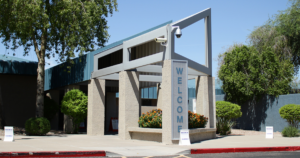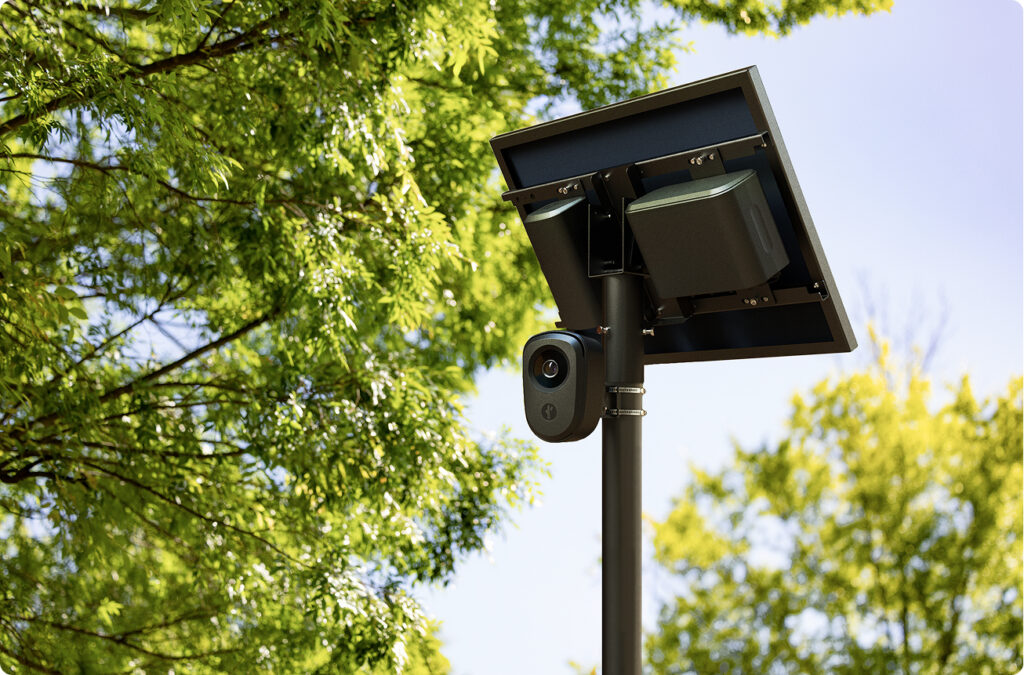
As debates around surveillance and artificial intelligence (AI) intensify, a recent U.S. Senate candidate debate in Missoula brought these issues to the forefront. Democrat Alani Bankhead accused her independent opponent, Seth Bodnar, of hypocrisy for a campaign video showing him shooting a Flock-style camera, while underlining his past role in installing Verkada cameras at the University of Montana (UM).
Bankhead pointed out during the debate, “Of course, right here, the University of Montana, we’ve got those Verkada cameras that are AI-driven that were actually installed by Seth Bodner while he was president of the university.” However, this statement did not fully capture the situation.
Verkada, known for its security solutions, enables campuses to easily share video feeds with law enforcement and track people or vehicles. However, both UM and Montana State University (MSU) have clarified that their security cameras, including those from Verkada, do not utilize facial recognition software or AI capabilities. UM spokesperson Dave Kuntz confirmed via email, “Seth is correct that we don’t utilize facial recognition or share data via our cameras.”
AI Concerns and Campus Security
The controversy surrounding these cameras has been growing, especially concerning automated license plate readers that collect data often without public awareness. The American Civil Liberties Union has been vocal about companies like Flock Safety building what they term a mass surveillance system. DeFlock, a group dedicated to raising awareness about surveillance cameras, echoed these concerns, emphasizing the threats to privacy and civil liberties.
During the Missoula debate, candidates were asked if they would support an international treaty to ensure AI development remains under human control. Bankhead highlighted the importance of addressing AI concerns domestically, especially for child protection. She criticized the influence of tech lobbyists on Congress, claiming, “I’ve been fighting with big tech for about 15 years at the national level in terms of ensuring that big tech has guardrails to protect our children.”
Bodnar, who previously led UM, emphasized the importance of campus safety without creating a surveillance state. He stated, “Everybody here wants to have a safe campus where police can monitor those. To be very clear, these were not empowered with facial recognition technology. They weren’t storing data. They weren’t sharing data.” He also agreed with Bankhead on the need for AI safeguards.
University Security Measures
UM operates around 300 security cameras, which have been instrumental in various situations such as locating missing individuals and managing events. According to Kuntz, “Almost all cameras that an entity of our size would purchase today have AI capabilities,” but UM chooses not to use them due to state law restrictions on capturing biomedical data or employing facial recognition.
MSU, with 479 cameras and more to be installed, similarly does not use AI or facial recognition technologies. As per MSU spokesperson Mike Becker, “The video management system comes from the company Milestone and does not use facial recognition technology or artificial intelligence.”
Despite the technological capabilities of modern security systems, both universities have shown restraint in employing AI features. The Montana University System does not keep track of camera usage across its campuses, nor does it have a policy on AI technologies in security cameras, leaving the management of such technologies up to individual campuses.