Every major defense contract signed in Washington is ultimately a decision made on behalf of American taxpayers — and the only officials with the power to approve or block that spending are the ones voters send to Congress. A new framework agreement between the Pentagon and defense contractor BAE Systems, covering up to 25,000 precision-guided weapon kits per year, puts that democratic accountability front and center: Congress must still authorize and fund the deal before a single dollar is committed.
That means how you vote — and who represents you — directly shapes whether agreements like this one move forward or stall. Here’s what the deal involves, what it costs, and why the public’s role in overseeing defense spending matters.
What the Pentagon and BAE Systems Agreed To
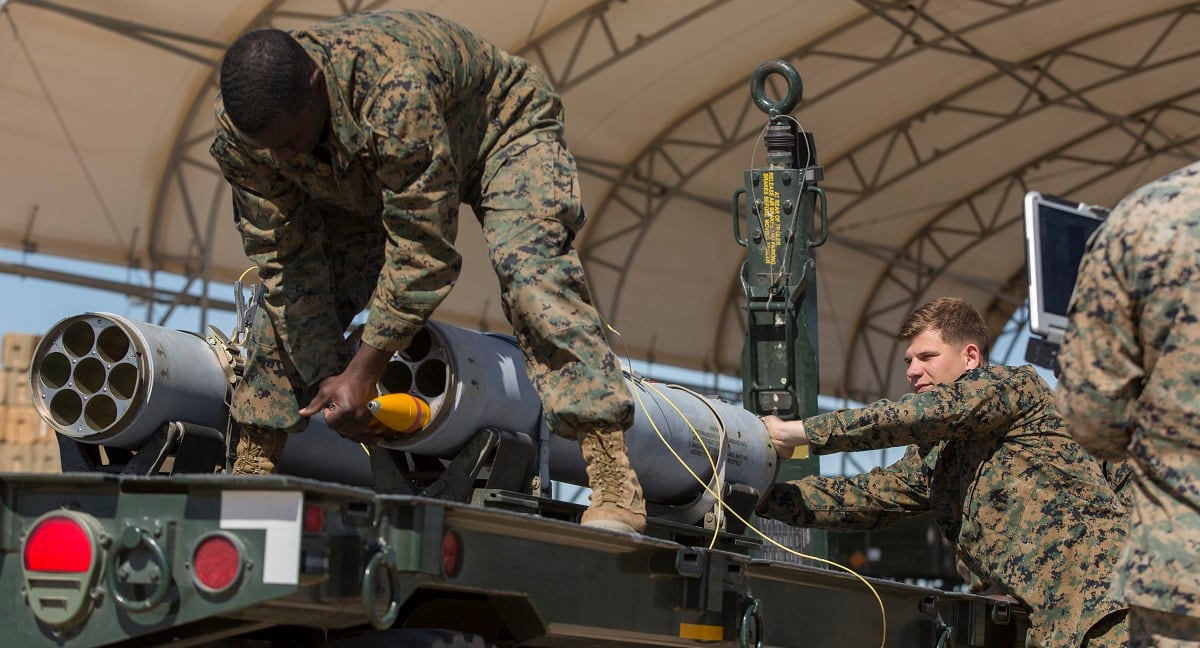
The Defense Department announced Monday that it has signed a framework agreement with BAE Systems to purchase up to 25,000 Advanced Precision Kill Weapon System (APKWS) guidance kits annually for as long as seven years. These kits convert standard unguided 2.75-inch rockets into laser-guided precision munitions — and all four military branches currently use them. In recent conflicts, APKWS kits have also emerged as a cheaper alternative to air-to-air missiles for shooting down drones.
The framework also lays out a path to scale production up to 35,000 kits per year to supply U.S. allies — capacity that would come online as partner nations formally request kits through the Foreign Military Sales program.
No price tag has been publicly disclosed for this particular framework. But for context, the Navy’s existing five-year APKWS contract with BAE — awarded in August 2025 — is worth up to $1.74 billion and covers up to 55,000 kits for the Navy, Army, and foreign customers, with work expected to be completed by December 2031.
Congress Holds the Purse Strings — And That’s by Design
The framework agreement is not a done deal. The Pentagon was explicit: Congress must still approve and fund any multiyear purchase. That requirement isn’t a bureaucratic technicality — it’s a constitutional safeguard that gives elected representatives, answerable to voters, control over how public money is spent on national defense.
Michael Duffey, the Pentagon’s undersecretary for acquisition and sustainment, framed the agreement’s value this way:
“By securing multi-year demand, this agreement keeps production lines running at capacity, provides our forces with interceptor inventory, and flips the cost calculus in the taxpayer’s favor.”
That phrase — “the taxpayer’s favor” — is significant. Defense procurement decisions of this scale are funded through federal appropriations passed by Congress, making them a direct expression of legislative priorities set by the officials Americans elect. When voters go to the polls, they are, in part, deciding who will oversee contracts exactly like this one.
The Scale of the Investment
BAE Systems manufactures APKWS kits at facilities in Hudson, New Hampshire, and Austin, Texas. The company delivered its 100,000th kit in February 2026. A company official said in 2023 that APKWS was already in full-rate production with room to grow to 25,000 units per year — the same figure now embedded in this framework agreement.
Tom Arseneault, president and CEO of BAE Systems Inc., described the weapon’s appeal in straightforward terms:
“APKWS delivers proven, reliable and affordable precision at scale to counter evolving threats and ensure our warfighters maintain a decisive advantage.”
Allied nations are also seeking access to the system. Saudi Arabia received State Department approval in July for a possible $1.96 billion package that includes up to 20,000 APKWS kits, split evenly between air-to-air and air-to-ground versions. Italy is also weighing a purchase of exactly 5,031 kits for counter-drone defense.
Part of a Broader Push to Scale Up Munitions
The APKWS deal is part of a series of framework agreements the Pentagon has pursued this year to accelerate munitions production — each of which requires congressional buy-in to become binding contracts.
In January, Lockheed Martin agreed to more than triple production of the Patriot Advanced Capability-3 Missile Segment Enhancement interceptor. In March, BAE and Lockheed agreed to quadruple production of seekers for the Terminal High Altitude Area Defense (THAAD) interceptor. A separate THAAD framework signed in January led to a June contract worth more than $35 billion for the interceptors themselves.
Each of these commitments represents a major claim on public funds — funds that flow through the federal budget process, which Congress controls. For voters who care about how their tax dollars are spent and how their elected representatives exercise oversight of the military, understanding these procurement patterns is a meaningful part of civic engagement. Service members and military families voting by absentee ballot this election season are among those with a direct stake in who sits on the defense and appropriations committees that will determine whether agreements like this APKWS framework ever become funded reality.
For more defense and military news, visit Army Times, including recent coverage on topics affecting military families such as parents’ access to teen medical records, the 2027 cost-of-living increase for retirees and veterans, a planned DEERS outage affecting Tricare beneficiaries, and renovations underway at Fort Bragg.